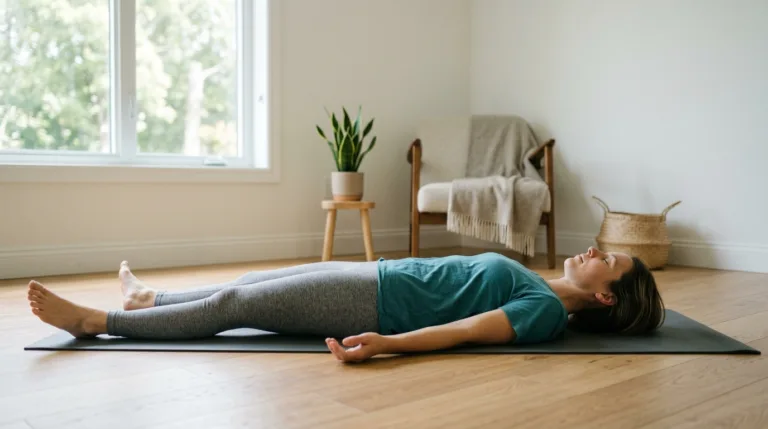
Whether you’ve decided to sleep on your back, switch to your left side for reflux, or stop sleeping on your stomach because your neck is killing you in the morning, you’re probably going to discover the same thing within a week: knowing the right position is easy, actually staying in that position all night is hard.
This article walks through what the research says about how long sleep-position changes take, which behavioral interventions actually work long-term, and a realistic step-by-step plan that doesn’t require willpower at 2 AM. We’re a research curator, not a sleep coach, so we’ll cite what the evidence says, including the depressing parts.
Key Takeaways
- How to sleep on your back (or any new position) is harder than changing most habits, you can’t consciously practice it during the eight-hour habit window.
- Habit-formation research finds a median of 59-66 days for a new behavior to feel automatic, with a wide range from 18 to over 250 days.
- The classic tennis-ball-in-shirt method works while used but has poor long-term compliance, only about 6% of users are still using it 30 months after starting.
- Vibrating sleep position trainers have substantially better adherence at about 52% daily use, vs 15% for the tennis ball.
- The realistic plan: body pillow approach first, escalate to a position trainer if needed, give yourself 6-12 weeks before judging whether it’s working.
Why Changing Sleep Position Is Harder Than Other Habits
Most habit changes, exercise, diet, meditation, give you the chance to consciously practice the new behavior. You can decide, in the moment, to skip the dessert or do the workout. Sleep position doesn’t work that way.
You make exactly one conscious decision about sleep position per night: which way to face when you get into bed. Everything that happens between then and morning is automatic. Your sleeping body rolls into whatever position felt comfortable before, and you don’t get to vote.
This is why generic habit-formation advice (“just do it for 21 days”) doesn’t transfer well. The 21-day idea is a popular myth anyway, actual research finds a median of 59-66 days for a behavior to feel automatic, with a wide range from 18 days to over 250 (Lally et al., European J. Social Psychology, 2010). A 2024 systematic review and meta-analysis updated those numbers and confirmed the wide range: median 59-66 days, mean 106-154 days, range 4-335 days depending on behavior and person (Singh et al., 2024).
For sleep position specifically, you’re at the longer end of that range because of the no-conscious-practice problem.
Plan for 6-12 weeks of deliberate work, not three.
The Tennis Ball Method: Works When Used, Rarely Used
The classic behavioral intervention is the tennis ball method. You sew or tape a tennis ball into the back of a t-shirt. When you roll onto your back during the night, the ball pokes you uncomfortably and you roll back onto your side. Over weeks or months, the theory goes, you train yourself out of supine sleeping.
The treatment effect is real and well-documented. In OSA patients using the tennis ball method, treatment success (defined as AHI dropping below 5) was 42.9%. That’s nearly half of users seeing their apnea drop into the normal range when they actually used it (Eijsvogel et al., JCSM, 2015).
The compliance is the problem. A 2009 study by Bignold and colleagues followed tennis-ball-method patients over 30 months and found that only 6.0% were still using it. The reasons for stopping, in order of frequency:
- Discomfort: 63%
- The ball moved out of position: 33%
- No perceived improvement in sleep: 26%
- Felt ineffective: 24%
- Backache: 13%
Most people abandoned it within months (Bignold et al., 2009). The discomfort number is the kicker, the same uncomfortable poke that’s supposed to train you out of back-sleeping is also why most people stop using the method entirely.
Sleep Position Trainers: Substantially Better Compliance
Modern alternatives are vibrating devices worn on the neck or chest. When you roll onto your back, a small vibration prompts you to roll back onto your side. The vibration is uncomfortable enough to register but generally not enough to wake you up.
The compliance numbers are dramatically better than the tennis ball method. In a head-to-head trial with 12-month follow-up:
- Daily use: 51.7% with the sleep position trainer vs 15.4% with the tennis ball
- Treatment success (AHI under 5): 68.0% with the trainer vs 42.9% with the tennis ball
(Eijsvogel et al., 2015). Both methods worked when used, but people used the trainer more often and for longer.
We don’t recommend specific products, we don’t test devices and aren’t a medical practice, but the device category has clear research support over the DIY tennis-ball approach. If positional therapy matters enough to you that you’d actually use a tennis ball for years, the position trainer is a reasonable upgrade. If you have diagnosed sleep apnea, this conversation should happen with your sleep physician.
The Lower-Tech Approaches
Before escalating to a behavioral device, the lower-tech interventions are worth trying. They’re cheap, have no real downside, and work for a meaningful fraction of people.
The Body Pillow
A long pillow you hug while lying on your side. The physical bulk in front of you and behind you (if you arrange it correctly) makes rolling onto your back or your stomach physically harder. See our research-curated body pillow picks for product-level recommendations. For people whose old position is stomach sleeping, the body pillow is often the highest-lever single intervention.
Setup: lie on your side, hug the pillow against your chest with the bottom arm under it, drape your top leg over the lower part of the pillow. The combination immobilizes you in a side-sleeping configuration without requiring you to think about it.
The Pillow Wall Behind You
A folded comforter, a long pillow, or a stack of regular pillows behind your back makes rolling onto your back physically harder. This works especially well as a supplementary measure alongside a body pillow in front.
Wedge Under the Hip
For people switching out of stomach sleeping, a small wedge or folded towel under the hip on the side you’re not sleeping on creates a slight forward tilt that discourages rolling onto the stomach.
For Sleeping on Your Back Specifically
If your goal is back sleeping rather than side sleeping, the setup is different. Pillows under each arm and along each side of the body make rolling onto either side harder. A pillow under the knees reduces lower back strain and signals to your sleeping body that this is the resting position.
Position-Change Methods Compared
Four methods for changing sleeping position have been studied or widely tried. The compliance gap between formal devices and DIY approaches is the variable that drives long-term success.
| Method | Daily use at 12mo | Cost | Best for |
|---|---|---|---|
| Body pillow approach | High (low-friction) | $30-80 | Stomach → side conversion |
| Wedge / pillow wall | Moderate | $20-60 | Side → back transition |
| Tennis ball method | 15.4% (Eijsvogel 2015) | $1-5 | Very motivated DIY users |
| Vibrating position trainer | 51.7% | $200-300 | Diagnosed positional OSA |
The Realistic Step-by-Step Plan
If you’re committed to changing your sleeping position, here’s the realistic order of operations.
- Decide which position you actually want, and why. If it’s for a specific condition, see the relevant deep-dive: snoring, acid reflux, pregnancy, back pain, or stomach sleeping.
- Get the right pillow first. Your existing pillow is probably wrong for the new position. Side sleepers need 4-6 inches of fill height. Back sleepers need 2-4 inches. Stomach sleepers (if you’re staying with stomach but adding the Mayo Clinic-recommended pelvis pillow) need a very thin head pillow or none at all.
- Try the body pillow / pillow wall approach for two weeks. Cheap test. If two weeks of physical-barrier-based positioning gets you 70%+ of nights in the target position, you may not need anything more sophisticated.
- If body pillow alone isn’t enough, add a positional sleep trainer or formal positional therapy device. The compliance research strongly favors vibrating trainers over the tennis ball.
- Track for 6-12 weeks before judging whether it’s working. Habit formation takes longer than people expect. The first three weeks are the hardest. By week 6-8, most people who are going to adapt have started feeling natural in the new position.
- If you have diagnosed sleep apnea, coordinate with your sleep physician. Positional therapy isn’t a substitute for CPAP for moderate-to-severe OSA, and decisions about device choice should involve a follow-up sleep study.
What to Expect During the Transition
Some honest expectations from the research:
- The first 1-2 weeks will feel uncomfortable. Your body keeps trying to default to the old position. You’ll wake up frequently at first.
- Sleep quality may temporarily decrease. Then improve, often beyond the baseline, by week 4-6.
- You’ll wake up in the wrong position sometimes. That’s normal. The win is reducing the time in the wrong position, not eliminating it overnight.
- Some people never fully adapt to the new position. If 12 weeks of consistent intervention hasn’t shifted your dominant position, the realistic answer may be either accepting some wrong-position time or escalating to medical evaluation if there’s an underlying condition driving it.
When Stress or Wind-Down Is the Real Problem
Position changes are physical, but the rest of the bedroom-and-routine setup matters too. If you’re someone whose sleeping position changes are part of a broader sleep-quality project, the related guides:
- Wind Down Routine for Better Sleep, the pre-bed habits that actually move the needle
- How to Fall Asleep Fast, the cognitive techniques that work when you’re lying awake
- Sleep Meditation Techniques, guided audio approaches
- Yoga Nidra for Sleep, for over-thinkers specifically
Frequently Asked Questions
How long does it take to change your sleeping position?
Habit-formation research finds a median of 59-66 days for a new behavior to feel automatic, with a wide range from 18 days to over 250 days. Sleep position is on the harder end of that range because you can’t consciously practice it during the actual habit window. Plan for 6-12 weeks of deliberate work before judging whether it’s working. The first 1-2 weeks are the hardest. By week 6-8, most people who are going to adapt have started feeling natural in the new position.
Does the tennis ball method actually work?
It works while you use it, but compliance is poor. Treatment success in OSA patients (AHI dropping below 5) was 42.9%, meaningful when used. But long-term adherence is the problem: only about 6% of tennis-ball-method users were still using it 30 months later. The most common reasons for stopping were discomfort (63%), the ball moving out of position (33%), and no perceived improvement in sleep (26%). Modern vibrating sleep position trainers have substantially better long-term adherence at about 52% daily use.
How do I sleep on my back if I’m a lifelong side sleeper?
The setup matters more than the willpower. A pillow under each arm and along each side of the body makes rolling onto either side harder. A pillow under the knees reduces lower back strain and signals to your sleeping body that this is the resting position. Get a thinner head pillow than you used as a side sleeper (2-4 inches instead of 4-6) so your neck doesn’t tilt forward when supine. The first week or two will feel awkward; by week 4-6, most people have adapted enough that it feels natural.
How do I stop sleeping on my stomach?
Stomach sleeping has the strongest behavioral solution: the body pillow. Hugging a body pillow against your chest with the bottom arm under it physically prevents rolling onto your stomach. For most lifelong stomach sleepers, the body pillow alone is enough to convert to side sleeping within 2-4 weeks. If you wake up on your stomach despite the body pillow, adding a folded blanket or wedge tucked behind your back creates a second physical barrier.
Is it normal to wake up in the old position even after months of trying?
Yes, especially in the first 6-8 weeks. The win is reducing the time spent in the wrong position, not eliminating it overnight. By month 3, most people who are going to successfully change have substantially reduced their wrong-position time. If 12 weeks of consistent intervention hasn’t shifted your dominant position at all, the realistic answer may be either accepting some wrong-position time or escalating to medical evaluation if there’s an underlying condition (chronic pain, OSA, etc.) driving the behavior.
Will changing my sleeping position improve my sleep quality?
It depends on what was wrong before. If you had a position-related problem, apnea events, reflux, stomach-sleeping back pain, switching to the recommended position usually does improve sleep quality, often substantially, after the initial adjustment period. If you had no position-related problems, the marginal benefit of switching from a working position to an “optimal” position is small. Don’t fix what isn’t broken.
References
- Lally, P. et al. (2010). How are habits formed: Modelling habit formation in the real world. European Journal of Social Psychology. Wiley
- Singh, B. et al. (2024). Habit formation: a systematic review and meta-analysis. PMC11641623
- Bignold, J.J. et al. (2009). Long-term effectiveness and compliance of position therapy with the tennis ball technique. Journal of Clinical Sleep Medicine. PMC2762713
- Eijsvogel, M.M. et al. (2015). Sleep position trainer versus tennis ball technique in positional obstructive sleep apnea syndrome. JCSM. JCSM
- Skarpsno, E.S. et al. (2017). Sleep positions and nocturnal body movements based on free-living accelerometer recordings. Nature & Science of Sleep. PMC5677378