If you wake up with back pain, sleep position is one of the variables you can actually change without buying anything new.
Bad mattress, wrong pillow, and sagging support are part of the picture, but position-and-setup is often the lever that matters most. Bad mattress, wrong pillow, and sagging support are part of the picture, but position-and-setup is often the lever that matters most. The honest version of what the research says: there isn’t one universally optimal position for back pain, but there are clearly worse positions, and most people with back pain benefit from a small set of well-validated changes.
This article walks through what the research says about position and lower back, upper back, and neck pain; the pillow and mattress setup for each; how sciatica fits in; and what to do when position changes alone aren’t enough. Standard caveat: we curate research, we don’t practice medicine. For persistent or severe pain, see a clinician.
Key Takeaways
- Roughly 39% of US adults experience back pain in any 3-month period (CDC NCHS Data Brief 415).
- A 2025 systematic review found that supine sleeping and supportive side-lying are most consistently recommended in the clinical literature for back pain.
- Prone (stomach) sleeping is associated with increased low back pain risk and is generally not recommended for people with existing back pain.
- The best sleeping position for back pain depends on which back: lower, upper, or neck, and whether you have sciatica.
- One principle ties them together: keep the spine neutral. A wrong pillow under your head, missing knee pillow, or sagging mattress can each undo the benefit of a good position.
How Common Is Back Pain, Actually?
Back pain isn’t a niche issue. According to CDC’s National Center for Health Statistics, 39.0% of US adults experienced back pain in any 3-month period in the most recent national survey (CDC NCHS Data Brief 415). Chronic pain affects 24.3% of US adults, with 8.5% experiencing high-impact chronic pain that limits daily activities (CDC NCHS Data Brief 518, 2024).
That’s a lot of people, which is why generic “fix your back pain” content is everywhere. Most of it is overconfident. The honest position: sleep is one variable, and getting the variable right matters, but it’s not a substitute for the harder questions of why the pain is there in the first place.
What the Research Says About Position and Back Pain
A 2025 systematic review by Saini and colleagues looked at low back pain and sleep posture across the published literature. The findings, summarized:
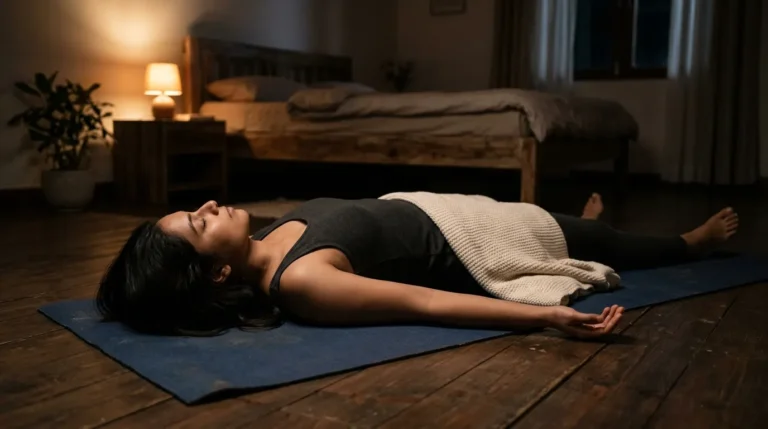
- Supine (back) sleeping with appropriate support (pillow under the knees) is most consistently recommended in clinical guidance.
- Supportive side-lying with a pillow between the knees is also strongly supported.
- Prone (stomach) sleeping is associated with increased low back pain risk and is generally not recommended for people with existing back pain.
(Saini et al., Musculoskeletal Care, 2025)
A 2019 scoping review by Cary and colleagues focused specifically on spinal posture during sleep and reached compatible conclusions. Supported side-lying was associated with fewer musculoskeletal symptoms than three-quarter side-lying or prone (Cary et al., 2019). A cross-sectional study found that chronic low back pain patients actively avoid prone sleeping (Carvalho et al., 2024), meaning even without explicit instruction, people with back pain learn to avoid the position that hurts.
Best Sleeping Position by Type of Back Pain
Different back pain locations have different position recommendations. The 2025 systematic review by Saini and colleagues consolidates the clinical literature into the matrix below.
| Pain location | Best position | Pillow setup | Avoid |
|---|---|---|---|
| Lower back | Side or supine | Pillow between knees (side) or under knees (supine) | Prone |
| Upper back / neck | Supine, thin pillow | 2-4 inch fill, head neutral | Stomach (cervical rotation) |
| Sciatica (one-sided) | Side, opposite of affected nerve | Pillow between knees critical | Prone, side on affected leg |
| Shoulder pain | Opposite side, or supine | Thicker pillow if side sleeping | Painful shoulder side |
Source: Saini et al., Musculoskeletal Care, 2025 systematic review on low back pain and sleep posture.
The Universal Principle: Keep the Spine Neutral
Importantly, across positions, the goal is the same: keep the spine in its natural alignment from the base of the skull to the tailbone. “Neutral” doesn’t mean perfectly straight, your spine has natural curves at the cervical, thoracic, and lumbar regions, and those curves should be preserved during sleep, not flattened or exaggerated.
The position-specific guidance below is mostly about what pillows go where to maintain neutral spine alignment given how each position naturally distributes weight. The principle is the same across positions; the application differs.
Best Position for Lower Back Pain
Side Sleeping with a Pillow Between the Knees
Generally, for most people with lower back pain, this is the recommended setup. Without a pillow between the knees, your top hip rolls forward and inward, twisting the lumbar spine. With a pillow, your hips stay stacked and the lumbar spine stays in its natural curve.
The pillow doesn’t need to be elaborate. A standard pillow folded in half works. A small dedicated knee pillow works. Even a folded blanket works. The principle is keeping the hips aligned, not buying a specific product.
Setup details:
- Pillow under the head sized to keep the cervical spine neutral (4-6 inches of fill height for most side sleepers)
- Pillow between the knees, ideally extending down to between the ankles (a full body pillow does this naturally and adds chest support)
- Slight bend in both hips and knees (full fetal curl is fine if comfortable; slight bend is fine too)
- Bottom arm extended forward rather than tucked under the body
Back Sleeping with a Pillow Under the Knees
Alternatively, the other strong option for lower back pain. Lying flat on your back hyperextends the lower spine slightly, which some people with lower back pain find painful. A pillow under the knees relieves that hyperextension by tilting the pelvis into a small posterior tilt.
Setup details:
- Pillow under the head thin enough to keep the cervical spine neutral (2-4 inches for most back sleepers)
- Pillow under the knees thick enough to take the strain off the lower back (a regular pillow works)
- Arms either at the sides or one resting on the chest, don’t put both arms over the head
Stomach Sleeping with a Pillow Under the Pelvis
For lifelong stomach sleepers when lower back pain starts to show up, the Mayo Clinic-recommended workaround is a thin pillow or folded towel under the pelvis. This restores some of the lumbar curve and reduces the over-extension that stomach sleeping otherwise produces. We covered this in detail in Is Stomach Sleeping Really That Bad?.
Frankly, this is a partial fix. Stomach sleeping with a pelvis pillow is better than stomach sleeping without one, but it’s still worse than side sleeping or back sleeping for most people with established lower back pain. If position change is feasible, the pelvis pillow is a transition tool, not a destination.
Best Position for Upper Back and Neck Pain
In contrast, upper back and neck pain often have different mechanics than lower back pain, and the position recommendations differ slightly.
Back Sleeping with the Right Pillow Height
Specifically, for neck pain, back sleeping with a thin-to-medium pillow that keeps the cervical spine neutral is most often recommended. The wrong pillow height, too thick or too thin, can cause or worsen neck pain regardless of position.
The neutral cervical alignment for back sleepers is one where the head doesn’t tilt forward or back. As a quick check, fit a flat hand between your chin and your chest while lying on your back, you’re probably about right. When your chin is jammed against your chest, the pillow is too thick. Conversely, a head that tilts back signals the pillow is too thin.
Side Sleeping with a Thicker Pillow
Meanwhile, side sleepers with neck pain need a thicker pillow than back sleepers, typically 4-6 inches, because there’s more vertical distance between the shoulder and the head when on your side. The line from your shoulder through your neck to your head should be roughly straight.
What to Avoid for Neck Pain
By contrast, stomach sleeping forces sustained cervical rotation, your head is turned to one side for hours, then often the other side for hours. For people with existing neck pain, this is the position with the most consistent downsides. The full discussion is in Is Stomach Sleeping Bad?.
Sciatica and Sleep Position
Notably, sciatica, pain radiating from the lower back down a leg, has its own position considerations. The general principles still apply (keep the spine neutral, use the right pillow setup), but the specifics depend on which side the sciatica is on.
- If your sciatica is on one side, sleeping on the opposite side often reduces pressure on the affected nerve. The unaffected side is the bottom side.
- The pillow between the knees matters even more for sciatica than for general lower back pain because hip alignment directly affects how the lumbar spine sits relative to the sciatic nerve.
- Back sleeping with a pillow under the knees is often well-tolerated for sciatica and is the second-best option.
- Stomach sleeping is poorly tolerated for most sciatica patients.
Importantly, persistent sciatica, especially with weakness, numbness, or loss of bladder or bowel control, is a medical situation, not a sleeping-position issue. See a doctor.
The Mattress Question
However, position and pillows can only do so much if the mattress underneath is the wrong firmness. Two basic principles:
- Too soft: the heaviest body parts (hips for side sleepers, lumbar region for back sleepers) sink in, the spine bends, you wake up with low back pain.
- Too firm: pressure points develop at the shoulder and hip for side sleepers, the lumbar region loses contact and support for back sleepers, you wake up with stiffness and localized pain.
Generally, medium-firm is the most-recommended firmness for back pain, but the right firmness depends on body weight (heavier sleepers need firmer mattresses to avoid sinking too deep) and specific pain pattern. If the mattress is over 8-10 years old and you’ve been having back pain that gets better when you sleep elsewhere, the mattress is a likely contributor.
How to Sleep with Back Pain Tonight
For readers whose back is hurting right now, here’s the realistic short-term plan.
- Set up for either side sleeping with a knee pillow OR back sleeping with a knee pillow. The two strongest options. Pick the one closer to your current position.
- Get the head pillow height right. If you don’t have an appropriate pillow, fold a regular pillow (for side sleepers needing more height) or use a thin towel-wrapped pillow (for back sleepers needing less height).
- If you’re a stomach sleeper, put a thin pillow under your pelvis. Best partial fix until you can transition out of stomach sleeping. See Is Stomach Sleeping Bad? for the longer-term plan.
- Don’t try to switch positions cold tonight. If you’re a lifelong side sleeper trying to switch to back tonight, you’ll lie awake. The behavioral change is a 6-12 week project, not an overnight one. See How to Change Your Sleeping Position.
- If pain persists despite position changes for more than 2-3 weeks, see a clinician. Position adjustment is one variable. It’s not a substitute for proper diagnosis when pain is chronic.
What Else Helps for Back Pain
Finally, sleep position is one variable. The broader picture:
- Movement. Most chronic low back pain responds to consistent gentle movement, walking, swimming, yoga, better than rest.
- Strengthening. Core strength reduces low back pain over time. This is well-established in physical therapy literature.
- Stress management. Pain has a real psychological component. Chronic stress amplifies pain perception. We covered the relaxation techniques in Progressive Muscle Relaxation and Somatic Exercises for Stress Relief.
- Sleep quality generally. Poor sleep amplifies pain. Pain disrupts sleep. The two reinforce each other. We covered the sleep-quality basics in The Complete Guide to Better Sleep.
Frequently Asked Questions
What is the best sleeping position for back pain?
A 2025 systematic review found that supine (back) sleeping with a pillow under the knees and supportive side-lying with a pillow between the knees are most consistently recommended in the clinical literature, while prone (stomach) sleeping is associated with increased low back pain risk. The right choice depends on your specific pain pattern and existing position. Side sleeping with a knee pillow is the most-recommended position for lower back pain. Back sleeping with a knee pillow is a strong alternative, particularly if you find pure side sleeping uncomfortable.
How do I sleep with lower back pain?
The most common recommendation is side sleeping with a pillow between the knees. Without a knee pillow, the top hip rolls forward and twists the lumbar spine. With one, the hips stay stacked and the lumbar curve stays neutral. The pillow doesn’t need to be elaborate, a folded standard pillow or a small dedicated knee pillow both work. Combine that with a head pillow thick enough to keep the cervical spine neutral (4-6 inches for most side sleepers) and a medium-firm mattress.
Is sleeping on your back good for back pain?
It can be, when set up correctly. Sleeping flat on your back without support hyperextends the lower spine slightly, which some people with lower back pain find painful. A pillow under the knees relieves that hyperextension by tilting the pelvis into a small posterior tilt. Combined with a thin-to-medium head pillow that keeps the cervical spine neutral, back sleeping is one of the two most-recommended positions in the clinical literature.
What is the best sleeping position for sciatica?
If your sciatica is on one side, sleeping on the opposite side often reduces pressure on the affected nerve. The pillow between the knees matters even more for sciatica than for general lower back pain because hip alignment directly affects how the lumbar spine sits relative to the sciatic nerve. Back sleeping with a pillow under the knees is often well-tolerated and is the second-best option. Stomach sleeping is poorly tolerated for most sciatica patients. Persistent sciatica with weakness or numbness needs medical evaluation.
Why does my neck hurt from sleeping?
Most often the pillow height is wrong for your sleeping position. For back sleepers, the pillow should be thin enough that your chin doesn’t jam against your chest but thick enough that your head doesn’t tilt back. For side sleepers, the pillow should be thicker, typically 4-6 inches, to keep the line from your shoulder through your neck to your head roughly straight. Stomach sleeping forces sustained cervical rotation and is often the underlying cause of chronic morning neck pain.
Should I avoid sleeping on my stomach if I have back pain?
Generally, yes. Stomach sleeping flattens the lumbar curve and forces the lower back into mild hyperextension for hours, and it forces sustained cervical rotation for the neck. A 2025 systematic review found prone sleeping is associated with increased low back pain risk. If you’re a lifelong stomach sleeper, the Mayo Clinic-recommended workaround is a thin pillow under the pelvis to restore some of the lumbar curve. That’s a partial fix; transitioning out of stomach sleeping over 6-12 weeks is the longer-term solution.
How firm should my mattress be for back pain?
Medium-firm is the most-recommended general firmness, but the right firmness depends on body weight and specific pain pattern. Heavier sleepers need firmer mattresses to avoid sinking too deep, which causes the spine to bend. Lighter sleepers can use slightly softer mattresses. If your mattress is over 8-10 years old and you’ve been having back pain that gets better when you sleep elsewhere, the mattress is a likely contributor. Position and pillow can’t fully compensate for a mattress that’s the wrong firmness.
References
- Saini, A. et al. (2025). Low back pain and sleep posture: a systematic review. Musculoskeletal Care. PubMed 40338112
- Cary, S.J. et al. (2019). Spinal posture during sleep: a scoping review. PMC6609073
- Carvalho, F.A. et al. (2024). Sleep posture and chronic low back pain: cross-sectional analysis. PMC11153877
- Desouzart, G. et al. (2016). Effects of a targeted sleep-position intervention on back pain in active older adults. Work. SAGE
- Centers for Disease Control and Prevention. (2024). Chronic Pain and High-Impact Chronic Pain in Adults: United States, 2023. NCHS Data Brief No. 518. CDC NCHS
- Centers for Disease Control and Prevention. (2021). Back, Lower Limb, and Upper Limb Pain Among U.S. Adults. NCHS Data Brief No. 415. CDC NCHS