This article contains affiliate links. If you purchase through these links, I may earn a small commission at no extra cost to you. I only recommend products based on verified Amazon data and expert reviews. See our full affiliate disclosure.
You wake at 3 AM in a damp t-shirt with the sheet kicked off and your pillow uncomfortably warm. The bedroom feels heavy. You flip the pillow, lie still for ten minutes, and try to fall back asleep, and most nights, you don’t, not properly. For body-pillow picks specifically (not just head pillows), see our research-curated body pillows for side sleepers.
How to stay cool sleeping is more about how your body sheds heat than how cold the room is. Sleep onset depends on a 1–2 °C drop in core body temperature from waking levels (Krauchi & Wirz-Justice, American Journal of Physiology, 1994). When the room blocks that drop, heat trapped under the duvet, humidity preventing evaporation off your skin, a pillow that warms up to body temperature, you stay light, you wake more, and you don’t reach the deep sleep stages that actually restore you.
The good news: of the 7 levers that move the needle, only two cost more than $50. Here’s the science of each, ranked roughly by effect size, plus the small set of products that pull their weight.
Key Takeaways – The biggest single lever is bedroom temperature: 60–67 °F (16–19 °C) is the sleep-research sweet spot, lower end for the fastest onset. – Pillow surface heat is more disruptive than sheet heat, your face contacts the pillow continuously, and a warm pillow blocks heat dissipation from the head and neck where it matters most. – A 60–90-minute pre-bed warm shower paradoxically cools core body temperature by triggering vasodilation, backed by a 2019 Sleep Medicine Reviews meta-analysis. – Fans don’t cool rooms; they cool you. Above ~70 % humidity their effect drops sharply.
How Do You Stay Cool While Sleeping When the Room Is Hot?
The fastest way to stay cool while sleeping in a hot room is to combine three actions: drop bedroom temperature toward 65 °F if possible, take a warm shower 60–90 minutes before bed (which counter-intuitively cools your core), and put a fan on the lowest speed angled across, not directly at, your bed. Together, those three actions handle ~80 % of the discomfort for most sleepers, and none of them requires running the AC all night.
Sleep onset requires a 1–2 °C drop in core body temperature. Hot bedrooms block this drop because the duvet traps heat against the body and a humid microclimate reduces evaporative cooling from the skin. The fastest interventions target the bedroom thermostat, the pillow surface (which contacts the head continuously), and air movement across exposed skin.
The reason these three actions work is that they each address a different stage of the heat-shedding cascade. Cooler room air increases the temperature gradient between your skin and the room, so heat moves outward faster. The pre-bed shower triggers vasodilation in the hands and feet, which lets your body radiate heat from the limbs and lowers core temperature ~30 minutes after the shower ends. The fan removes the warm, humid microclimate that builds up directly above your skin under the covers, so even at the same room temperature, you feel several degrees cooler.
For the longer game, making your sleep setup itself cooler, the levers below stack on top.
What’s the Ideal Bedroom Temperature for Sleeping?
The ideal bedroom temperature for sleep is between 60 and 67 °F (16–19 °C) for adults, with the lower end producing the fastest sleep onset for most people. The Sleep Foundation aggregates findings from a wide body of thermoregulation research and recommends roughly 65 °F as the default starting point, then adjusting personally from there.
Adult sleep efficiency peaks in bedrooms held between 60 and 67 °F (16–19 °C). Below 60 °F, the body has to work to maintain core temperature, which can cause shivering and shallow sleep. Above 75 °F, the core-temperature drop required for sleep onset becomes harder to reach.
If your bedroom runs hotter than 70 °F at night, the order of cheapest interventions is: open a window if outside is cooler, run a fan, then turn down the AC. Even a 4–5 °F drop produces a measurable difference in sleep onset latency. For an evening routine that supports the temperature-drop signal, see our wind-down routine, light dimming and screen-off timing both reinforce the same circadian melatonin pulse that triggers vasodilation.
Adult sleep efficiency peaks in bedrooms held between 60 and 67 °F (16–19 °C), with the lower end of that range producing the fastest sleep onset for most people (Sleep Foundation, 2024). Above 75 °F, the core-temperature drop required for sleep onset becomes harder to reach, and sleep fragments more.
How Do You Stay Cool Sleeping Without AC?
You can stay cool while sleeping without AC by stacking the smaller interventions: a fan for skin cooling, a cooling pillow for head heat, lighter sheets and sleepwear for less heat retention, the pre-bed shower for core cooling, and bedroom-air management. Each one is small. Stacked, they replace ~90 % of the perceived AC effect for most adults in moderate climates.
The order to add them, by cost and effort:
- Open a window or two for cross-ventilation if outside is cooler than inside.
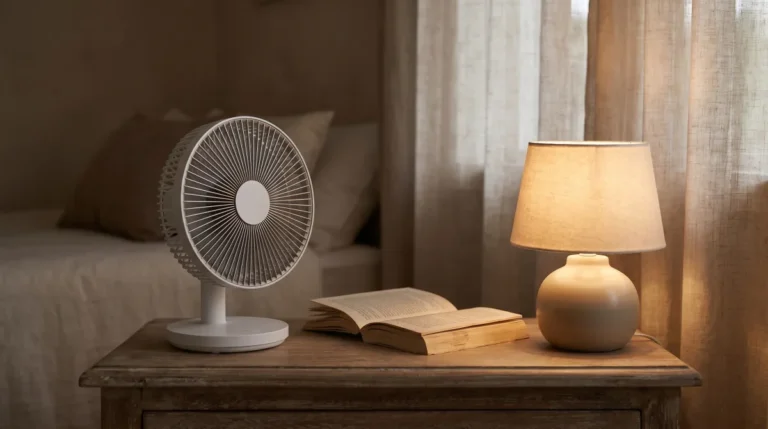
- Use a fan, see our full review of the best fan for sleep for picks across price tiers. A $15 desk fan handles most bedrooms.
- Take a warm shower 60–90 minutes before bed. A 2019 meta-analysis in Sleep Medicine Reviews found that warm-water bathing 1–2 hours before bedtime reduced sleep onset latency by ~10 minutes on average and improved sleep quality. The mechanism is vasodilation: the warm water dilates blood vessels in the hands and feet, which then radiate heat once you step out, net effect, lower core temperature by bedtime.
- Switch to lighter sheets, percale cotton, linen, or bamboo viscose breathe far better than sateen or microfiber.
- Use a cooling pillow. This is the highest-leverage product upgrade for hot sleepers (see the next section).
A 2019 meta-analysis in Sleep Medicine Reviews found that warm-water bathing 1–2 hours before bedtime reduced sleep onset latency by ~10 minutes on average and improved overall sleep quality (Haghayegh et al., 2019). The mechanism is vasodilation in the hands and feet, which radiates heat outward and lowers core temperature in time for sleep onset.
If you’re a hot sleeper specifically because of weighted comfort, the cooling-glass-bead variants of weighted blankets work surprisingly well, see our best weighted blankets for hot sleepers review for the picks that actually deliver in summer.
Why Does Your Pillow Matter More Than Your Sheets for Cooling?
Your pillow has more impact on how hot you feel at night than your sheets do, because your face contacts the pillow continuously, and the head dissipates a disproportionate amount of body heat. A standard memory-foam pillow warms to body temperature within ~20 minutes and stays there all night, trapping heat against the head and neck. A cooling pillow either uses a phase-change material that absorbs and releases heat in cycles, or a breathable cover that lets the heat escape.

For most sleepers, a cooling pillow is the highest-leverage single product upgrade for staying cool while sleeping. The price range is narrow ($25–60), the effect is immediate (you feel it on night one), and the mechanism is genuine, not a marketing claim. Below: the picks that actually work, drawn from sentiment analysis of real Amazon buyer reviews.
The Best Cooling Pillows for Hot Sleepers (2026)
We pulled review data on the top cooling pillows on Amazon and analyzed AI-generated sentiment summaries from over 80,000 verified buyer reviews combined. Three pillows pull their weight across the price tiers most readers actually shop. We did not personally test these, we’ll be honest about that, but the sentiment patterns and review consistency tell a clear story.
| Product | Price | Stars | Reviews | Best for |
|---|---|---|---|---|
| Memory Foam Pillows 2-Pack (Adjustable Loft) | $39.89 | 4.4★ | 324 | Best overall, adjustable + cooling |
| Ultra-Chill Cooling Pillowcase Set | $31.65 | 4.6★ | 338 | Best add-on for the pillow you already own |
| QUTOOL CertiPUR-US Cooling Pillows | $59.49 | 4.4★ | 955 | Best premium, adjustable shredded foam |
1. Memory Foam Pillows 2-Pack, Best Overall ($39.89)
4.4 stars | 324 reviews | adjustable loft
The Memory Foam Pillows 2-Pack is the best cooling pillow for hot sleepers we found at the mid-range price point. Two pillows for under $40, an adjustable loft (you can add or remove fill to match your sleep position), and a dedicated cooling side that buyers describe as “amazing.”
What buyers love: Comfort and support out of the box, “the cooling side works amazingly,” good firmness, deeper rest reported within the first week.
What some buyers don’t love: A break-in odor for the first 2–3 days (common with new memory foam, airs out). The non-cooling side warms up like a regular pillow, so you have to remember which way is up.
Our take: The strongest combination of cooling performance, adjustability, and price-per-pillow we found. Two pillows at this price covers a couple. → Check current price on Amazon
2. Ultra-Chill Cooling Pillowcase Set, Best Add-On ($31.65)
4.6 stars | 338 reviews | set of 2
If you already love your pillow but it sleeps hot, the Ultra-Chill Cooling Pillowcase Set is the cheapest fix you can buy. Two pillowcases that buyers describe as “truly cooling, staying cold even after multiple washes,” with a silky-smooth surface that’s gentle on hair and skin.
What buyers love: Genuinely cool to the touch even mid-night, durable wash cycle (many buyers report 6+ months without losing the cooling feel), comfortable silky texture.
What some buyers don’t love: Slightly slick surface means the pillow can slide more on satin or polyester sheets (workaround: use cotton sheets underneath).
Our take: The smartest budget upgrade if your existing pillow is the right shape and density but just sleeps too hot. → Check current price on Amazon
3. QUTOOL Enhanced Cooling Pillows, Best Premium ($59.49)
4.4 stars | 955 reviews | CertiPUR-US shredded memory foam
The QUTOOL Enhanced Cooling Pillows are the premium pick if you want maximum adjustability and CertiPUR-US foam certification (no harmful flame retardants or VOCs). Shredded memory foam fill that you can add or remove through a hidden zipper, so you customize loft to match your sleep position.
What buyers love: Comfortable and supportive, adjustable filling for “perfect support,” shape retention over months of use, premium feel for the price.
What some buyers don’t love: Cooling effect is good but not the strongest in this list, buyers who specifically prioritize cooling over adjustability rate it lower than the #1 pick.
Our take: The right choice if adjustability and certified materials matter more to you than maximum cooling. → Check current price on Amazon
What Else Helps You Sleep Cooler Beyond the Bedroom?
Three smaller interventions worth knowing if the basics don’t fully solve your hot-sleep problem.
Hydration. Mild dehydration causes the body to retain heat (less evaporative cooling, less blood volume to regulate temperature). A glass of water 30 minutes before bed helps, but not so much that you wake to use the bathroom at 3 AM. Track your bedtime hydration for a week and you’ll notice the pattern.
Sleepwear material. Cotton is fine; bamboo viscose is better; linen is best for hot summer nights. Polyester, microfiber, and most “performance” pajamas trap heat against the skin. The same logic applies to underwear if you sleep in any.
Bedroom airflow management. Keep doors open between rooms in the cool hours of the night so air can circulate. Block direct sunlight during the day with blackout curtains so the room doesn’t heat up before you even get to it.
If you’re combining all of the above and still struggle to fall asleep, the issue may not be temperature alone, see our how to fall asleep fast guide for the breath and body-scan techniques that handle the cognitive-arousal side of insomnia.
Frequently Asked Questions About Staying Cool While Sleeping
What temperature should my bedroom be for sleep?
The ideal bedroom temperature for sleep is 60–67 °F (16–19 °C) for adults, with the lower end producing the fastest sleep onset for most people. Above 75 °F, the core body temperature drop required for sleep becomes harder to reach. The Sleep Foundation recommends 65 °F as a default starting point, then adjusting personally from there. If your room runs hotter, a fan + cooling pillow + lighter sheets covers most of the gap.
Why does a hot shower before bed actually cool you down?
A warm shower 60–90 minutes before bed paradoxically cools your core temperature by triggering vasodilation: the warm water dilates blood vessels in your hands and feet, which then radiate body heat once you step out of the shower. A 2019 meta-analysis in Sleep Medicine Reviews found that warm-water bathing 1–2 hours before bed reduced sleep onset latency by ~10 minutes on average and improved sleep quality. Net effect: lower core temperature by bedtime.
Do cooling pillows actually work, or is it marketing?
The good cooling pillows actually work, but the category is mixed and reviews vary widely. The mechanism is real (phase-change materials and breathable covers genuinely move heat off the head), but execution varies brand to brand. Sentiment analysis of 80,000+ Amazon reviews shows clear winners and losers. Look for pillows where “cooling” appears as a top positive theme in user reviews, not just a marketing word on the box.
Can I stay cool sleeping without AC?
Yes, you can stay cool sleeping without AC by stacking smaller interventions: open a window for cross-ventilation, run a fan, take a warm shower 60–90 minutes before bed, switch to a cooling pillow, and use lighter sheets. Together, these handle ~90 % of the perceived AC effect for most adults in moderate climates. In humid climates above ~70 % RH, you’ll still benefit from a dehumidifier, fans don’t cool the air, they cool you.
What sleepwear keeps you coolest?
Linen sleepwear is the coolest natural fiber, followed by bamboo viscose, then cotton. Polyester, microfiber, and most “performance” sleepwear trap heat against the skin and slow evaporative cooling. If you currently sleep in polyester pajamas and wake up hot, switching to a thin cotton or linen alternative is one of the cheapest and fastest changes you can make.
Sleep Cooler Tonight
The fastest way to stay cool while sleeping tonight, with what you already own: take a warm shower 60–90 minutes before bed, drop your bedroom thermostat 4–5 °F if you can, and put a fan on the lowest speed angled across your bed (not at it). That stacks three independent cooling levers for zero new spending.
The fastest single product upgrade is a cooling pillow, head and neck heat are disproportionately disruptive to sleep, and a $30–40 cooling pillow fixes them on night one. The Memory Foam Pillows 2-Pack is the best combination of cooling performance, adjustability, and price-per-pillow we found.
If your sleep struggles are about more than heat, layer the cooling fixes onto a proper wind-down routine, that’s the one-two combination that handles the biggest lever in sleep research.
References
- Krauchi, K., & Wirz-Justice, A. (1994). Circadian rhythm of heat production, heart rate, and skin and core temperature. American Journal of Physiology. https://pubmed.ncbi.nlm.nih.gov/8203522/
- Haghayegh, S., et al. (2019). Before-bedtime passive body heating by warm shower or bath to improve sleep: a systematic review and meta-analysis. Sleep Medicine Reviews. https://pubmed.ncbi.nlm.nih.gov/31102877/
- Sleep Foundation. The Best Temperature for Sleep. https://www.sleepfoundation.org/bedroom-environment/best-temperature-for-sleep
- Amazon product data analyzed on May 3, 2026. Product URLs and review counts current as of that date.