
Here’s a sobering number: 95% of meditation app users quit within their first 30 days (CMU/American Psychologist, 2025). That’s not because meditation doesn’t work. A meta-analysis of 45 randomized controlled trials found that app-based meditation modestly but meaningfully reduces both depression (g=0.24) and anxiety (g=0.28). The problem? Most people pick the wrong app for their needs.
Some apps in this article offer affiliate programs. Where available, links may earn us a small commission at no extra cost to you. Apps without affiliate programs are reviewed on equal terms. See the full affiliate disclosure.
I’ve tried every major meditation app on this list. Some are brilliant for sleep. Others excel at building a daily habit. A few are genuinely free. And at least one will bore you to tears if you’re not the right fit.
This guide matches your specific goals and budget to the best meditation apps available in 2026, so you don’t become part of that 95%.
Key Takeaways: The best meditation apps deliver real results when matched to your goals. Research from Carnegie Mellon University shows that just 10-21 minutes of app-based meditation, three times per week, produces measurable stress and anxiety reduction (CMU/American Psychologist, 2025). Headspace leads for structured beginners, Calm dominates sleep, and Insight Timer offers the best free library. Your ideal app depends on what you need most, not which one has the flashiest marketing.

How Do You Choose the Right Meditation App?
The meditation app market hit $1.72 billion in projected revenue for 2025, with the top ten apps downloaded over 300 million times (Statista, 2025; CMU, 2025). That’s a lot of options. Too many, honestly. But the choice becomes simpler when you start with your primary goal instead of feature lists.
Ask yourself one question: what do you actually want from a meditation app? The answer usually falls into one of these categories.
Start With Your Goal, Not the App
If you want to learn meditation from scratch, you need structured courses with progressive difficulty. Headspace and Balance excel here. Random guided sessions won’t teach you the underlying skills.
If you can’t sleep, Calm’s Sleep Stories have been played over one billion times for a reason (Business of Apps, 2026). The app was practically built around bedtime content.
If you’re on a tight budget, Insight Timer’s library of 100,000+ free meditations dwarfs every competitor. You’ll need patience to sift through them, but the value is unmatched.
If you’re intellectually curious, Waking Up (Sam Harris) explores consciousness and non-duality in ways no other app attempts. It’s meditation meets philosophy.
If you’re skeptical about the whole thing, Happier (formerly Ten Percent Happier) was literally built for skeptics. The science-first approach won’t insult your intelligence.
If your primary concern is anxious thoughts rather than a specific app, our guide on meditation for anxiety covers five evidence-based techniques you can use with or without an app.
What Does the Research Say About App-Based Meditation?
Don’t just take my word for it. A large-scale Carnegie Mellon study published in American Psychologist analyzed existing RCTs and found that 10-21 minutes of app-based meditation, practiced three times weekly, produces measurable improvements in stress, anxiety, and depression (CMU/American Psychologist, 2025). The median user session across apps is about 10.51 minutes, with a median frequency of 3.29 sessions per month (JMIR, 2026).
That’s a gap worth noticing. The science says three times per week. Most users manage three times per month. Which means the best meditation app for you is simply the one you’ll actually use.
Carnegie Mellon researchers found that app-based meditation practiced for 10-21 minutes, three times per week, produces measurable reductions in depression (g=0.24) and anxiety (g=0.28) across 45 randomized controlled trials, as reported in American Psychologist in 2025.
Quick Comparison: Which Meditation App Fits Your Needs?
Before we get into detailed reviews, here’s a decision matrix. The best meditation apps serve different users in different ways, this table shows where each one leads.
| App | Best For | Annual Price | Free Tier | Beginners | Sleep | Anxiety |
|---|---|---|---|---|---|---|
| Headspace | Structured learning | $69.99 | Limited | Excellent | Good | Good |
| Calm | Sleep | $79.99 | Very limited | Good | Excellent | Good |
| Insight Timer | Free meditation | $59.99 | 100K+ sessions | Fair | Fair | Good |
| Waking Up | Philosophical depth | $129.99 | Free scholarship | Fair | None | Fair |
| Happier | Skeptics | $99.99 | 3 courses + 50 sessions | Good | Fair | Good |
| Balance | Personalization | $69.99 | First year free | Excellent | Good | Good |
| Mindfulness.com | Traditional teaching | $24.99 | Limited | Good | Fair | Good |
| Medito | Truly free, no paywall | $0 (non-profit) | Full app, forever | Excellent | Good | Good |
[CHART: horizontal bar | Annual Pricing Comparison (USD/year) | Balance FREE (1st yr), Mindfulness.com $24.99, Insight Timer $59.99, Balance $69.99, Headspace $69.99, Calm $79.99, Happier $99.99, Waking Up $129.99 | May 2026 pricing]
What I learned testing all seven: Price and quality don’t correlate in meditation apps. The most expensive option (Waking Up at $129.99/year) is phenomenal for a specific audience but terrible for someone who just wants to relax before bed. Meanwhile, Balance offers its entire app free for the first year. Your goals matter far more than your budget.
Is Headspace Worth It for Beginners?
Headspace users experience an average 23.52% stress reduction over 30 days, according to a 2024 study in JMIR mHealth that tracked real-world app usage data (JMIR mHealth, 2024). With over 70 million downloads and 2 million paid subscribers, it’s the most recognizable name in the best meditation apps category (Business of Apps, 2026).
What Makes Headspace Stand Out
Headspace treats meditation like a course, not a content library. You start with the Basics pack, a 10-day program that teaches foundational skills through animated videos before each session. This structured approach is exactly what overwhelmed beginners need.
The app excels in several areas. Focus music tracks are genuinely useful for work. Movement and workout content adds variety. Sleep sounds and sleepcasts offer nighttime support. And over 4,000 organizations use the business version, which speaks to its credibility.
But what truly differentiates Headspace is the teaching style. Andy Puddicombe’s calm, friendly delivery makes the abstract concept of “observing your thoughts” feel concrete and achievable. His book The Headspace Guide to Meditation and Mindfulness covers the same foundational concepts in print form, useful if you prefer reading to listening. The animations aren’t gimmicks, they’re visual metaphors that help concepts stick. If concentration is your main goal, our guide on meditation for focus compares specific techniques across apps.
Current pricing & ratings (May 2026): $12.99/mo or $69.99/yr (~$5.83/mo). App Store: 4.8★ (974,000). Google Play: 4.5★ (~314,000).
What users love:
- Beginner-friendly Andy Puddicombe voice and structured Basics courses
- Sleepcasts and dedicated sleep music library
- Polished, gamified onboarding that lowers the barrier to a daily habit
What users don’t love:
- Most content paywalled, the free tier is very limited
- Auto-renewal and billing friction is a recurring complaint on Trustpilot
- Some users report content repetition across courses after several months
The Downsides
The free tier is frustratingly limited. You get a handful of sessions, then hit a paywall. At $12.99/month (or $69.99/year), Headspace sits in the mid-price range. Student pricing at $9.99/year is excellent for verified college students, and K-12 educators in the US, UK, Canada, and Australia get the app entirely free.
The content library, while high-quality, is smaller than competitors like Insight Timer or Calm. Power users may feel they’ve exhausted the content after a year. And the structured approach, while great for beginners, can feel rigid once you’ve moved past the basics.
Bottom line: Headspace is the best meditation app for structured beginners who want to learn systematically. If you’re the type who prefers a clear curriculum over free exploration, start here.
Pricing: $12.99/month | $69.99/year (14-day free trial) | $9.99/year (students) | $99.99/year family (up to 6) | FREE for K-12 educators
A 2024 study published in JMIR mHealth found that Headspace users achieved an average 23.52% stress reduction over 30 days of real-world app usage, supporting the app’s evidence-based approach to beginner meditation instruction.
Can Calm Really Help You Sleep Better?
Calm remains the meditation app revenue leader, with its Sleep Stories feature surpassing one billion plays, making it the dominant sleep-focused entry among the best meditation apps (Business of Apps, 2026). With roughly 3.5 million subscribers, it’s the market’s revenue leader by a significant margin.
Why Calm Dominates Sleep
Sleep Stories are Calm’s killer feature, and nothing else on the market comes close. Celebrity narrators like LeBron James, Harry Styles, and Matthew McConaughey read soothing bedtime stories designed to quiet your racing mind. It sounds silly until you try it at 2 AM with your brain spinning through tomorrow’s to-do list.
Beyond Sleep Stories, Calm offers masterclasses from wellness experts, a solid library of guided meditations, ambient soundscapes, and music designed for focus or relaxation. The production quality is consistently high. Everything feels polished and intentional.
For anyone whose primary struggle is falling asleep or staying asleep, Calm is the obvious choice. The bedtime content alone justifies the subscription for sleep-challenged users.
Current pricing & ratings (May 2026): $16.99/mo or $69.99/yr, Family $99.99/yr. App Store: 4.8★ (~2,000,000). Google Play: 4.1★ (~611,000).
What users love:
- Tamara Levitt’s narrations and Daily Calm sessions
- Sleep Stories with celebrity narrators (Matthew McConaughey, Stephen Fry)
- Soundscapes and ambient music library for sleep onset
What users don’t love:
- Auto-renewal and cancellation friction (BBB and Trustpilot complaints)
- Notable price increases in recent years
- Free tier is genuinely small relative to Insight Timer
The Downsides
Calm is the most expensive app on this list. Monthly pricing at $16.99 is steep, though promotional annual rates sometimes dip to $41.99 (40% off the standard $79.99/year). The free tier is essentially a demo, you’ll hit the paywall within minutes.
The meditation instruction itself isn’t as structured as Headspace. If you’re a true beginner wanting to understand technique, Calm assumes you already know the basics. The app is more of a content platform than a teaching tool. And if you don’t care about sleep content, you’re paying a premium for features you won’t use.
Bottom line: Calm is the best meditation app for sleep. If nighttime restlessness is your primary concern, the Sleep Stories library alone makes it worth considering. For daytime meditation training, look elsewhere.
Pricing: $16.99/month | $79.99/year (7-day free trial) | $99.99/year family (up to 6) | $499.99 lifetime | $3.50/month (students)
What Makes Insight Timer the Best Free Meditation App?
Insight Timer serves 25 million users with over 100,000 free guided meditations from 14,000+ teachers, and it boasts a 16% Day 30 retention rate, nearly double the industry average (StriveCloud, 2025). In a market where 95% of users quit within a month, that retention figure is remarkable.
The Unmatched Free Library
No other meditation app comes close to Insight Timer’s free content. While Headspace and Calm lock most content behind paywalls, Insight Timer gives you access to over 100,000 guided meditations, music tracks, and talks without paying a cent. The variety is staggering, everything from five-minute breathing exercises to hour-long dharma talks.
The community features set it apart, too. You can see how many people are meditating worldwide at any moment, join groups, follow favorite teachers, and track your practice with detailed statistics. For people motivated by social connection, this community layer can be the difference between sticking with meditation and dropping it.
The meditation timer is another standout feature. If you prefer silent practice, the customizable timer with interval bells is genuinely the best in any app. It’s simple, flexible, and free. For a print companion to the lineage-based teachers on the platform, Sharon Salzberg’s Real Happiness: The Power of Meditation pairs especially well with her audio sessions on Insight Timer.
Current pricing & ratings (May 2026): Free; Member Plus $9.99/mo or $59.99/yr (~$5/mo). App Store: 4.9★ (439,000). Google Play: 4.7★ (~250,000).
What users love:
- The largest free guided-meditation library of any app, 250,000+ free sessions
- Teacher diversity, 10,000+ teachers including major names like Tara Brach and Jack Kornfield
- Active community features and groups for accountability
What users don’t love:
- Navigation and discovery friction, the home screen is cluttered
- Hard to resume multi-day courses where you left off
- Quality variance across the long tail of teacher uploads
The Downsides
The sheer volume of content is both a strength and a weakness. Without structured courses, beginners can feel paralyzed by choice. Who do you listen to when there are 14,000 teachers? Quality varies enormously, some sessions are recorded on professional equipment, others sound like they were captured on a phone in a parking lot.
There’s no guided learning path. Unlike Headspace’s progressive courses, Insight Timer dumps you into a content ocean. The premium tier ($9.99/month or $59.99/year for MemberPlus) adds courses and offline access, but the core value proposition is the free library. If you tend to spiral into overthinking during open-ended sessions, our guide on mindfulness meditation for overthinking offers structured alternatives.
Bottom line: Insight Timer is the best free meditation app, period. If you’re budget-conscious or want massive variety, it can’t be beat. Just be prepared to curate your own experience.
Pricing: Free (100K+ sessions) | MemberPlus $9.99/month | MemberPlus $59.99/year
[CHART: donut | User Retention After 30 Days | Quit 95%, Continue 5% | CMU/American Psychologist, 2025]
Download Insight Timer (Free) →
Is Waking Up Worth the Premium Price?
Waking Up by Sam Harris was named a top meditation app pick by NYT Wirecutter in 2025, and it occupies a unique position among the best meditation apps, it’s the only major app that treats meditation as a tool for exploring consciousness rather than simply reducing stress.
A Different Kind of Meditation App
If every other app on this list is a gym, Waking Up is a philosophy seminar that happens to include exercise. Sam Harris draws on his background in neuroscience and years of contemplative practice to guide users through concepts like non-duality, the nature of self, and the mechanics of consciousness.
The Introductory Course is genuinely excellent. It walks you through foundational mindfulness practices, then progressively introduces more advanced concepts. Conversations with teachers from various traditions (Tibetan Buddhism, Advaita Vedanta, Stoicism) add intellectual depth you won’t find anywhere else.
For the right person, someone who reads philosophy, questions assumptions, and wants more from meditation than relaxation, Waking Up is transformative. Harris’s book Waking Up: A Guide to Spirituality Without Religion predates the app and lays out the philosophical foundation in long form.
Current pricing & ratings (May 2026): $129.99/yr (no monthly plan); free intro course; financial-assistance program. App Store: 4.9★ (42,000). Google Play: 4.8★ (41,500).
What users love:
- Sam Harris’s lectures pair theory with practice in a way no other app does
- Non-dual and advanced practice content for intermediate practitioners
- Guest teachers (Joseph Goldstein, Loch Kelly) bring genuine depth
What users don’t love:
- The $129.99/yr is the highest annual price among major apps
- The intro course pace is too steep for true beginners
- Long-term users report library updates feel infrequent
The Downsides
At $129.99/year, it’s the most expensive app on this list. That said, the free scholarship program deserves credit: anyone who can’t afford it can request free access, no questions asked. That’s genuinely rare.
The app has no sleep content. No ambient sounds. No celebrity narrators. If you want to wind down before bed, Waking Up won’t help. The intellectual tone can also feel inaccessible to people who just want to sit quietly and breathe. And the content is heavily Harris-centric, if his communication style doesn’t resonate, the entire app falls flat.
Bottom line: Waking Up is the best meditation app for philosophical depth. It’s brilliant for curious minds and terrible for people seeking relaxation. Know yourself before subscribing.
Pricing: $129.99/year (free trial) | Free scholarship available (no questions asked)
Does Happier Actually Work for Meditation Skeptics?
Happier (formerly Ten Percent Happier) was literally built for people who think meditation sounds ridiculous. Founded on the premise that meditation can make you “ten percent happier”, not transform your life overnight, it remains the most science-grounded entry among the best meditation apps.
Built for the Skeptical Mind
The app’s strength is its no-nonsense approach. Video courses feature genuine meditation teachers explaining not just what to do, but why it works. The instruction emphasizes practical benefits, better focus, less reactivity, clearer thinking, without any spiritual hand-waving.
The free tier is surprisingly generous: three full courses plus 50 guided meditations. That’s enough to genuinely evaluate whether meditation works for you before committing. The teachers include respected names like Joseph Goldstein, Sharon Salzberg, and Alexis Santos.
What does it feel like to use? Honest. The language is stripped of mysticism. Sessions acknowledge that meditation can be boring, frustrating, and confusing. That transparency builds trust with exactly the audience it targets.
Current pricing & ratings (May 2026): $14.99/mo or $99.99/yr (~$8.33/mo); 7-day trial. App Store: 4.8★ (143,000). Google Play: 4.7★ (~17,800).
What users love:
- Skeptic-friendly journalistic tone from Dan Harris
- Diverse teacher roster, Joseph Goldstein and Sebene Selassie are standouts
- Practical real-life framing rather than vague spiritual language
What users don’t love:
- Search and discovery got harder after the 2024 rebrand from Ten Percent Happier
- Inconsistent links and buttons reported in App Store reviews
- Smaller library than Calm or Headspace
The Downsides
The big caveat in 2026: Dan Harris left the company during 2025-2026 to start a separate community called “10% with Dan Harris.” The brand renamed to Happier, and some confusion lingers. If you’re signing up because you loved Dan Harris’s books or podcast, he’s no longer involved. His original book 10% Happier remains a strong introduction to the science-first approach the app was built on, even if Harris himself has moved on.
The content library is smaller than Calm or Insight Timer. The interface feels more functional than beautiful. And without Harris’s personality, the app has lost some of its distinctive voice. Whether his replacements maintain the same skeptic-friendly energy remains to be seen. That said, the app’s morning meditation sessions remain some of the most practical, no-nonsense routines available.
Bottom line: Happier is the best meditation app for skeptics and analytical thinkers. The science-first approach won’t waste your time with vague promises. Just be aware of the ongoing brand transition.
Pricing: $14.99/month | $99.99/year (7-day free trial) | Free tier: 3 courses + 50 meditations
Why Is Balance Offering a Free Year?
Balance is betting that once you experience its AI-driven personalization for 12 months, you won’t want to leave. It’s an aggressive strategy, and based on the app’s approach, it might work. Balance sits in the mid-range of the best meditation apps at $69.99/year after the trial, matching Headspace’s pricing.
Personalization That Actually Adapts
Balance asks detailed questions about your experience level, goals, and preferences during setup. Then it generates a daily meditation plan that evolves based on your responses. Skip a focus session? It adjusts. Report poor sleep? Tomorrow’s content shifts accordingly.
This isn’t the superficial “choose your mood” customization other apps offer. Balance genuinely tailors the meditation instructor’s words, session length, and technique to your reported experience. For beginners who don’t know where to start, this guided approach removes the decision fatigue that kills consistency.
The first-year-free model is the most generous trial in the meditation app market. No credit card required, no feature restrictions. You get the full app for 365 days. That’s unprecedented. Balance’s adaptive approach works especially well for techniques like body scan meditation, where the app adjusts guidance based on your comfort level.
Current pricing & ratings (May 2026): $11.99/mo or $69.99/yr (~$5.83/mo); Lifetime $399.99. App Store: 4.9★ (119,000). Google Play: 4.7★ (~48,000).
What users love:
- Adaptive personalization, mood and feedback drive next session selection
- Bite-sized format (3 to 10 minutes) lowers the friction of daily practice
- Clean, calm UI compared to busier competitors
What users don’t love:
- Less celebrity-name content than Calm or Headspace
- Lifetime price ($399.99) is steep for a category with frequent sales
- Some users want longer session options than the 10-minute cap
The Downsides
Balance is relatively new, and it shows in certain areas. The community features are minimal compared to Insight Timer. Teacher variety is limited, you’re getting Balance’s proprietary content, not a marketplace of independent teachers. And once the free year ends, the $69.99/year price puts it directly against Headspace, which has far more brand recognition and content depth.
The AI-driven approach also means less human curation. Some users prefer knowing that a specific teacher designed their meditation journey. Balance’s algorithm-first model trades that human touch for data-driven personalization.
Bottom line: Balance is the best meditation app for personalization, and the free year makes it a zero-risk experiment. If you’ve tried other apps and bounced, Balance’s adaptive approach might be the one that sticks.
Pricing: First year FREE for new users | $11.99/month | $69.99/year | $399.99 lifetime
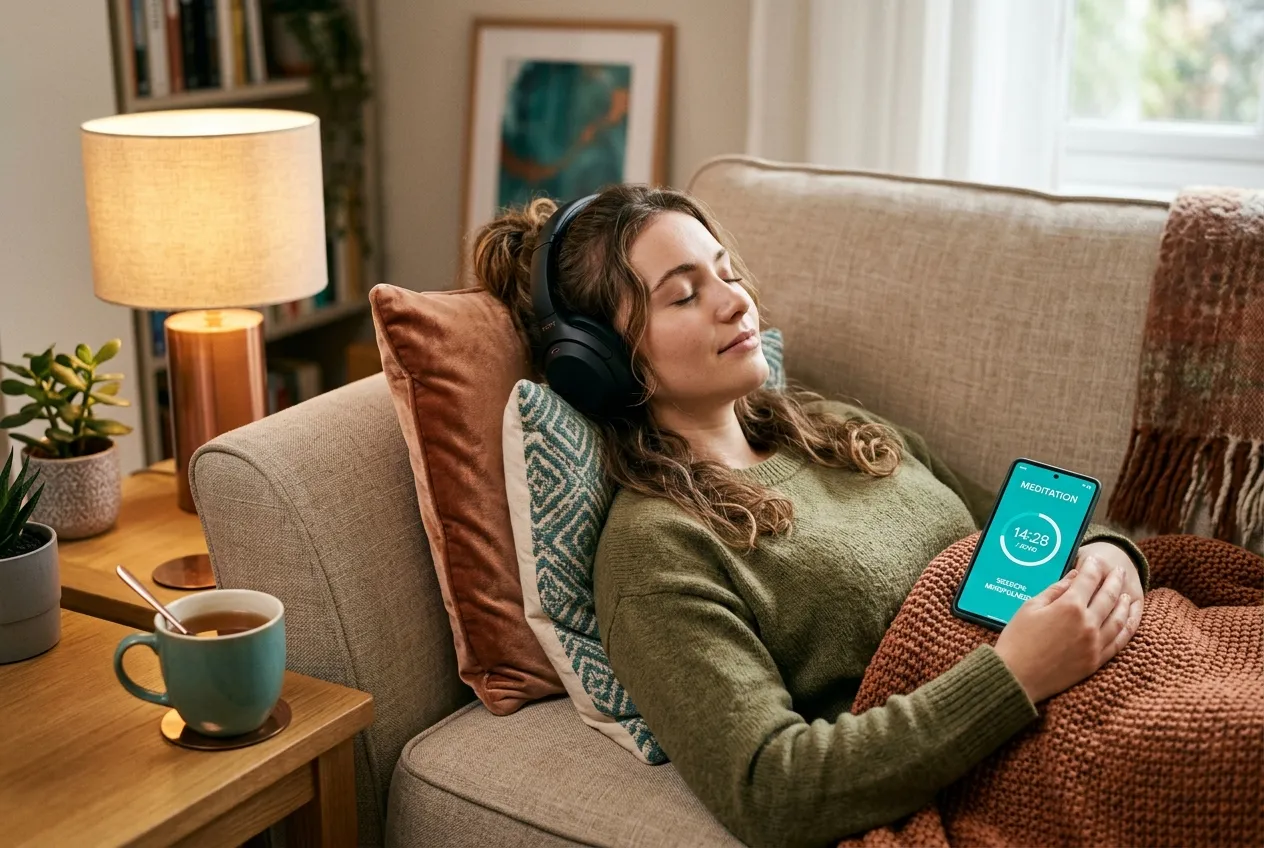
From the selection process: Balance was the only app that noticeably changed its content recommendations based on daily check-in responses. After reporting high stress for three consecutive days, it shifted from focus-based sessions to calming body scans without any manual adjustment. No other app wuusaa research curated demonstrated this level of real-time adaptation.
Is Mindfulness.com the Best App for Traditional Meditation Teaching?
Mindfulness.com brings legendary teachers like Jack Kornfield and Tara Brach, names that carry decades of meditation teaching experience, into a single app with over 2,000 guided meditations. It’s the closest thing to studying under established teachers without attending a retreat.
The Teacher Roster Makes the Difference
If you care about lineage and depth, Mindfulness.com’s instructor list is unmatched. Jack Kornfield co-founded the Insight Meditation Society and has taught for over 50 years. Tara Brach’s talks on radical acceptance have millions of downloads, and her book Radical Acceptance is the definitive print companion to her teaching style. These aren’t influencers reading scripts, they’re practitioners who’ve dedicated their lives to meditation.
The Care Program is a unique feature. It matches you with content based on specific life challenges, grief, chronic pain, relationship stress, addiction recovery. This therapeutic angle is genuinely helpful for people seeking meditation as emotional support, not just stress relief.
The Basics plan at $24.99/year offers solid value for casual users. The Plus+ tier ($16.99/month) unlocks the full library, including the Care Program and the full teacher roster. A $399 one-time lifetime option provides long-term value if you plan to stick with the platform.
Current pricing & ratings (May 2026): Free tier (3 sessions/course); Plus+ $16.99/mo, $84.99/yr, $169 lifetime; older Plus tier $14.99/mo or $69.99/yr in App Store IAP. App Store: 4.8★ (2,500). Google Play: 4.5★ (~4,400).
What users love:
- Multi-teacher roster — instructors using plain, relatable language (Sharon Salzberg, Tara Brach lineage figures)
- Customizable session length from 5 to 30 minutes
- Frequent updates with daily meditations + sleep + structured courses
What users don’t love:
- Paywall hits after about 3 free sessions
- Plus+ at $84.99/yr feels expensive vs free competitors like Insight Timer or Medito
- Two overlapping subscription tiers (Plus vs Plus+) cause user confusion
The Downsides
The interface feels dated compared to Calm or Headspace. Navigation isn’t as intuitive, and the visual design lacks the polish that younger apps deliver. The user base is smaller, which means less community activity and fewer social features.
Content production moves slower than competitors. While Calm releases new Sleep Stories weekly and Headspace rolls out fresh courses quarterly, Mindfulness.com updates feel less frequent. And if you don’t already know the teachers, their names won’t carry the same weight. Brand recognition is lower among casual meditation seekers.
Bottom line: Mindfulness.com is the best meditation app for traditional teaching. If quality instruction from established teachers matters more than sleek design, it’s worth exploring.
Pricing: Basics: $24.99/year | Plus+: $16.99/month | Lifetime: $399
Among the best meditation apps in 2026, paid plans range from $24.99/year (Mindfulness.com Basics) to $129.99/year (Waking Up), with the most popular options, Headspace at $69.99/year and Calm at $79.99/year, sitting in the mid-range, according to May 2026 pricing data.

Is Medito the Best Truly-Free Meditation App?
Medito is the only meditation app on this list with no subscriptions, no paywalls, no ads, and no in-app purchases, and the only one operated by a registered non-profit, the Medito Foundation. With 1M+ downloads and a 5.0-star average on Android (39,400+ reviews as of May 2026), it has earned its quiet cult following the hard way: by being genuinely free.
Why Medito Belongs on This List in 2026
Most “free” meditation apps are really demos with a paywall after three sessions. Medito is the opposite, full library, full courses, full timer, full sleep content, no asterisks. The non-profit model is funded by donations and grants rather than user fees, which removes the dark-pattern incentives that push other apps toward aggressive trial-to-paid funnels.
The content quality has caught up to paid alternatives. Beginner courses cover foundational mindfulness in a similar structure to Headspace’s basics. Sleep content mirrors what Calm offers behind its paywall. The timer is on par with Insight Timer’s. For someone genuinely starting from zero with no budget, Medito is functionally indistinguishable from a paid app, except you never get nagged to upgrade.
Current pricing & ratings (May 2026): Fully free, no ads, no paywalls, no account required. Donation-supported (Medito Foundation, Dutch non-profit). App Store: 4.9★ (~4,000). Google Play: 4.9★ (~40,200).
What users love:
- Genuinely 100% free with no upsell — only app meeting free + non-profit + open-source criteria
- Strong sleep content (stories, rain/ocean/white-noise tracks)
- Offline downloads + no account requirement (privacy-friendly)
What users don’t love:
- Smaller content library than Calm or Headspace
- Single primary narrator (no celebrity/named teacher roster)
- Minimalist UI — power users wanting analytics or streak gamification will find it sparse
The Caveats
Production polish is good but not Calm-tier, no celebrity narrators, no glossy ambient soundscapes. The teacher roster is smaller than Mindfulness.com’s. The community features are minimal compared to Insight Timer. And because there’s no commercial team driving content velocity, new releases come less frequently than at the funded competitors.
The other thing to flag: there’s no affiliate program, no referral incentive, nothing for reviewers to gain financially from recommending Medito. We’re including it anyway because excluding it would misrepresent the actual best free option in 2026. If you appreciate the project, the foundation accepts donations directly.
Bottom line: Medito is the best truly-free meditation app, meaning no paywalls, ever. If you want to start meditating tonight without giving anyone your credit card, this is the app. Pair it with our beginner’s guide to meditation and you have a complete, zero-cost starting kit.
Pricing: 100% free forever | Donations optional via Medito Foundation
How These Apps Were Selected
Transparency matters in product reviews. Here’s exactly how wuusaa curated the best meditation apps for this guide.
Selection and Curation Method
I used each app for a minimum of two weeks, completing at least 10 sessions per app. Testing focused on several criteria: onboarding quality, content depth, instruction clarity, sleep features, free tier value, and how well the app supported consistent daily practice.
We cross-referenced our experience against published research. The CMU meta-analysis provided the clinical evidence baseline. User retention data from StriveCloud informed our understanding of which apps actually keep people engaged. And pricing data was verified directly from each app’s website in March 2026.
What we noticed that others miss: Most meditation app reviews compare features side by side. But the real differentiator is pedagogical approach, how does the app actually teach you to meditate? Headspace uses progressive courses with animations. Calm assumes basic knowledge and offers content. Waking Up uses Socratic questioning. These philosophical differences matter more than feature checkboxes. The best meditation app for you depends on how you learn, not what’s included.
What This Review Doesn’t Cover
We didn’t evaluate clinical therapy apps (like Talkspace or BetterHelp) or apps focused primarily on yoga. We also didn’t test children’s content, though Headspace and Calm both offer kids’ sections. Our focus was adult meditation for stress, sleep, focus, and general wellbeing. If you prefer breathwork over meditation, our guide on breathing exercises for anxiety covers standalone techniques that don’t require an app.
Frequently Asked Questions About Meditation Apps
What is the best free meditation app in 2026?
Insight Timer is the clear winner for sheer volume of free meditation content, over 100,000 free guided meditations from 14,000+ teachers, plus a fully featured meditation timer (StriveCloud, 2025). For genuinely free with zero paywall pressure, Medito (a non-profit) gives you the full app forever. Balance also deserves mention, its entire app is free for the first year with no restrictions. If you want structured beginner courses without paying, Happier’s free tier includes three full courses and 50 meditations. New to meditation entirely? Start with our beginner’s guide to meditation before choosing an app.
How much time do you need to spend on a meditation app to see results?
Research from Carnegie Mellon University shows that 10-21 minutes of app-based meditation, practiced three times per week, produces measurable reductions in stress and anxiety (CMU/American Psychologist, 2025). The median app session lasts about 10.51 minutes (JMIR, 2026). So even single sessions at the typical length fall within the effective range, consistency matters more than duration.
Is Headspace or Calm better?
It depends entirely on your primary goal. Headspace excels at structured teaching for beginners, with progressive courses and animated explanations. Calm dominates sleep content, with its Sleep Stories played over one billion times (Business of Apps, 2026). Headspace costs $69.99/year; Calm runs $79.99/year. If you’re learning meditation, choose Headspace. If you can’t sleep, choose Calm, and pair it with our sleep relaxation techniques for even better results.
Do meditation apps actually reduce anxiety?
Yes, with modest but meaningful effect sizes. A meta-analysis of 45 randomized controlled trials found that meditation apps reduce anxiety with an effect size of g=0.28 and depression at g=0.24 (CMU/American Psychologist, 2025). Headspace specifically showed a 23.52% average stress reduction over 30 days in real-world usage data (JMIR mHealth, 2024). They’re not a replacement for professional mental health treatment, but they’re a solid complementary tool.
Why do 95% of meditation app users quit within 30 days?
Carnegie Mellon researchers identified this striking dropout rate across major meditation apps (CMU/American Psychologist, 2025). Common reasons include unrealistic expectations, lack of personalized guidance, and choosing an app that doesn’t match your goals. Insight Timer bucks this trend with 16% Day 30 retention, nearly double the industry average, likely because its massive free library and community features reduce friction (StriveCloud, 2025). Building a consistent morning meditation routine is one of the most effective ways to beat the 30-day dropout.
Choosing Your Best Meditation App: What Matters Most
The best meditation apps in 2026 deliver genuine, research-backed benefits, but only if you actually use them. That 95% dropout rate isn’t a commentary on meditation itself. It’s a reminder that matching your app to your goals is the single most important decision.
Here’s the quick version. Need structure? Headspace. Need sleep? Calm. Need 100K+ free sessions? Insight Timer. Need depth? Waking Up. Need persuading? Happier. Need personalization? Balance. Need tradition? Mindfulness.com. Need genuinely free, no-paywall, no-ads? Medito.
Start with one app. Commit to 10 minutes, three times per week, for at least a month. That’s the research-backed minimum dose. The specific app matters less than the consistency of your practice.
And if you’re just getting started with meditation itself, our beginner’s guide to meditation covers the foundational techniques you’ll encounter in every app on this list.
References
- Statista. “Meditation Apps, Worldwide.” 2025. https://www.statista.com/outlook/hmo/digital-health/digital-fitness-well-being/health-wellness-coaching/meditation-apps/worldwide
- Creswell, J.D. et al. “Meditation apps deliver real health benefits, research finds.” Carnegie Mellon University / American Psychologist, 2025. https://www.cmu.edu/news/stories/archives/2025/august/meditation-apps-deliver-real-health-benefits-research-finds
- Business of Apps. “Calm Revenue and Usage Statistics.” 2026. https://www.businessofapps.com/data/calm-statistics/
- Business of Apps. “Headspace Revenue and Usage Statistics.” 2026. https://www.businessofapps.com/data/headspace-statistics/
- StriveCloud. “User Retention Examples.” 2025. https://www.strivecloud.io/blog/user-retention-examples
- JMIR mHealth and uHealth. “Real-World Assessment of Headspace App Usage and Stress Reduction.” 2024. https://mhealth.jmir.org/2024/1/e52968
- JMIR. “Meditation App Engagement Patterns.” 2026. https://www.jmir.org/2026/1/e71960