Four weeks of daily slow-paced breathing increased total HRV power by 55% and lowered perceived stress by 24% in a 2022 randomized controlled trial (Ghati et al., 2022). That number stopped me when I first read it. I’d been using resonance breathing for months, but I hadn’t expected a number that large from something that takes 20 minutes a day and costs nothing. This guide focuses on the physical side of vagus nerve stimulation: cold exposure, humming, gargling, diving reflex, and breath-based techniques that produce measurable changes in HRV. If you want the broader picture of what vagal tone means and how it connects to long-term health, our vagal tone guide covers that ground.
Sleep position also interacts with vagal tone through breathing patterns. See our research roundup on the best sleeping position for more on that connection.
Key Takeaways
- Slow-paced breathing at 6 breaths per minute increases the HRV marker SDNN (SMD = 0.77) and reduces systolic blood pressure (SMD = -0.45) across 31 studies (Shao et al., 2024).
- Cold water face immersion triggers the mammalian dive reflex and can slow heart rate by up to 25% within seconds through rapid vagal cardiac activation (Godek & Freeman, 2021).
- Humming and chanting create sustained throat vibrations that directly stimulate the laryngeal and pharyngeal branches of the vagus nerve.
- A 2023 Stanford study found cyclic sighing (5 minutes per day) improved mood more effectively than mindfulness meditation over four weeks (Huberman et al., 2023).
- Consistent daily practice of two or three physical exercises for at least four weeks is the threshold at which research-documented HRV improvements appear.
What Is the Vagus Nerve and Why Does Stimulation Matter?
The vagus nerve carries roughly 80% of its signals from the body to the brain rather than the other way around, making it the primary afferent pathway of the parasympathetic nervous system (Breit et al., 2018). It runs from the brainstem down through the neck, into the chest, and all the way to the gut. That reach is why stimulating it in one place produces effects across multiple organ systems.
Vagal tone describes how active and responsive the nerve is at baseline. Researchers measure it indirectly through heart rate variability (HRV), specifically the respiratory sinus arrhythmia (RSA) component. Higher vagal tone means your body shifts from stressed to calm more quickly and recovers more fully after a difficult event.
What Happens When Vagal Tone Is Low?
A 2018 review in Frontiers in Psychiatry described low vagal tone as a common thread across chronic inflammation, anxiety, depression, poor digestion, and cardiovascular disease (Breit et al., 2018). That’s a wide-ranging list. The important point is that vagal tone isn’t fixed at birth. It responds to training, which is exactly what the exercises in this guide do.
How Do Physical Vagus Nerve Exercises Actually Work?
A 2022 review in Neuroscience & Biobehavioral Reviews confirmed that slow-paced breathing at around 0.1 Hz (6 breaths per minute) maximizes heart-brain coherence by synchronizing respiratory sinus arrhythmia with the baroreflex loop (Laborde et al., 2022). Each physical exercise in this guide targets the vagus nerve through a distinct physiological pathway.
- Breathing exercises activate pulmonary stretch receptors and baroreceptors, which send signals up the vagus nerve to the nucleus tractus solitarius in the brainstem.
- Cold exposure triggers the mammalian dive reflex through trigeminal-vagal cross-activation, rapidly shifting cardiac activity toward parasympathetic dominance.
- Humming, chanting, and gargling produce sustained vibrations that directly stimulate the laryngeal and pharyngeal branches of the vagus nerve in the throat.
- Massage and manual techniques apply pressure to areas where vagal fibers or associated baroreceptors are accessible near the body surface.
The outcome across all these pathways is similar: heart rate slows, HRV increases, inflammation markers drop, and subjective stress decreases. The practical question is which combination you’ll actually stick with.
The 8 Best Physical Vagus Nerve Exercises
These eight exercises are arranged from easiest to most involved. Each has clear step-by-step instructions, the underlying mechanism, and practical notes from my own practice.
Quick-Reference Table
| Exercise | Time | Difficulty | Primary Mechanism |
|---|---|---|---|
| 1. Slow diaphragmatic breathing | 5-20 min | Easy | Pulmonary stretch receptors + baroreflex |
| 2. Cold water face immersion | 30-60 sec | Easy | Mammalian dive reflex |
| 3. Humming or chanting | 5-10 min | Easy | Laryngeal nerve vibration |
| 4. Vigorous gargling | 1-3 min | Easy | Pharyngeal branch stimulation |
| 5. Loud sustained singing | 10-20 min | Easy-moderate | Combined respiratory + laryngeal |
| 6. Ear massage (tragus) | 2-5 min | Easy | Auricular branch of vagus |
| 7. Carotid sinus massage | 2-5 min | Moderate | Carotid sinus baroreceptors |
| 8. Restorative yoga postures | 15-60 min | Moderate | Multi-pathway: baroreflex + breathing + posture |
1. Slow Diaphragmatic Breathing (Resonance Breathing)
Slow diaphragmatic breathing is the most studied vagus nerve exercise. A 2024 meta-analysis of 31 studies (n = 1,133) found that breathing at approximately 6 breaths per minute increases SDNN with a standardized mean difference of 0.77 and reduces systolic blood pressure (SMD = -0.45) (Shao et al., 2024). That’s a large effect for a free, equipment-free practice.
Slow, deep breaths activate pulmonary stretch receptors in the lungs. Those receptors send signals through vagal afferents to the nucleus tractus solitarius in the brainstem, which triggers parasympathetic outflow. Heart rate decreases and HRV increases within minutes of starting the practice.
Step-by-step:
- Sit with your spine upright, or lie down.
- Place one hand on your belly and one on your chest.
- Inhale through your nose for 5 seconds. Your belly should expand; the chest hand should stay mostly still.
- Exhale slowly through your nose or pursed lips for 5 seconds.
- Keep the rhythm continuous, like a wave. No pause between inhale and exhale.
- Continue at 6 breaths per minute for 5 to 20 minutes.
If 5-in and 5-out feels forced, try 4 seconds in and 6 seconds out. A longer exhale increases parasympathetic activation. Free breathing pacer apps work well for keeping the timing consistent. For a more detailed protocol, see our guide on resonance breathing and HRV.
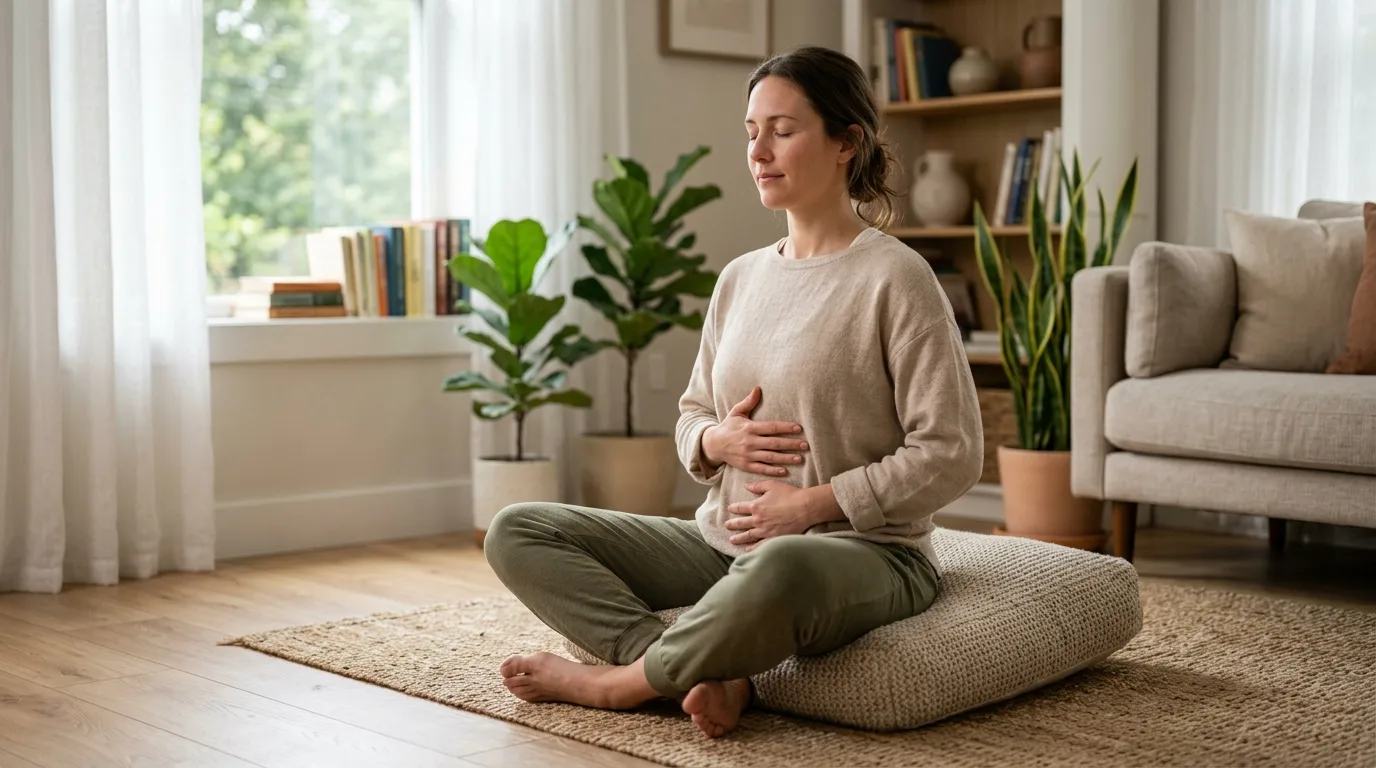
A 2024 meta-analysis of 31 studies with 1,133 participants found that slow-paced breathing at approximately 6 breaths per minute increases the HRV marker SDNN (SMD = 0.77) and reduces systolic blood pressure (SMD = -0.45). It is the most evidence-backed physical vagus nerve exercise currently available (Shao et al., 2024).
2. Cold Water Face Immersion (The Dive Reflex)
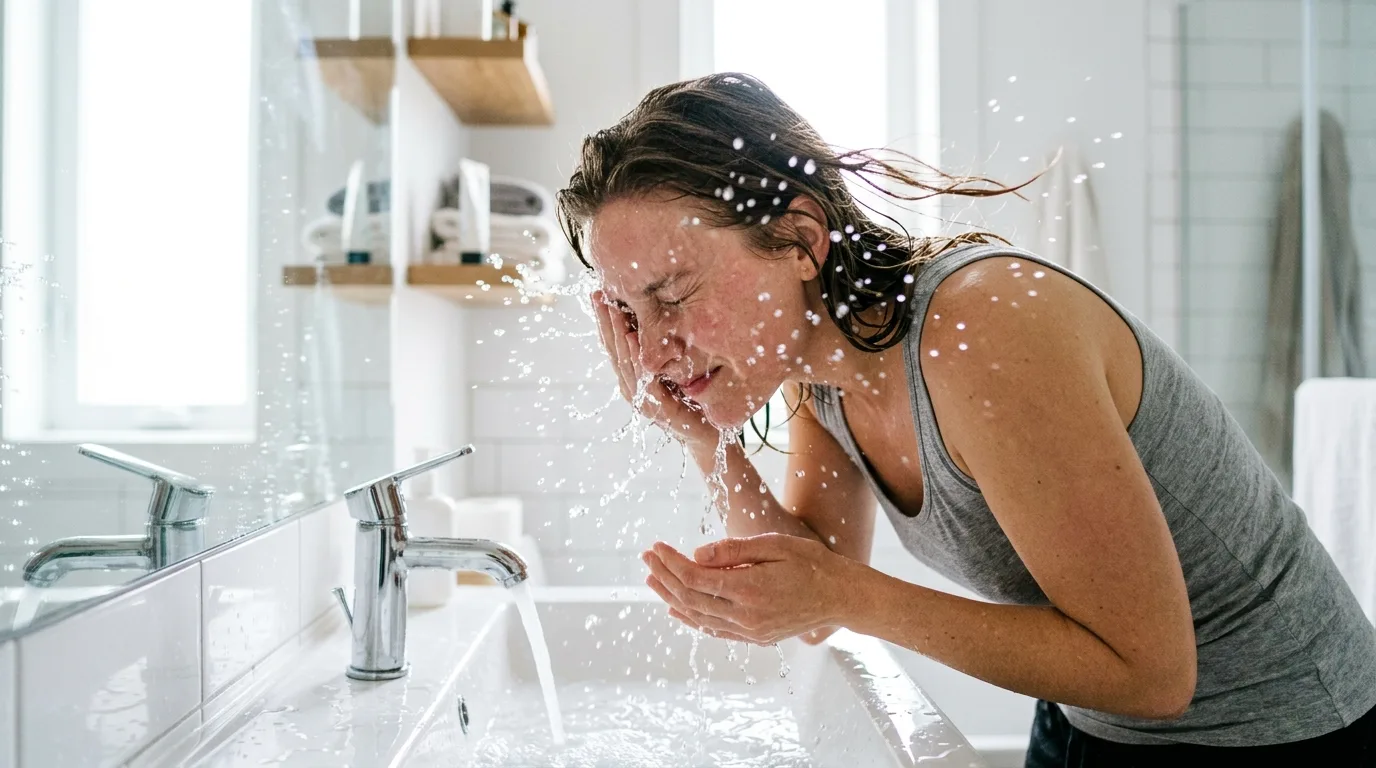
Cold water applied to the face triggers the mammalian dive reflex, which can slow heart rate by up to 25% within seconds. A 2021 study confirmed that face immersion in cold water at approximately 14 degrees Celsius produces rapid cardiac vagal activation, with the effect strongest when the forehead, eyes, and cheeks are submerged (Godek & Freeman, 2021). This is one of the fastest-acting techniques in this guide.
Cold receptors on your face, particularly around the eyes and forehead, send signals through the trigeminal nerve. Those signals cross-activate the vagus nerve, producing an immediate shift toward parasympathetic dominance. You don’t need to do anything else. The reflex is automatic.
Step-by-step:
- Fill a large bowl with cold water (10-15 degrees Celsius). Add ice cubes if needed.
- Take a deep breath in.
- Submerge your face including forehead, eyes, and cheeks for 15 to 30 seconds.
- Breathe out slowly as you lift your face.
- Repeat 2 to 3 times.
If full face immersion feels too intense, hold a bag of frozen vegetables or a cold wet towel against your face and closed eyes for 30 to 60 seconds. This also triggers the dive reflex, though less strongly.
3. Humming or Chanting “Om”
Humming and chanting produce sustained vibrations in the throat that directly stimulate the vagus nerve’s laryngeal branches. A 2020 study found that 5 minutes of “Om” chanting significantly increased HRV and shifted autonomic balance toward parasympathetic dominance compared to a quiet rest control condition (Kuppusamy et al., 2020). The mechanism is straightforward anatomically: the vagus nerve passes through the pharynx and larynx.
Humming gives you a double dose of vagal stimulation. The vibrations mechanically activate the laryngeal nerve fibers, while the extended exhalation required for sustained humming also triggers the respiratory vagal pathway. You get both effects simultaneously.
Step-by-step:
- Sit comfortably with eyes closed.
- Take a slow, deep breath in through your nose.
- On the exhale, hum steadily with lips closed, producing a steady “mmmm” sound. Feel the vibration in your throat and chest.
- Each hum should last as long as your exhale, aiming for 5 to 10 seconds.
- Inhale again and repeat for 5 to 10 minutes.
For stronger throat vibrations, try “Om” chanting: open your mouth for the “O” portion and close for the “M”. Chant at a low, comfortable pitch without straining. Humming is one of the most discreet exercises on this list. You can do it at your desk, in your car, or in a bathroom during a stressful workday.
4. Vigorous Gargling With Cold Water
Vigorous gargling stimulates the pharyngeal branch of the vagus nerve through a well-established neuroanatomical mechanism. The muscles of the soft palate and posterior pharynx involved in gargling are directly innervated by vagal fibers, making this a reliable physical trigger for parasympathetic signaling. Gargling as a vagal toning practice is documented in clinical literature on polyvagal approaches (Porges, 2011). For a structured set of exercises built on this framework, see our polyvagal theory exercises guide.
When you gargle vigorously, you contract the pharyngeal muscles hard enough to send strong afferent signals up the vagus nerve to the brainstem. Cold water adds a mild thermal stimulus as a bonus.
Step-by-step:
- Take a large sip of cold water.
- Tilt your head back and gargle vigorously for 30 seconds. Gargle hard enough that your eyes water slightly. If your eyes don’t water, you’re not gargling hard enough.
- Spit and repeat 3 to 5 times.
- Practice morning and evening.
This stacks easily with your morning routine. Gargle right after brushing your teeth. It takes under two minutes and requires zero equipment beyond a glass of water.
5. Loud Sustained Singing
Singing loudly engages the same vagal pathways as humming and gargling, but adds sustained breath control and emotional engagement. A 2017 study in Frontiers in Human Neuroscience found that choir singing produced measurable increases in HRV and decreases in cortisol compared to solo control conditions (Schladt et al., 2017). Group singing adds social co-regulation on top of the physical mechanisms.
Singing combines three vagal stimulation pathways simultaneously: extended exhalation activates respiratory vagal afferents, vocal cord vibration stimulates the laryngeal branch, and the emotional component activates higher-order vagal circuits. You get more out of singing at full volume than humming quietly.
Step-by-step:
- Choose a song you genuinely enjoy.
- Sing out loud at full volume. Don’t hold back.
- Focus on long, sustained notes. These require extended exhalation, which is where the vagal benefit comes from.
- Aim for at least 10 minutes.
- If possible, sing with others. Choir, karaoke, or singing along with friends amplifies the social engagement component.
The vagal benefit comes from volume and breath control, not vocal quality. Shower singing counts. Belt it out wherever you feel comfortable being loud.
Singing activates the vagus nerve through three simultaneous pathways: extended exhalation stimulates respiratory vagal afferents, vocal cord vibration activates the laryngeal branch, and the social and emotional components of group singing engage ventral vagal circuits. Research confirms measurable HRV increases and cortisol decreases during choir singing sessions (Schladt et al., 2017).
6. Ear Massage (Auricular Vagal Stimulation)
The auricular branch of the vagus nerve, also called Arnold’s nerve, innervates the outer ear, particularly the tragus and the inner bowl (concha). A 2018 randomized study found that transcutaneous stimulation at the tragus increased parasympathetic markers and reduced sympathetic activity in healthy adults (Badran et al., 2018). Manual pressure can activate the same pathway without any electrical device.
Pressure on the tragus activates vagal afferents that project to the nucleus tractus solitarius in the brainstem, which is the same hub targeted by slow breathing. You can combine both techniques for a synergistic effect.
Step-by-step:
- Using your thumb and index finger, gently pinch the tragus (the small cartilage flap in front of your ear canal).
- Apply firm but comfortable pressure and massage in small circles for 1 to 2 minutes per ear.
- Move to the inner bowl of the ear and apply gentle circular pressure for another minute per ear.
- Breathe slowly and deeply throughout.
- Repeat 2 to 3 times daily.
This is one of the most discreet exercises on this list. You can do it during a meeting, on public transport, or while watching television. No one around you will know what you’re doing.
7. Gentle Carotid Sinus Massage
The carotid sinus, located on each side of the neck where the carotid artery branches, contains baroreceptors that communicate directly with the vagus nerve. Gentle massage of this area activates the baroreflex and promotes parasympathetic tone. Carotid sinus massage is used clinically to terminate certain types of supraventricular tachycardia (Lim et al., 2013). The self-administered version described here is a far milder application.
Step-by-step:
- Sit or lie down comfortably.
- Locate the carotid sinus on one side of your neck, at the level of the jawbone angle, where you can feel your carotid pulse.
- Using two fingertips, apply very gentle pressure to one side only. Never both sides simultaneously.
- Massage in small, slow circles for 10 to 15 seconds.
- Release, pause, then repeat on the other side.
- Do this no more than 2 to 3 times per side per session.
8. Restorative Yoga Postures
Yoga combines multiple vagal stimulation pathways: slow breathing, physical postures that activate the baroreflex, and sustained body awareness. A meta-analysis of 22 randomized controlled trials found that yoga practice significantly increased HRV compared to control conditions (Hedges’ g = 0.40, p less than 0.001) (Zou et al., 2018). Even 10 to 15 minutes of specific restorative postures produces measurable nervous system effects.
Inversions, forward folds, and twists change intra-abdominal and intrathoracic pressure in ways that stimulate baroreceptors and mechanoreceptors along the vagus nerve pathway. The pranayama component adds the respiratory pathway on top.
Four postures with the strongest vagal evidence:
- Legs Up the Wall (Viparita Karani): Lie on your back with legs extended up against a wall. Stay 5 to 10 minutes with slow, deep breathing. Promotes venous return and activates the baroreflex.
- Child’s Pose (Balasana): Kneel and fold forward, resting your forehead on the ground. Gentle abdominal compression and forehead contact stimulate vagal pathways. Hold 1 to 3 minutes.
- Supine Twist (Supta Matsyendrasana): Lie on your back, twist lower body to one side while keeping shoulders flat. Abdominal compression stimulates visceral vagal afferents. Hold 1 to 2 minutes per side.
- Cat-Cow (Marjaryasana-Bitilakasana): Alternate arching and rounding your spine on hands and knees, coordinated with slow breathing. Mobilizes the spine and diaphragm together.
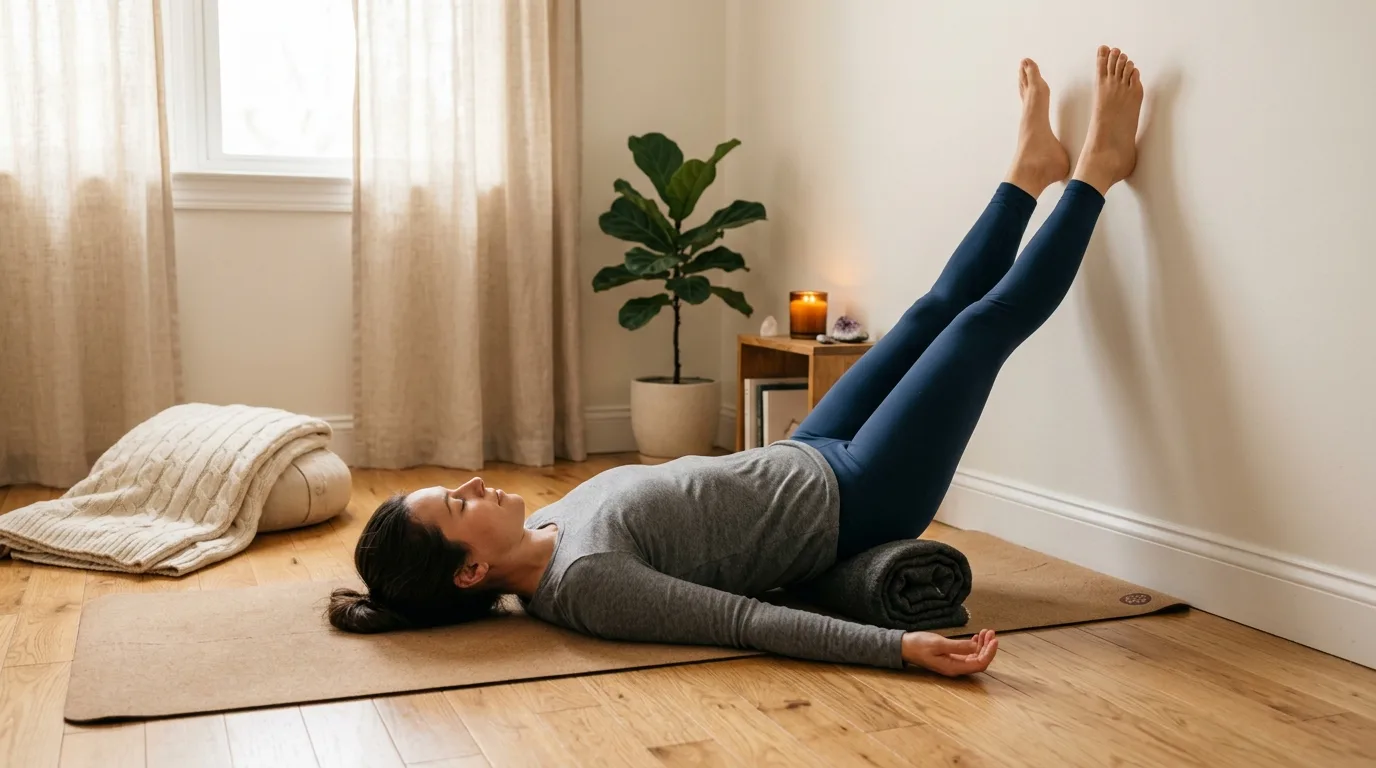
A meta-analysis of 22 randomized controlled trials found that yoga practice significantly increases heart rate variability compared to control conditions (Hedges’ g = 0.40, p less than 0.001), confirming that yoga functions as a multi-pathway vagus nerve exercise through combined effects of breathing, posture, and sustained body awareness (Zou et al., 2018).
How Do You Know If Your Vagus Nerve Exercises Are Working?
The most reliable objective measure of vagal tone is heart rate variability. Research shows that consistent vagus nerve exercises produce measurable HRV improvements within two to four weeks. In the Ghati et al. (2022) study, 20 minutes of daily resonance breathing increased SDNN from 66.69 ms to 78.76 ms after four weeks (Ghati et al., 2022). That’s an 18% gain from one daily habit.
Objective Measures
Wearable HRV monitors, including the Oura Ring, WHOOP, Apple Watch, and Garmin devices, track overnight RMSSD, which reflects parasympathetic activity. Look for a gradual upward trend over weeks, not day-to-day fluctuations. Morning resting heart rate often declines alongside improved vagal tone. Breathing pacer apps with real-time HRV feedback, such as Elite HRV or HRV4Training, let you see vagal activation during your practice sessions.
Subjective Signals
You’ll likely notice subjective changes before the wearable data shows a clear trend. Faster recovery from stressful events is usually the first thing people report. Better digestion, fewer nighttime awakenings, lower baseline anxiety, and less emotional reactivity to situations that used to feel overwhelming tend to follow within one to two weeks of consistent daily practice.
How Often Should You Practice Vagus Nerve Exercises?
Research consistently supports daily practice for a minimum of four weeks to produce meaningful vagal tone improvements. The Ghati et al. (2022) study used 20-minute daily sessions. The Stanford cyclic sighing research showed mood benefits from just 5 minutes per day over four weeks (Huberman et al., 2023). The minimum effective dose is lower than most people expect.
Morning routine (5 minutes):
- Gargle vigorously with cold water (1 to 2 minutes)
- Hum or chant for 3 minutes
Midday reset (5 minutes):
- Ear massage with slow breathing (2 minutes)
- Cold water face immersion or cold towel on face (1 minute)
- Slow breathing cooldown (2 minutes)
Evening wind-down (10 to 20 minutes):
- Resonance breathing at 6 breaths per minute (10 to 20 minutes)
- Or: restorative yoga postures (15 minutes)
You don’t need to do all eight exercises every day. Pick two or three that fit your schedule and preferences, then rotate the others in when you have more time. Consistency matters far more than variety. For a complete framework on how these exercises fit into broader nervous system health, see our nervous system regulation guide.
Frequently Asked Questions
What are the best vagus nerve exercises for anxiety?
Slow diaphragmatic breathing at 6 breaths per minute and cold water face immersion are the two most evidence-supported options for acute anxiety. A 2023 meta-analysis of 12 RCTs found that breathwork produced significant anxiety reduction (Hedges’ g = -0.32, p less than 0.0001) across 785 participants (Fincham et al., 2023). Cold face immersion works faster, within seconds, because the dive reflex immediately shifts cardiac activity toward parasympathetic dominance. See our guide on breathing exercises for anxiety for more options.
How long does it take for vagus nerve exercises to work?
Acute effects like reduced heart rate and increased calm happen within minutes during a single session. For lasting baseline improvements in vagal tone and HRV, research consistently points to at least four weeks of daily practice. The Ghati et al. (2022) trial documented significant SDNN increases of 18% and perceived stress reductions of 24% after four weeks of 20-minute daily sessions (Ghati et al., 2022).
Can you overstimulate the vagus nerve?
In theory, yes, though it’s rare with the exercises described in this guide. Excessive vagal activation can cause bradycardia (abnormally slow heart rate), lightheadedness, or vasovagal syncope (fainting). The most common triggers are overly aggressive carotid sinus massage or prolonged cold water immersion. If you feel dizzy, nauseous, or close to fainting during any exercise, stop immediately and sit or lie down with your legs elevated.
Do vagus nerve exercises help with digestion?
Research suggests they can. The vagus nerve controls gastric motility, enzyme secretion, and the migrating motor complex that cleans the gut between meals. Higher vagal tone has been associated with better gastric motility and reduced symptoms of functional dyspepsia. A 2018 review confirmed that vagus nerve stimulation, both electrical and behavioral, can improve gastrointestinal function in patients with gastroparesis and irritable bowel syndrome (Bonaz et al., 2018).
Are vagus nerve exercises safe for everyone?
Most vagus nerve exercises, particularly slow breathing, humming, gargling, and singing, are safe for the vast majority of people. Cold water face immersion and carotid sinus massage carry specific risks for people with heart conditions, very low resting heart rate, carotid artery disease, or a history of vasovagal syncope. If you have any cardiovascular condition, epilepsy, or are pregnant, consult a healthcare provider before starting any new practice.
References
- Breit, S., Kupferberg, A., Rogler, G., & Hasler, G. (2018). Vagus Nerve as Modulator of the Brain-Gut Axis in Psychiatric and Inflammatory Disorders. Frontiers in Psychiatry, 9, 44. https://pmc.ncbi.nlm.nih.gov/articles/PMC5859128/
- Ghati, N., et al. (2022). Effect of Resonance Breathing on Heart Rate Variability and Cognitive Functions in Young Adults: A Randomised Controlled Study. Cureus. https://pmc.ncbi.nlm.nih.gov/articles/PMC8924557/
- Shao, R., et al. (2024). The Effect of Slow-Paced Breathing on Cardiovascular and Emotion Functions: A Meta-Analysis and Systematic Review. Mindfulness. https://link.springer.com/article/10.1007/s12671-023-02294-2
- Laborde, S., et al. (2022). Heart rate variability and slow-paced breathing: when coherence meets resonance. Neuroscience & Biobehavioral Reviews. https://www.sciencedirect.com/science/article/abs/pii/S0149763422000653
- Godek, D. & Freeman, A.M. (2021). Physiology, Diving Reflex. StatPearls [Internet]. https://pmc.ncbi.nlm.nih.gov/articles/PMC8586077/
- Huberman, A.D., et al. (2023). Brief structured respiration practices enhance mood and reduce physiological arousal. Cell Reports Medicine, 4(1), 100895. https://pmc.ncbi.nlm.nih.gov/articles/PMC9873947/
- Kuppusamy, M., et al. (2020). Effects of yoga breathing practice on heart rate variability in healthy adolescents. Journal of Cardiovascular Disease Research. https://pmc.ncbi.nlm.nih.gov/articles/PMC6913943/
- Schladt, T.M., et al. (2017). Choir versus Solo Singing: Effects on Mood, and Salivary Oxytocin and Cortisol Concentrations. Frontiers in Human Neuroscience, 11, 430. https://pmc.ncbi.nlm.nih.gov/articles/PMC5618811/
- Badran, B.W., et al. (2018). Neurophysiologic effects of transcutaneous auricular vagus nerve stimulation (taVNS) via electrical stimulation of the tragus. Brain Stimulation, 11(3), 492-500. https://pmc.ncbi.nlm.nih.gov/articles/PMC6056408/
- Lim, S.H., et al. (2013). Slow breathing and cardiac vagal tone. Journal of Emergency Medicine. https://pmc.ncbi.nlm.nih.gov/articles/PMC4017328/
- Zou, L., et al. (2018). Effects of Mind-Body Exercises (Tai Chi/Yoga) on Heart Rate Variability Parameters and Perceived Stress: A Systematic Review with Meta-Analysis of Randomized Controlled Trials. Journal of Clinical Medicine, 7(11), 404. https://pmc.ncbi.nlm.nih.gov/articles/PMC5871291/
- Fincham, G.W., et al. (2023). Effect of breathwork on stress and mental health: A meta-analysis of randomised-controlled trials. Scientific Reports. https://pmc.ncbi.nlm.nih.gov/articles/PMC9828383/
- Bonaz, B., Bazin, T., & Pellissier, S. (2018). The Vagus Nerve at the Interface of the Microbiota-Gut-Brain Axis. Frontiers in Neuroscience, 12, 49. https://pmc.ncbi.nlm.nih.gov/articles/PMC5808284/
- Porges, S.W. (2011). The Polyvagal Theory: Neurophysiological Foundations of Emotions, Attachment, Communication, and Self-regulation. W. W. Norton & Company.