If you feel wired and exhausted at the same time, you are not imagining it. In 2025, the American Psychological Association reported that 62 percent of US adults named societal division as a significant source of stress. Among that group, 83 percent said they had at least one physical symptom of stress in the past month, most often feeling nervous or anxious, fatigued, or headachy (American Psychological Association, Stress in America 2025).
That tired-but-tense state is what many people now call nervous system dysregulation. I curate wellness research for a living, not in a lab. The science behind this popular term is more interesting, and more honest, than most of what you will read about it.
Key takeaways
- “Nervous system dysregulation” is a popular wellness term, not a formal medical diagnosis. It describes an autonomic nervous system that leans too far toward fight-or-flight and struggles to settle.
- Heart rate variability (HRV) is the closest measurable signal. A 2018 review of 37 studies found that stress consistently lowers vagal activity (American Psychological Association data on symptoms backs the felt experience).
- The most studied tools have real, modest evidence. HRV biofeedback showed a large effect on stress and anxiety in a 2017 meta-analysis (Hedges g around 0.83).
- Slow breathing at about 6 breaths per minute is the simplest place to start, and consistency matters more than any single technique.
What is nervous system dysregulation?
Nervous system dysregulation is a popular term for an autonomic nervous system that stays stuck in a stress state and struggles to return to calm. It is not a formal diagnosis in the DSM-5 or the ICD-11, so no clinician can hand you that exact label. What the science does describe is autonomic imbalance, when the sympathetic “fight-or-flight” branch runs hot and the parasympathetic “rest-and-digest” branch cannot quiet it down.
Your autonomic nervous system runs the background processes you never think about: heart rate, breathing, digestion, and the stress response. It has two main branches that work like a seesaw. The sympathetic branch speeds you up under threat. The parasympathetic branch, carried largely by the vagus nerve, slows you down afterward. In a balanced system, the two trade off smoothly. When stress is chronic, the seesaw gets stuck on the sympathetic side.
This is where I want to be straight with you, because most articles are not. “Dysregulation” is a useful everyday word for a real felt experience, but it is an umbrella concept, not a measurable disease. The honest version of this topic leans on the genuine research into the autonomic nervous system and stress. For the full framework on shifting out of that stuck state, my guide to nervous system regulation walks through it step by step.
What does a dysregulated nervous system feel like?
A dysregulated nervous system usually feels like being tired and wired at once. The American Psychological Association found in 2025 that among adults stressed by societal division, 42 percent felt nervous or anxious, 40 percent felt fatigued, and 39 percent had headaches in the past month (APA, Stress in America 2025). Those overlapping symptoms are the everyday texture of autonomic imbalance.
People describe a recognizable cluster. Sleep that will not come even though you are drained. A racing mind at 2 a.m. Small stressors that trigger a reaction far bigger than the moment deserves. Digestive flare-ups, jaw tension, and a short fuse. When those moments spike, a few minutes of grounding exercises for anxiety can take the edge off. None of these is unique to stress on its own, which is exactly why the felt sense of “dysregulation” resonates with so many people.
According to the APA Stress in America 2025 survey, more than four in five adults stressed by division reported at least one physical symptom of stress in a single month, and the most common one was simply feeling nervous or anxious. That single data point captures why the body, not just the mind, is the right place to look. The sensations are physical because the nervous system is physical.
What causes nervous system dysregulation?
The main driver is chronic stress that never fully switches off. Research published in 2018 in Psychiatry Investigation, pooling 37 studies, found that stress reliably reduces parasympathetic activity and tips autonomic balance toward the sympathetic side (Kim et al., Psychiatry Investigation, 2018). When that tipping point becomes your baseline, the system stops recovering between stressors.
Several things feed into it. Ongoing pressure at work or home keeps the sympathetic branch active. Unresolved trauma and early-life adversity can recalibrate the stress response so it fires more easily. Burnout, poor sleep, and a lack of recovery time all reduce the body’s chances to downshift. Caffeine, alcohol, and an always-on phone do not help the seesaw settle either.
Here is the useful reframe. You do not need to find one root cause to start feeling better. The autonomic nervous system responds to inputs in the present, which means the practices that calm it work regardless of how you got here. That is the practical core of the research, and it is genuinely hopeful.
How is nervous system dysregulation measured? HRV is the closest signal
The most validated way to see autonomic balance is heart rate variability, the tiny variation in time between heartbeats. In the 2018 Psychiatry Investigation review of 37 studies, stress consistently lowered high-frequency HRV and a measure called RMSSD while raising the LF/HF ratio, a physiological signature of the parasympathetic brake losing ground (Kim et al., Psychiatry Investigation, 2018). Higher HRV generally signals a more flexible, better-regulated system.
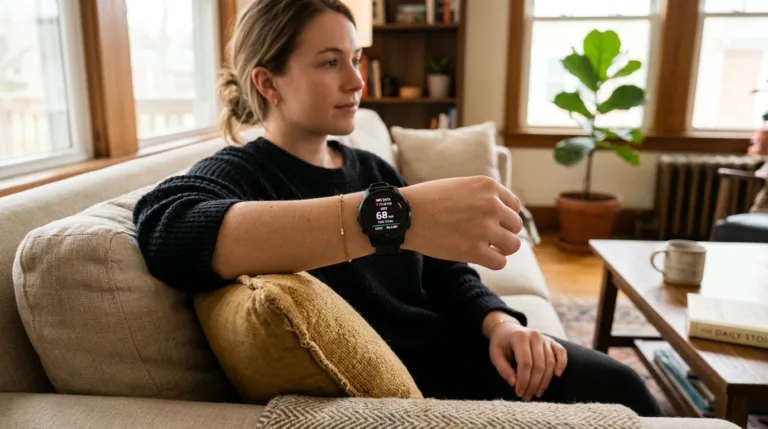
Think of HRV as a window, not a verdict. A healthy nervous system adjusts its heart rhythm constantly, speeding slightly as you breathe in and slowing as you breathe out. That flexibility is the parasympathetic system doing its job. When chronic stress flattens that variation, HRV drops. It is the same vagal activity I cover in my guide to vagal tone, viewed through a number you can actually track.
What are the most effective ways to regulate your nervous system?
The best-supported tools are slow breathing, HRV biofeedback, meditation, and brief cold exposure, and their effects are real but modest. In a 2017 meta-analysis of 24 studies in Psychological Medicine, HRV biofeedback produced a large reduction in stress and anxiety, with a between-group effect size around Hedges g 0.83 (Goessl, Curtiss and Hofmann, Psychological Medicine, 2017). That is the headline number worth knowing.
The other tools cluster in the small-to-moderate range, which is still meaningful for a free, low-risk practice. A 2023 meta-analysis in Scientific Reports found that breathwork reduced stress (g around 0.35), anxiety (g around 0.32), and depressive symptoms (g around 0.40) across dozens of randomized trials (Fincham et al., Scientific Reports, 2023). Meditation has measurable physical effects too. A 2021 meta-analysis in Health Psychology Review found it lowered the stress hormone cortisol, with an effect size around g 0.40 overall and 0.52 in higher-stress groups (Koncz, Demetrovics and Takacs, Health Psychology Review, 2021). If anxiety is your main symptom, a few targeted breathing exercises for anxiety are an easy place to begin.

A simple slow-breathing practice to start with
Slow breathing is the most accessible entry point, and there is a reason it centers on a specific pace. A 2023 meta-analysis in the journal Mindfulness found that breathing at roughly 6 breaths per minute strengthens cardiac vagal tone (Laborde et al., Mindfulness, 2023). That pace sits near a personal “resonance frequency” of about 4.5 to 7 breaths per minute, where the natural rise and fall of your heart rate peaks. Here is the plain version:
- Sit or lie down somewhere quiet and let your shoulders drop.
- Breathe in gently through your nose for about 4 seconds.
- Breathe out slowly through your nose or pursed lips for about 6 seconds.
- Keep the exhale longer than the inhale. That is the part that engages the vagal brake.
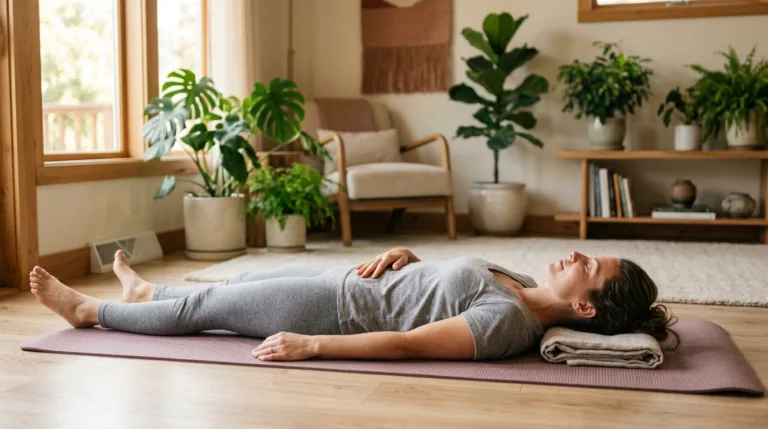
- Continue for 5 to 10 minutes. Aim for roughly 6 breaths a minute without straining.
For a deeper version that pairs this pace with biofeedback, see my guide to resonance breathing and HRV, which explains how to find your own ideal rate.
Cold exposure is a more intense option with early support. A 2024 systematic review found that brief cold-water immersion shifted autonomic balance toward the parasympathetic side, raising vagal HRV markers in healthy adults (ScienceDirect systematic review, 2024). A cool shower at the end of a warm one is a sensible place to test it, if it appeals to you.
How long does it take to regulate your nervous system?
Most people notice early shifts within a few weeks of daily practice, but the benefits depend on keeping it up. In the 2021 Health Psychology Review meditation analysis, cortisol reductions were clear right after the interventions, yet the effect was no longer significant at follow-up when practice stopped (Koncz et al., Health Psychology Review, 2021). The nervous system responds to what you do repeatedly, not what you did once.
This is the part the “reset your nervous system in one session” content gets wrong. There is no switch. The research consistently rewards guided, multi-session practice over single dramatic attempts. A 2021 meta-analysis in Scientific Reports found HRV biofeedback improved depressive symptoms across 14 trials with nearly 800 participants, and those programs ran over weeks, not minutes (Pizzoli et al., Scientific Reports, 2021). Five honest minutes a day beats an hour you do once and abandon.
Frequently asked questions
Is nervous system dysregulation a real medical diagnosis?
No. It is a popular wellness term, not a diagnosis in the DSM-5 or ICD-11. What it describes, autonomic imbalance under chronic stress, is real and measurable through heart rate variability. A 2018 review of 37 studies confirmed that stress lowers vagal activity (Kim et al., 2018). Treat the term as a useful description, not a clinical label.
What does nervous system dysregulation feel like?
Most people describe feeling tired and wired at once: trouble sleeping, a racing mind, anxiety, brain fog, and outsized reactions to small stressors. The American Psychological Association found in 2025 that 42 percent of stressed adults felt nervous or anxious in the past month (APA, 2025). The symptoms are physical because the nervous system is physical.
How do I reset or regulate my nervous system?
Start with slow breathing at about 6 breaths per minute, keeping the exhale longer than the inhale. A 2023 meta-analysis found this pace strengthens cardiac vagal tone (Laborde et al., 2023). Meditation, HRV biofeedback, and brief cold exposure also help. Pick one, practice daily, and let consistency do the work.
Can a dysregulated nervous system be healed?
The system can become better regulated, though “healed” overstates it for a non-diagnosis. The evidence supports steady improvement with regular practice rather than a one-time fix. In a 2021 analysis, meditation’s cortisol benefits faded once practice stopped (Koncz et al., 2021), so maintenance matters.
How long does it take to regulate your nervous system?
Many people feel early changes within a few weeks of daily practice, with deeper change over months. The research rewards guided, multi-session programs over single attempts. A 2021 meta-analysis found HRV biofeedback improved symptoms across programs that ran for weeks (Pizzoli et al., 2021). Patience and repetition are the point.
References
- American Psychological Association, Stress in America 2025, retrieved 2026-06-22, https://www.apa.org/pubs/reports/stress-in-america/2025
- Kim, H.-G. et al., “Stress and Heart Rate Variability: A Meta-Analysis,” Psychiatry Investigation, 2018, retrieved 2026-06-22, https://pmc.ncbi.nlm.nih.gov/articles/PMC5900369/
- Goessl, V. C., Curtiss, J. E. and Hofmann, S. G., “The effect of heart rate variability biofeedback training on stress and anxiety: a meta-analysis,” Psychological Medicine, 2017, retrieved 2026-06-22, cambridge.org
- Fincham, G. W. et al., “Effect of breathwork on stress and mental health: A meta-analysis of randomised-controlled trials,” Scientific Reports, 2023, retrieved 2026-06-22, https://pmc.ncbi.nlm.nih.gov/articles/PMC9828383/
- Koncz, A., Demetrovics, Z. and Takacs, Z. K., “Meditation interventions efficiently reduce cortisol levels of at-risk samples: a meta-analysis,” Health Psychology Review, 2021, retrieved 2026-06-22, tandfonline.com
- Pizzoli, S. F. M. et al., “A meta-analysis on heart rate variability biofeedback and depressive symptoms,” Scientific Reports, 2021, retrieved 2026-06-22, https://pmc.ncbi.nlm.nih.gov/articles/PMC7988005/
- Laborde, S. et al., “Effects of Voluntary Slow Breathing on Heart Rate and Heart Rate Variability: A Systematic Review and Meta-Analysis,” Mindfulness, 2023, retrieved 2026-06-22, link.springer.com
- Systematic review and meta-analysis on cold exposure and autonomic control, ScienceDirect, 2024, retrieved 2026-06-22, sciencedirect.com