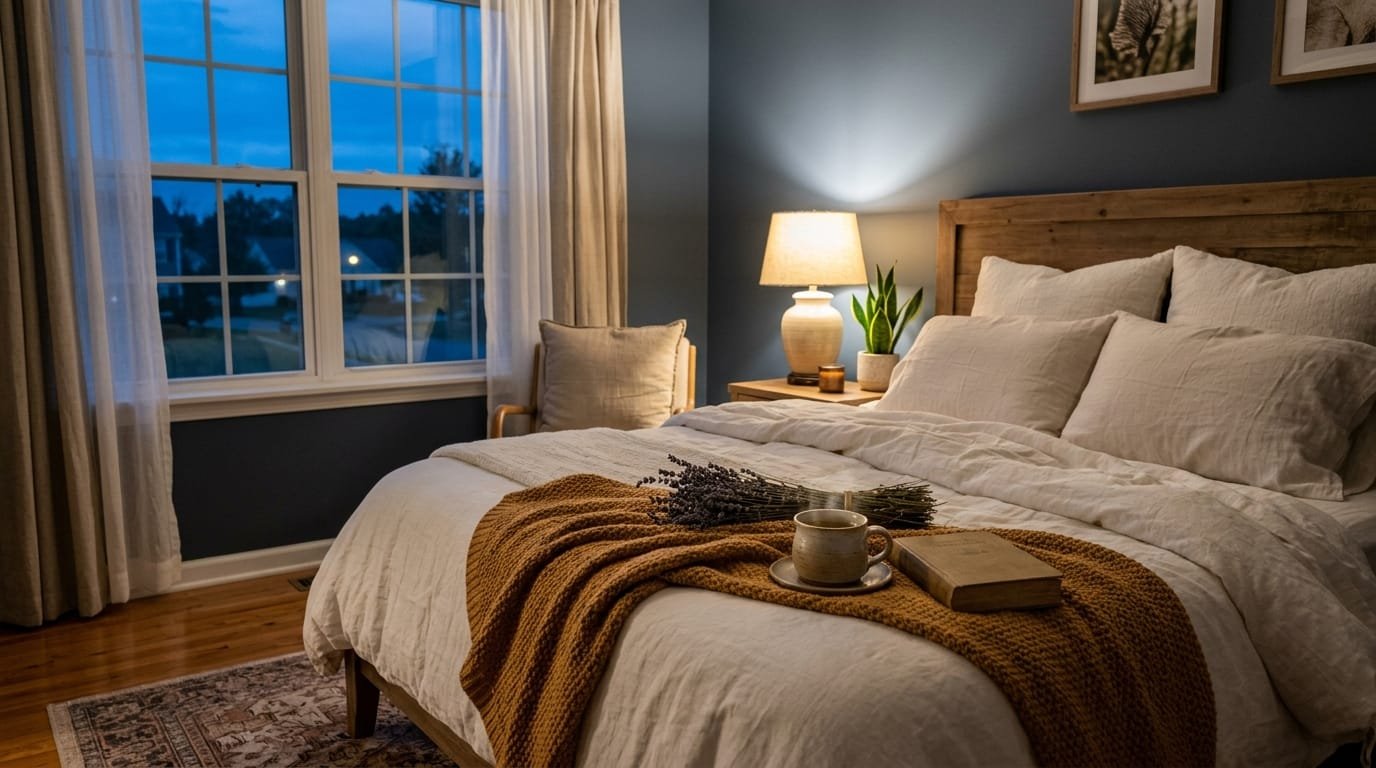
You’re lying awake at 1 a.m. again. The alarm goes off in five hours. Your body is exhausted, but your mind won’t stop. If you’ve been wondering how to sleep better, you’re asking one of the most consequential health questions there is. According to the CDC, one in three American adults regularly gets less than the recommended seven hours of sleep per night (CDC, 2016). And the consequences go far beyond feeling groggy the next morning.
Poor sleep doesn’t just ruin your energy. It raises your risk for heart disease, diabetes, depression, and cognitive decline. But here’s the encouraging part: most sleep difficulties aren’t medical conditions. They’re habit problems. And habits can change. This guide covers everything the research says about how to sleep better — from the science of sleep cycles to practical techniques you can try tonight. We’ll connect you to deeper resources on breathwork, relaxation techniques, and nervous system regulation along the way.
This article is for informational purposes only and does not constitute medical advice. Consult a qualified healthcare provider for any sleep-related health concerns.
Your overall quality of rest depends on more than just what happens in the bedroom. Your breathwork techniques during the day and how well you manage nervous system regulation both play a direct role in how quickly you drift off and how deeply you stay there.
Key Takeaways
- Adults need 7-9 hours per night for optimal health, yet 35.2% of U.S. adults fall short (CDC, 2016).
- Hygiene habits work. A meta-analysis of 53 studies found that behavioral education significantly improves nighttime quality, with a pooled effect size of d = 0.72 (Journal of Sleep Research, 2022).
- CBT-I is the gold standard non-drug treatment for insomnia, producing results that last longer than pills (Annals of Internal Medicine, 2015).
- Room temperature matters. Research suggests the ideal bedroom temperature is 65-68°F (18-20°C), with ambient temperature being one of the strongest environmental predictors of nighttime quality (Sleep Medicine Reviews, 2012).
- Relaxation techniques like 4-7-8 breathing and progressive muscle relaxation reduce onset latency significantly in clinical trials.
- Consistent schedules — going to bed and waking up at the same time daily — are more important than total hours slept.
TL;DR: One in three adults doesn’t get enough rest, which raises the risk for heart disease, diabetes, and depression (CDC, 2016). This guide covers proven, non-pharmacological methods to sleep better naturally — from optimizing your bedroom environment and building a wind-down routine to specific breathing techniques that activate your body’s relaxation response.
Why Does Sleep Matter So Much for Your Health?
Rest isn’t optional maintenance — it’s a biological necessity. A landmark longitudinal study following over 500,000 participants found that getting fewer than six hours per night was associated with a 12% higher risk of all-cause mortality compared to getting seven to eight hours (Sleep, 2010). As a result, those numbers translate into real consequences for every major organ system.
During the night, your brain clears metabolic waste through the glymphatic system. Your body releases growth hormone, repairs tissue, and consolidates memories. Your immune system produces cytokines that fight infection and inflammation. When you consistently cut these hours short, every one of these processes suffers.
Perspective shift: The conversation around sleep has shifted. Ten years ago, “I’ll sleep when I’m dead” was a badge of honor. Today, research makes it clear that chronically getting under six hours may actually bring that outcome closer. What’s changed isn’t the science — it’s our willingness to take it seriously.
What Happens When You Don’t Get Enough Sleep?
The effects of chronic deprivation cascade across your body. Research from the European Heart Journal found that short nighttime duration is associated with a 48% increased risk of developing or dying from coronary heart disease and a 15% greater risk of stroke (European Heart Journal, 2011).
How Deprivation Affects Your Body and Mind
Beyond cardiovascular risk, insufficient rest impairs:
- Cognitive function — reaction time, decision-making, and memory consolidation all decline measurably after just one poor night
- Emotional regulation — the amygdala becomes 60% more reactive to negative stimuli after deprivation, according to neuroimaging research (Current Biology, 2007)
- Metabolic health — getting under six hours increases insulin resistance and raises the risk of type 2 diabetes by 28% (Diabetes Care, 2015)
- Immune function — people getting fewer than seven hours nightly are 2.94 times more likely to catch a cold than those getting eight or more (Archives of Internal Medicine, 2009)
So when we talk about how to sleep better, we’re not talking about comfort. We’re talking about protecting your long-term health.
According to a study in the Archives of Internal Medicine, adults getting fewer than seven hours per night are 2.94 times more likely to develop a cold than those who get eight or more, establishing nightly rest as a critical factor in immune defense (Archives of Internal Medicine, 2009).
Chronic deprivation doesn’t just make you tired — it compromises your emotional regulation and nervous system balance, creating a cycle where stress disrupts your night and exhaustion amplifies stress.
How Does Sleep Actually Work? Understanding Sleep Architecture
Your body cycles through distinct stages roughly every 90 minutes, completing four to six full cycles per night. According to the Sleep Foundation, adults typically spend about 5% of the night in N1 (light dozing), 45% in N2 (intermediate rest), 25% in N3 (deep/slow-wave phase), and 25% in REM (Sleep Foundation, 2024). Understanding these stages helps explain why quality matters as much as quantity.
The Four Stages of Sleep
Stage N1 (Light): This transitional stage lasts one to five minutes. Your muscles relax, your breathing slows, and you can be easily awakened. You might experience hypnic jerks — those sudden twitches that sometimes startle you awake.
Stage N2 (Intermediate): Your body temperature drops, heart rate decreases, and brain activity slows with bursts of rapid activity called spindles. These spindles play a role in memory consolidation. Consequently, most of your total time in bed is spent in N2.
Stage N3 (Deep): This is the most restorative stage. Your body repairs tissues, strengthens the immune system, and releases growth hormone. Deep phases dominate the first half of the night. It’s extremely difficult to wake someone from this stage, and if you do, they’ll feel disoriented and groggy.
REM: Your brain becomes highly active — almost as active as when you’re awake. Dreaming occurs primarily during REM. Importantly, this stage is critical for emotional processing, creativity, and memory consolidation. In addition, REM periods get longer as the night progresses, which is why cutting your night short disproportionately reduces REM time.
Why Sleep Cycles Matter for How You Feel
Here’s something most people don’t realize. Waking up mid-cycle — especially during a deep phase — causes the groggy, foggy feeling known as inertia. But waking at the end of a cycle, during light N1 or N2, leaves you feeling refreshed. That’s why getting 7.5 hours (five complete 90-minute cycles) can feel better than getting eight hours if the alarm catches you mid-cycle.
Adults cycle through four sleep stages roughly every 90 minutes, spending approximately 25% of the night in deep N3 sleep and 25% in REM sleep, according to the Sleep Foundation (Sleep Foundation, 2024). Waking during light sleep rather than mid-cycle reduces sleep inertia and improves how rested you feel.
What Is Sleep Hygiene, and Does It Actually Work?
Sleep hygiene refers to the habits and environmental conditions that promote consistent, restorative rest. A 2022 meta-analysis of 53 studies found that hygiene education produced a significant pooled effect on quality improvement (d = 0.72), confirming that these behavioral changes genuinely work when applied consistently (Journal of Sleep Research, 2022).
The term might sound clinical, but it’s really about two things: what you do during the day and evening that sets up quality rest, and what your bedroom environment looks like when you get there.
The Core Habits for Better Sleep
Keep a consistent schedule. Go to bed and wake up at the same time every day — including weekends. Your circadian rhythm relies on regularity. Research shows that irregular timing is associated with poorer academic performance, worse mood, and higher cardiometabolic risk, independent of total hours (Scientific Reports, 2017).
Limit screen time before bed. Blue light from phones, tablets, and laptops suppresses melatonin production. A Harvard study found that reading on a light-emitting device before bed delayed onset by an average of 10 minutes, reduced evening drowsiness, and decreased morning alertness compared to reading a printed book (PNAS, 2014).
Watch your caffeine timing. Caffeine has a half-life of approximately five to six hours. A study published in the Journal of Clinical Sleep Medicine found that caffeine consumed even six hours before bedtime significantly reduced total nightly duration by more than one hour (JCSM, 2013). Therefore, cut off caffeine by early afternoon.
Daytime Habits That Affect Your Night
Move your body — but not too late. Regular physical activity improves quality of your rest. However, vigorous exercise within two hours of bedtime can increase core body temperature and adrenaline, making it harder to fall asleep. As a result, morning or afternoon workouts are ideal.
Avoid alcohol before bed. While alcohol makes you feel drowsy initially, it disrupts your nighttime architecture. Specifically, it reduces REM phases and increases awakenings during the second half of the night.
What we’ve found: Many people underestimate how much their afternoon habits shape their sleep. Small adjustments — switching from 3 p.m. coffee to herbal tea, taking a 20-minute walk after lunch, putting the phone on a charger in another room by 9 p.m. — often produce more improvement than any supplement or gadget.
For a step-by-step evening sequence that builds on these habits, see our complete wind down routine guide.
How Can You Optimize Your Bedroom for Better Sleep?
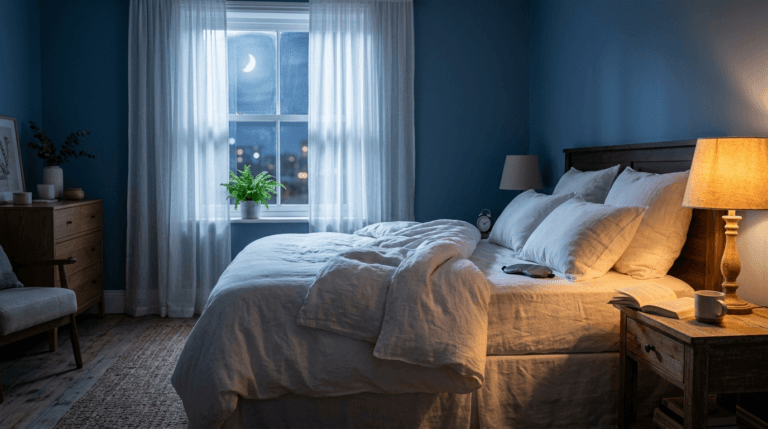
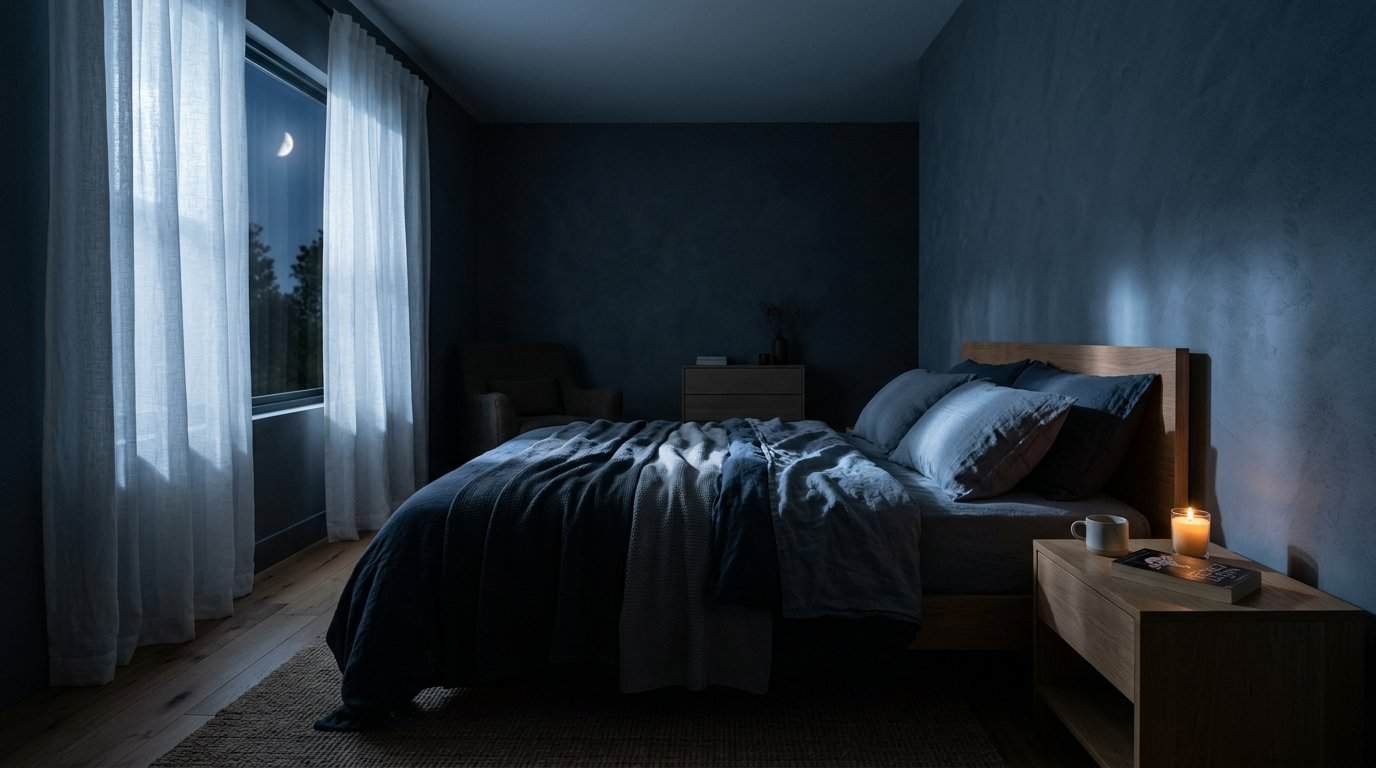
Your bedroom environment is one of the most controllable factors in how well you rest. A 2012 review in Sleep Medicine Reviews found that ambient temperature is among the strongest environmental predictors of nighttime disruption, with both heat and cold significantly increasing wakefulness and reducing slow-wave phases (Sleep Medicine Reviews, 2012). Getting your environment right doesn’t require expensive equipment. It requires attention to three variables: temperature, light, and sound.
Temperature: The Most Underrated Sleep Factor
Your core body temperature needs to drop by about 1-2°F to initiate drowsiness. This is a biological requirement, not a preference. Research suggests the ideal bedroom temperature for most adults falls between 65-68°F (18-20°C).
How can you help this process? Take a warm bath or shower 60-90 minutes before bed. It sounds counterintuitive, but a meta-analysis of 17 studies found that bathing in warm water (104-109°F) one to two hours before bed significantly improved both sleep quality and sleep onset latency (Sleep Medicine Reviews, 2019). The warm water draws blood to the surface of your skin, and when you step out, your core temperature drops rapidly — signaling your body that it’s time to wind down.
Light: Darkness Is Non-Negotiable
Even small amounts of light exposure during the night can be harmful. A 2022 study found that resting with a moderate level of room lighting (100 lux) increased heart rate, reduced heart rate variability, and elevated next-morning insulin resistance compared to resting in dim light (less than 3 lux) (PNAS, 2022).
Practical steps to darken your room:
- Use blackout curtains or a quality sleep mask
- Cover LED indicator lights on electronics with electrical tape
- Switch to a dim red or amber nightlight if you need bathroom visibility
- Avoid checking your phone if you wake during the night
Sound: Consistency Beats Silence
Complete silence isn’t always ideal. Sudden noises — a car horn, a door slamming — are what cause disruptions. White noise or brown noise machines create a consistent sound floor that masks these interruptions.
But does noise actually help? A 2021 systematic review found that continuous white noise improved onset latency and total nighttime duration in hospital and ICU environments, though results in home settings were more mixed (Sleep Medicine Reviews, 2021). If you live in a noisy environment, however, a sound machine or fan is worth trying.
A 2022 study published in PNAS found that sleeping with even moderate room lighting (100 lux) impaired glucose metabolism and elevated heart rate overnight, demonstrating that darkness is a physiological requirement for restorative sleep, not merely a preference (PNAS, 2022).
Pair these environmental changes with a consistent wind down routine and you’re giving your body every signal it needs to transition into sleep.
What Relaxation Techniques Help You Sleep Better?
Relaxation techniques are among the most effective non-pharmacological tools for improving how you rest. A Cochrane review found that relaxation interventions significantly reduced onset latency compared to no treatment, with benefits comparable to cognitive behavioral therapy for insomnia in some studies (Cochrane Database, 2015). The key is finding the right technique for your specific nighttime barrier — whether that’s a racing mind, physical tension, or both.
Breathing Techniques for Better Sleep
Breathing exercises work because they directly activate the parasympathetic nervous system — your body’s built-in “rest mode.” The extended exhale slows heart rate, lowers blood pressure, and signals your brain that you’re safe enough to drift off.
Three techniques with the strongest evidence for sleep:
4-7-8 Breathing. Inhale for four counts, hold for seven, exhale for eight. A 2022 study found this pattern reduced heart rate by 7.21% and lowered systolic blood pressure significantly in healthy adults (PMC, 2022). In addition, the structured counting interrupts rumination loops — those repetitive worry thoughts that keep you awake.
Resonance Breathing. Breathe at a rate of approximately six breaths per minute (five seconds in, five seconds out). This rate maximizes heart rate variability, which reflects parasympathetic activation. A four-week study found that daily resonance breathing increased total HRV power by 55% (Frontiers in Physiology, 2022).
Cyclic Sighing. A double inhale through the nose followed by a long exhale through the mouth. Stanford researchers found that five minutes of daily cyclic sighing improved mood 56% more than mindfulness meditation over 28 days (Cell Reports Medicine, 2023).
For a complete overview of breathing methods, see our breathwork techniques guide. If you struggle specifically with falling asleep, our how to fall asleep fast guide covers additional rapid techniques.
Progressive Muscle Relaxation (PMR)
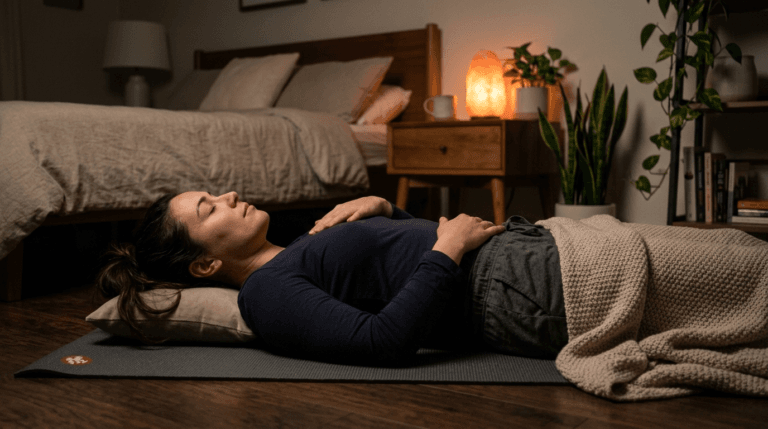
Progressive muscle relaxation involves systematically tensing and then releasing each muscle group, typically starting from your toes and working up to your face. The technique works on two levels: the physical release of muscular tension, and the mental focus required to move through each muscle group, which distracts from anxious thinking.
Research supports its effectiveness. A meta-analysis published in BMC Psychiatry found that PMR significantly improved sleep quality in patients with various conditions, with pooled effect sizes consistently favoring PMR over control groups (BMC Psychiatry, 2021).
Sleep Meditation and Body Scans
Guided meditation uses awareness techniques — typically a body scan or visualization — to shift your attention away from stressful thoughts and toward physical sensations. It doesn’t require you to “empty your mind.” On the contrary, it gives your mind something calming to focus on.
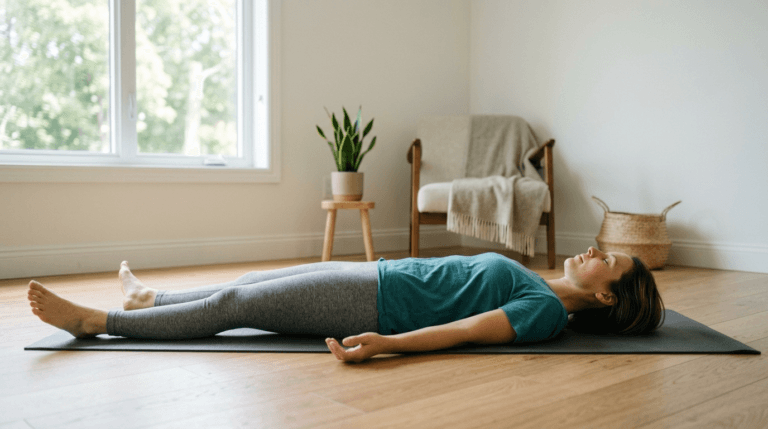
If you find traditional meditation too open-ended, guided body scans can be more accessible. You simply move your attention slowly from your toes to the top of your head, noticing sensations without trying to change them. For more structured options, our relaxation techniques guide covers five methods you can try tonight.
A 2022 study in Physiological Reports found that 4-7-8 breathing reduced heart rate by 7.21% and lowered systolic blood pressure by 3.80% in healthy young adults, confirming that structured breathing patterns can shift the autonomic nervous system toward a state conducive to sleep (PMC, 2022).
Our 4-7-8 breathing guide walks you through the full technique. For a broader look at how breathing patterns affect your nervous system, see our breathwork techniques overview. And if you want a practical toolkit of methods ranked by speed, our guide on how to fall asleep fast covers ten approaches you can try tonight.
How Does Your Nervous System Affect Sleep Quality?
Your ability to drift off depends on one physiological shift: your nervous system must transition from sympathetic (fight-or-flight) to parasympathetic (rest-and-digest) dominance. A meta-analysis of 12 randomized controlled trials found that breathwork interventions reduce stress by 35% and anxiety by 32% — both primary drivers of insomnia (Scientific Reports, 2023). If your nervous system is stuck in overdrive, no amount of melatonin will override it.
The Stress-Sleep Feedback Loop
Here’s why chronic stress and poor rest create a vicious cycle. When you’re stressed, your body produces cortisol — a hormone that promotes alertness. Cortisol levels naturally drop in the evening, allowing melatonin to rise and trigger drowsiness. But chronic stress keeps cortisol elevated at night, blocking this natural transition.
Then deprivation itself becomes a stressor. Your amygdala becomes more reactive. Your emotional regulation weakens. You worry more about staying awake, which produces more cortisol, which further delays drowsiness. Sound familiar?
For this reason, breaking this cycle requires tools that directly influence your autonomic nervous system, not just your conscious thoughts. That’s where vagus nerve exercises and breathing exercises for anxiety become especially relevant.
How to Shift Your Nervous System Before Bed
The vagus nerve — the primary pathway of the parasympathetic nervous system — can be activated deliberately. When it fires, heart rate slows, blood pressure drops, and your body enters a state conducive to rest.
Effective pre-bed vagal activation techniques include:
- Extended exhale breathing — any pattern where the exhale is longer than the inhale (like 4-7-8 breathing)
- Humming or gentle vocalization — vibrations stimulate the vagus nerve in the throat
- Splashing cold water on your face — triggers the dive reflex, which rapidly activates vagal tone
- A structured wind-down routine — 30-60 minutes of calming activities that signal your nervous system it’s safe to sleep
For a comprehensive approach to nervous system regulation beyond sleep, our nervous system regulation guide covers eight evidence-based techniques.
What the research tells us: The connection between autonomic nervous system function and nighttime quality is bidirectional. Poor rest reduces HRV (a marker of vagal tone), and low vagal tone makes it harder to drift off. This is why techniques that improve vagal tone — such as resonance breathing — often improve sleep as a secondary benefit, even when sleep isn’t the primary target.
How Can You Build a Better Sleep Routine?
Building a consistent bedtime routine is one of the most impactful changes you can make. Research shows that adults with irregular schedules have poorer cardiometabolic health and worse academic or work performance, independent of how many total hours they get (Scientific Reports, 2017). As a result, consistency trains your circadian clock, and a circadian clock that knows what to expect makes drifting off dramatically easier.

A Sample Evening Wind-Down Routine
Here’s a practical sequence you can adapt to your schedule. The goal isn’t perfection — it’s creating a predictable signal chain that tells your body sleep is approaching.
90 minutes before bed: Stop work-related tasks. Dim the lights in your home. Switch from overhead lighting to lamps or candles.
60 minutes before bed: Take a warm shower or bath. The subsequent body temperature drop aids sleep onset. Put all screens away or switch to night mode with brightness at minimum.
30 minutes before bed: Choose a calming activity. Read a physical book. Practice gentle stretching or progressive muscle relaxation. Have a conversation with your partner. Write in a journal to offload tomorrow’s worries.
In bed: Practice 4-7-8 breathing or a guided body scan. Four cycles of controlled breathing take less than two minutes and can significantly accelerate onset.
Our dedicated wind-down routine guide covers this sequence in more detail.
Do Morning Habits Improve Your Sleep?
How you start your day shapes how you rest that night. Morning light exposure is one of the most powerful circadian regulators available. Research shows that bright light in the morning advances the circadian clock and improves onset timing at night.
Three morning habits that support deeper rest:
- Get 10-15 minutes of sunlight within the first hour of waking — even on cloudy days, outdoor light is far brighter than indoor light
- Wake up at the same time every day — yes, even on weekends; your circadian rhythm doesn’t take days off
- Avoid hitting snooze — fragmented dozing in the final 30 minutes provides no restorative benefit and can increase grogginess
A study in Scientific Reports found that irregular sleep timing — varying bedtimes and wake times by more than 30 minutes — was independently associated with poorer academic performance, worse mood, and delayed sleep onset, regardless of total hours in bed (Scientific Reports, 2017).
When Should You Seek Professional Help for Sleep Problems?
Most nighttime difficulties respond to the behavioral and environmental changes outlined in this guide. However, some conditions require professional evaluation. The American Academy of Sleep Medicine recommends seeking help if your difficulties persist for three months or longer, occur at least three nights per week, and cause significant daytime impairment (AASM, 2020).
Signs You May Need a Sleep Specialist
Consider consulting a healthcare provider if you experience:
- Persistent insomnia despite consistent hygiene practices
- Loud, chronic snoring or episodes of gasping at night (potential apnea)
- Excessive daytime drowsiness that interferes with work or driving safety
- Unusual nighttime behaviors such as sleepwalking, acting out dreams, or paralysis episodes
- Restless legs — an uncomfortable urge to move your legs that worsens at night
CBT-I: The Gold Standard Treatment
Cognitive Behavioral Therapy for Insomnia (CBT-I) is the first-line treatment recommended by both the American College of Physicians and the American Academy of Sleep Medicine. A systematic review published in Annals of Internal Medicine confirmed that CBT-I produces durable improvements in quality that persist long after treatment ends — unlike pharmacological aids, whose benefits stop when you stop taking them (Annals of Internal Medicine, 2015).
CBT-I typically includes:
- Restriction therapy — temporarily limiting time in bed to consolidate rest
- Stimulus control — using the bed only for rest and intimacy, not for scrolling or worrying
- Cognitive restructuring — addressing unhelpful beliefs (“I’ll never function on less than eight hours”)
- Relaxation training — techniques like PMR and guided imagery
Fortunately, you don’t necessarily need in-person sessions. Digital CBT-I programs have shown comparable effectiveness to face-to-face therapy in several randomized trials. Ask your doctor about options if traditional sleep hygiene approaches haven’t been enough.
Reality check: Many people try supplements, apps, and gadgets before considering CBT-I. But the evidence hierarchy is clear: CBT-I has a stronger evidence base for chronic insomnia than any supplement, including melatonin. The barrier isn’t effectiveness — it’s awareness. Most people simply don’t know this option exists.
Frequently Asked Questions
How many hours of sleep do you actually need?
The National Sleep Foundation recommends 7-9 hours for adults aged 18-64 and 7-8 hours for adults 65 and older (National Sleep Foundation, 2024). However, individual needs vary. The best indicator isn’t a number — it’s how you feel. If you wake without an alarm, feel alert within 30 minutes, and maintain energy throughout the day, you’re likely getting enough.
Does melatonin actually help you sleep?
Melatonin is a hormone that signals nighttime to your brain. It can help with circadian rhythm issues like jet lag or shift work. However, a meta-analysis found that melatonin reduced onset latency by only about 7 minutes on average (PLoS ONE, 2013). It’s not a powerful sedative. For chronic insomnia, behavioral approaches like CBT-I and relaxation techniques are more effective long-term.
Can breathing exercises really help you fall asleep?
Yes. Research shows that techniques like 4-7-8 breathing activate the parasympathetic nervous system, reducing heart rate by 7.21% and lowering blood pressure (PMC, 2022). The extended exhale stimulates the vagus nerve, shifting your body from alert mode to rest mode. In fact, effects strengthen with daily practice over several weeks.
What is the best sleeping position?
Research suggests that lying on your side reduces snoring and may lower the risk of apnea. For back pain, lying on your back with a pillow under your knees can reduce spinal pressure. Stomach positioning is generally discouraged because it can strain the neck and lower back. Choose the position where you wake with the least stiffness.
How do you stop waking up at 3 a.m.?
Waking in the early morning hours is often linked to cortisol rhythms and blood sugar fluctuations. Strategies that help include avoiding alcohol before bed (it disrupts your architecture in the second half of the night), eating a small protein-rich snack to stabilize blood sugar, and practicing nervous system regulation techniques to reduce baseline cortisol. If you wake up, avoid looking at the clock — it triggers anxiety about remaining hours.
Is a cold or warm room better for sleep?
A cool room is better. Your core body temperature needs to drop 1-2°F to initiate drowsiness. Research in Sleep Medicine Reviews identified ambient temperature as one of the strongest environmental predictors of nighttime quality, with the ideal range being 65-68°F (18-20°C) (Sleep Medicine Reviews, 2012). If your room is too warm, your body can’t complete the temperature drop that triggers this process.
How long before bed should you stop using screens?
Research from Harvard found that reading on a light-emitting device before bed delayed onset and reduced evening melatonin levels compared to reading a printed book (PNAS, 2014). Ideally, stop using screens 60-90 minutes before bed. If that’s not practical, use blue-light filtering glasses or enable night mode on your devices, though these measures only partially reduce the impact.
Start Sleeping Better Tonight
You don’t need to overhaul your entire life to sleep better. Pick one or two changes from this guide and start tonight. Maybe it’s moving your phone charger to another room. You could try four cycles of 4-7-8 breathing before you close your eyes. Or simply go to bed at the same time for seven consecutive nights.
The research is unambiguous: good hygiene works, relaxation techniques work, and the improvements compound over time. A four-week study found that daily resonance breathing increased total HRV power by 55% (Frontiers in Physiology, 2022). These aren’t marginal gains. They’re measurable shifts in how your body handles stress and sleep.
If you want to go deeper into relaxation techniques, explore our guides on breathwork, 4-7-8 breathing, progressive muscle relaxation, and guided meditation. And if behavioral changes aren’t enough, don’t hesitate to ask your healthcare provider about CBT-I. Rest isn’t a luxury. It’s the foundation everything else is built on.
This article is for informational purposes only and does not constitute medical advice. Consult a qualified healthcare provider for any sleep-related health concerns.
Last updated: March 23, 2026. All statistics sourced from peer-reviewed journals and verified institutional reports.
References
- Liu, Y. et al. (2016). “Prevalence of healthy sleep duration among adults — United States, 2014.” MMWR Morbidity and Mortality Weekly Report, 65(6), 137-141. CDC
- Cappuccio, F.P. et al. (2010). “Sleep duration and all-cause mortality: a systematic review and meta-analysis of prospective studies.” Sleep, 33(5), 585-592. PubMed
- Cappuccio, F.P. et al. (2011). “Sleep duration predicts cardiovascular outcomes: a systematic review and meta-analysis of prospective studies.” European Heart Journal, 32(12), 1484-1492. PubMed
- Yoo, S.S. et al. (2007). “The human emotional brain without sleep — a prefrontal amygdala disconnect.” Current Biology, 17(20), R877-R878. PubMed
- Shan, Z. et al. (2015). “Sleep duration and risk of type 2 diabetes: a meta-analysis of prospective studies.” Diabetes Care, 38(3), 529-537. PubMed
- Cohen, S. et al. (2009). “Sleep habits and susceptibility to the common cold.” Archives of Internal Medicine, 169(1), 62-67. PubMed
- Sleep Foundation. (2024). “Stages of Sleep.” Sleep Foundation
- Alanazi, E.M. et al. (2022). “The effect of sleep hygiene education on sleep quality: a systematic review and meta-analysis.” Journal of Sleep Research, 31(5), e13609. PubMed
- Phillips, A.J.K. et al. (2017). “Irregular sleep/wake patterns are associated with poorer academic performance and delayed circadian and sleep/wake timing.” Scientific Reports, 7, 3216. PubMed
- Chang, A.M. et al. (2014). “Evening use of light-emitting eReaders negatively affects sleep, circadian timing, and next-morning alertness.” PNAS, 112(4), 1232-1237. PubMed
- Drake, C. et al. (2013). “Caffeine effects on sleep taken 0, 3, or 6 hours before going to bed.” Journal of Clinical Sleep Medicine, 9(11), 1195-1200. PubMed
- Okamoto-Mizuno, K. & Mizuno, K. (2012). “Effects of thermal environment on sleep and circadian rhythm.” Journal of Physiological Anthropology, 31(1), 14. PubMed
- Haghayegh, S. et al. (2019). “Before-bedtime passive body heating by warm shower or bath to improve sleep.” Sleep Medicine Reviews, 46, 124-135. PubMed
- Mason, I.C. et al. (2022). “Light exposure during sleep impairs cardiometabolic function.” PNAS, 119(12), e2113290119. PubMed
- Messineo, L. et al. (2021). “Broadband sound administration improves sleep onset latency in healthy subjects in a model of transient insomnia.” Frontiers in Neurology, 8, 718. PubMed
- Vierra, J. et al. (2022). “Effects of sleep deprivation and 4-7-8 breathing control on heart rate variability.” Physiological Reports, 10(14), e15389. PMC
- Ghati, N. et al. (2022). “Effect of resonance breathing on heart rate variability and perceived stress.” Frontiers in Physiology. PMC
- Balban, M.Y. et al. (2023). “Brief structured respiration practices enhance mood and reduce physiological arousal.” Cell Reports Medicine, 4(1), 100895. PMC
- Fincham, G.W. et al. (2023). “Effect of breathwork on stress and mental health: a meta-analysis of randomised controlled trials.” Scientific Reports, 13, 432. PMC
- Qaseem, A. et al. (2016). “Management of chronic insomnia disorder in adults: a clinical practice guideline from the American College of Physicians.” Annals of Internal Medicine, 165(2), 125-133. PubMed
- Ferracioli-Oda, E. et al. (2013). “Meta-analysis: melatonin for the treatment of primary sleep disorders.” PLoS ONE, 8(5), e63773. PubMed
- Toussaint, L. et al. (2021). “Effectiveness of progressive muscle relaxation on sleep quality: a systematic review and meta-analysis.” BMC Psychiatry. PubMed
- Trauer, J.M. et al. (2015). “Cognitive behavioral therapy for chronic insomnia: a systematic review and meta-analysis.” Annals of Internal Medicine, 163(3), 191-204. PubMed