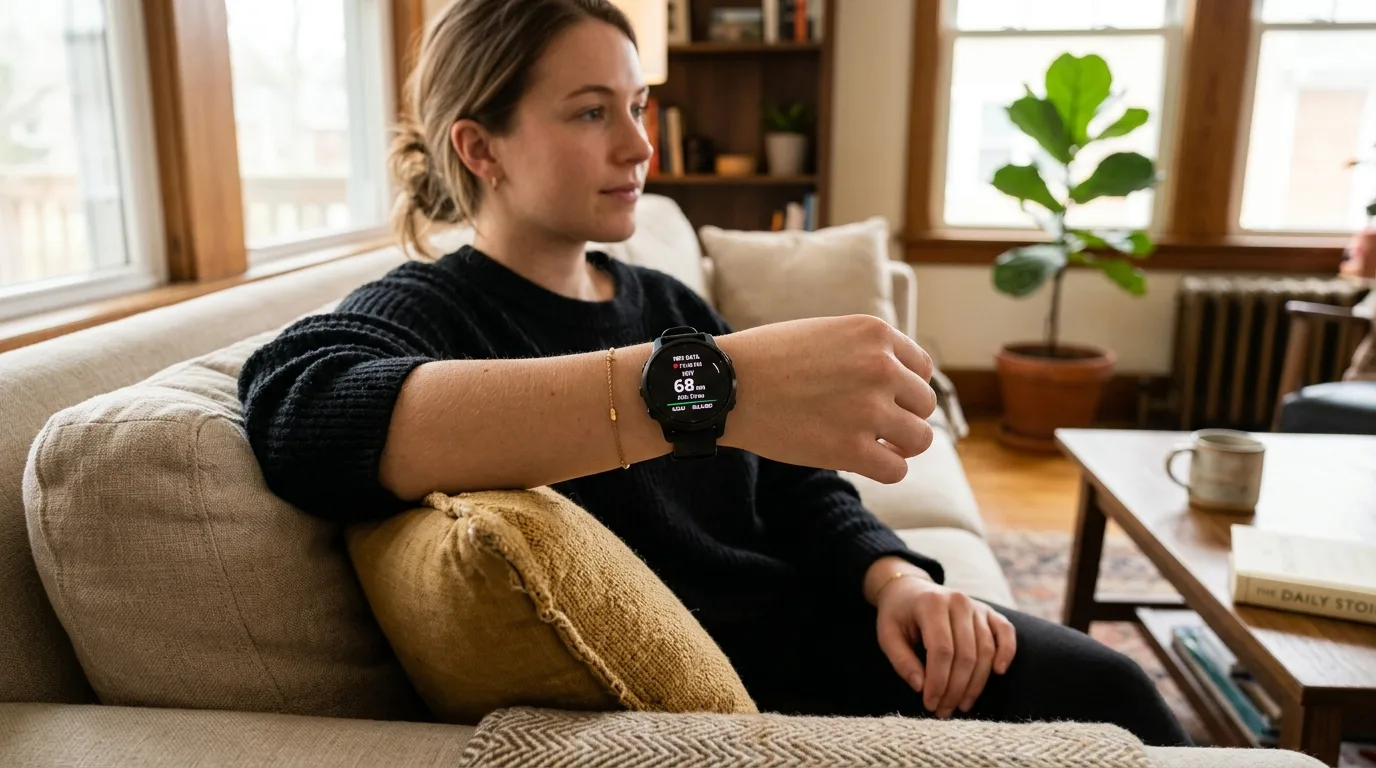
Vagal tone is not a wellness concept. It’s a measurable physiological property: the resting level of activity your vagus nerve exerts on your heart, and it predicts health outcomes with unusual precision. A meta-analysis of 51 studies involving 14,759 adults found a significant inverse relationship between heart rate variability (the standard proxy for vagal tone) and inflammatory markers including C-reactive protein and interleukin-6 (Williams et al., 2019). The ARIC study, following over 11,000 adults, found that those in the lowest quartile of HRV had significantly elevated cardiovascular risk even after controlling for standard risk factors like cholesterol and blood pressure (Dekker et al., 2000).
What makes vagal tone different from most health metrics is that you can improve it measurably within weeks using free, zero-risk interventions. This guide covers what vagal tone actually is, how to establish a real baseline using your wearable, and a 30-day progressive program that moves from foundational practices to more demanding protocols. It’s built for people who want to see numbers move, not just feel better.
For the full framework on how the autonomic nervous system works, the nervous system regulation guide provides the foundational context that makes this protocol make sense.
Key Takeaways
- Vagal tone is best measured by RMSSD, available on Oura Ring, WHOOP, Apple Watch, Garmin, and Polar. Your 30-day rolling average matters more than any single reading.
- Low vagal tone is independently associated with cardiovascular disease, chronic inflammation, anxiety, depression, and all-cause mortality (Jarczok et al., 2019).
- Four weeks of slow-paced breathing at 6 breaths per minute increased total HRV power by 55% in a 2022 randomized controlled trial (Ghati et al., 2022).
- Cold exposure, aerobic exercise, social connection, and singing all have evidence-based mechanisms for improving vagal tone.
- The 30-day program in this guide is progressive: Weeks 1-2 build the habit foundation, Weeks 3-4 add intensity and cold immersion protocols.
What Is Vagal Tone, Exactly?
Vagal tone describes how actively your vagus nerve modulates your heart at rest. Higher vagal tone correlates with better emotional regulation, lower resting heart rate, and reduced systemic inflammation (Laborde et al., 2017). Think of it as your nervous system’s braking capacity: the stronger it is, the faster you shift from high alert to genuine recovery.
The vagus nerve is the longest cranial nerve in the body. It runs from the brainstem through the neck and chest into the abdomen, connecting to the heart, lungs, and digestive tract. When it fires strongly, it slows heart rate, reduces blood pressure, stimulates digestion, and dampens inflammatory signaling. When it’s underactive, none of those systems work as efficiently.
Why “Tone” Is the Right Word
The term isn’t metaphorical. Just as muscle tone describes resting tension in your muscles, vagal tone describes the resting level of vagus nerve activity. A well-toned vagus nerve maintains steady parasympathetic influence on your heart even when you’re sitting still. That baseline activity is what separates fast recoverers from people who stay wound up for hours after a stressful event.
Crucially, vagal tone is trainable. Your genetic baseline sets your starting point. It doesn’t set your ceiling.
Vagal Tone vs. Vagus Nerve Exercises: An Important Distinction
This guide is about building vagal tone as a long-term, measurable health metric. That’s different from in-the-moment vagus nerve exercises designed to interrupt an acute stress response. Acute techniques like humming, gargling, or cold face immersion do activate the vagus nerve, but a single activation doesn’t build lasting tone. That requires weeks of consistent, progressive training.
If you’re looking for techniques to manage acute anxiety or dissociation right now, the sensory grounding guide covers those. This guide focuses on the baseline you’re building over four weeks.
How Do You Measure Vagal Tone at Home?
The most widely accepted non-invasive proxy for vagal tone is respiratory sinus arrhythmia (RSA), the natural fluctuation in heart rate that occurs with each breath. A 2017 consensus paper signed by 60 researchers confirmed that RMSSD and high-frequency HRV are the most reliable indicators of cardiac vagal activity available without clinical equipment (Laborde et al., 2017). Practically, this means your wearable already has what you need.
Which HRV Metric Reflects Vagal Tone?
Not all HRV metrics measure the same thing. Here’s what to use and what to ignore:
- RMSSD (root mean square of successive differences): The most reliable vagal tone indicator in consumer wearables. Available on Oura Ring, WHOOP, Apple Watch, Garmin, and Polar. This is the primary metric for this program.
- HF-HRV (high-frequency power, 0.15-0.40 Hz): Captures the respiratory-driven component directly tied to RSA. Useful if your wearable or app reports it.
- pNN50: Percentage of successive heartbeat intervals differing by more than 50 milliseconds. Another solid vagal marker if your device reports it.
- LF-HRV: Influenced by both sympathetic and parasympathetic branches. Less specific to vagal tone. Don’t use this as your primary tracking metric.
Establishing Your Baseline: The 7-Day Protocol
Before starting any training program, establish a real baseline. One reading tells you nothing. Seven days of morning readings before you get up, before coffee, before stress, gives you a meaningful average to work from.
Baseline measurement protocol:
- Measure RMSSD first thing after waking, before getting out of bed. Keep your wearable on overnight if it supports continuous tracking (Oura, WHOOP, Garmin).
- Record the value each morning for 7 days. Most apps do this automatically.
- Calculate your 7-day average. This is your baseline.
- Note any variables that might affect readings: alcohol the night before, illness, late sleep, travel across time zones.
Your baseline is personal. Don’t compare it to population averages as a source of concern. What matters is the direction of your trend over four weeks.
What Do the Numbers Mean?
Average RMSSD values vary significantly by age, fitness level, and health status. These are general reference ranges for adults, not diagnostic thresholds:
| RMSSD Range | General Interpretation |
|---|---|
| Below 20 ms | Low vagal tone. Common in chronic stress, poor sleep, or cardiovascular concerns. |
| 20-50 ms | Moderate vagal tone. Typical for sedentary adults. |
| 50-100 ms | Good vagal tone. Common in active, healthy individuals. |
| Above 100 ms | High vagal tone. Often seen in endurance athletes and long-term meditators. |
Your personal upward trend over four weeks is more meaningful than where you start. resonance breathing and HRV guide
Why Does Vagal Tone Predict Health Outcomes?
Low vagal tone is not merely a stress signal. It’s an independent predictor across multiple disease categories. A 2019 umbrella review found that reduced HRV was a consistent marker across cardiovascular disease, diabetes, depression, and all-cause mortality, even after controlling for confounding variables (Jarczok et al., 2019). The mechanism runs through at least three pathways.
The Anti-Inflammatory Pathway
Neuroscientist Kevin Tracey described the “cholinergic anti-inflammatory pathway” in 2002. The vagus nerve releases acetylcholine, which signals immune cells in the spleen and liver to reduce pro-inflammatory cytokines like TNF-alpha and IL-6 (Tracey, 2002). When vagal tone is low, this braking mechanism weakens and inflammation runs without adequate regulation. That’s one reason chronic stress, which suppresses vagal tone, is so strongly associated with inflammatory conditions.
A 2019 cross-sectional study of 1,537 adults found that each standard deviation increase in HRV was associated with significantly lower CRP and IL-6, even after adjusting for age, BMI, and smoking status (Jarczok et al., 2019). The relationship held across the full sample.
The Mental Health Connection
A meta-analysis of 124 studies with over 25,000 participants found that individuals with anxiety disorders, depression, and PTSD consistently showed lower resting HRV compared to healthy controls (Koch et al., 2019). The relationship appears bidirectional: low vagal tone increases vulnerability to anxiety, and chronic anxiety further suppresses vagal tone. Building vagal tone through practice may break this cycle from the physiological end.
Cardiovascular Risk
The ARIC study followed 11,654 middle-aged adults over eight years. Those in the lowest quartile of HRV had significantly elevated risk of coronary heart disease events compared to those with the highest HRV, independent of cholesterol, blood pressure, and smoking (Dekker et al., 2000). This wasn’t a small or marginal effect. Low HRV is now considered an independent cardiovascular risk factor in cardiology research.
What Suppresses Vagal Tone?
Several modifiable factors consistently depress vagal tone. Chronic psychological stress is the single strongest behavioral predictor of reduced HRV in healthy adults, according to a large cross-sectional study of working-age adults (Jarczok et al., 2019). Understanding these factors helps you remove friction from the 30-day program.
Chronic Stress
Sustained sympathetic activation actively suppresses parasympathetic activity. Every hour your body spends in fight-or-flight mode is an hour your vagus nerve gets less practice. Over months, this creates a low-tone baseline that makes you more reactive to the next stressor, which further suppresses tone. It’s a compounding problem.
Sedentary Lifestyle
Physical inactivity is strongly associated with lower HRV. Regular aerobic exercise is one of the most reliable vagal tone builders. Its absence is one of the most reliable vagal tone suppressors.
Poor Sleep
Sleep deprivation reduces HRV measurably. Even a single night of restricted sleep lowers next-day vagal tone. Chronic insomnia creates sustained parasympathetic suppression that no amount of daytime breathwork fully compensates for.
Alcohol
Even moderate alcohol consumption suppresses next-morning HRV. If you’re tracking your RMSSD and wondering why a reading is low, check whether you had a drink the night before. The effect is consistent and well-documented in wearable data.
Age
Vagal tone naturally declines with age. RMSSD typically peaks in the late teens and decreases gradually through adulthood. Lifestyle interventions can slow or partially reverse this decline, but they can’t stop it entirely. That makes consistent practice more important, not less, as you get older.
The 30-Day Vagal Tone Program
Research confirms that meaningful baseline changes in HRV are achievable within four to eight weeks of consistent practice. A 2022 randomized controlled trial found that four weeks of slow-paced breathing at 6 breaths per minute increased total HRV power by 55% and significantly shifted autonomic balance toward parasympathetic dominance (Ghati et al., 2022). The program below is structured progressively: Weeks 1-2 build the habit foundation, Weeks 3-4 add intensity and cold exposure.
Before You Start: Establish Your 7-Day Baseline
Complete the baseline measurement protocol described in the measurement section. Record your average RMSSD. This is your Week 0 benchmark. You’ll compare against it at the end of Week 2 and Week 4.
Weeks 1-2: Building the Foundation
The first two weeks focus on establishing two daily habits: resonance breathing and consistent sleep timing. These produce the most reliable HRV improvements across the research literature and require minimal time investment.
Daily practice (15-20 minutes):
- Resonance breathing, 10 minutes: Breathe at 5-6 breaths per minute. Inhale for 5 seconds through the nose, exhale for 5 seconds through the nose or pursed lips. If 5 seconds is uncomfortable, start at 4-second cycles and extend over the first week. A 2024 meta-analysis of 31 studies confirmed that this practice reliably increases RMSSD (SMD = 0.37) and SDNN (SMD = 0.77) (Shao et al., 2024).
- Consistent sleep and wake times: Vagal tone is sensitive to sleep disruption. Aim for the same wake time daily, including weekends. This alone will move your baseline if your sleep timing has been irregular.
- Cold shower finish, 30 seconds: At the end of your morning shower, switch to the coldest setting for 30 seconds. Focus on breathing slowly rather than bracing. This begins building cold adaptation gradually before Week 3 extends the duration.
Tracking: Record your morning RMSSD each day. Note sleep hours and the presence or absence of alcohol. At Day 14, calculate your 7-day rolling average and compare it to your baseline.
resonance breathing and HRV guide
Weeks 3-4: Adding Intensity
With two weeks of consistent practice established, Weeks 3-4 extend session duration, increase cold exposure, and add aerobic exercise. A 2017 systematic review and meta-analysis of 21 studies found that aerobic exercise training significantly increased HRV in sedentary adults, with effects emerging after 4-12 weeks of consistent training (Villafaina et al., 2017).
Daily practice (25-35 minutes):
- Resonance breathing, extended to 20 minutes: Build from 10 minutes to 20 over the first week of this phase. Morning sessions before checking email produce the most consistent results in my experience. The extended duration compounds the HRV benefit established in Weeks 1-2.
- Cold shower finish, extended to 90 seconds: Extend the cold phase gradually. By Day 28, aim for 90 consecutive seconds at the coldest setting. A 2022 systematic review found that regular cold water immersion was associated with increased HRV and improved parasympathetic tone (Esperland et al., 2022).
- Aerobic exercise, 3 sessions per week: 30-45 minutes of moderate-intensity activity: brisk walking, cycling, swimming, or jogging. Target 65-75% of maximum heart rate. High-intensity intervals can temporarily suppress HRV, so keep intensity moderate during this program.
- Social connection, at least 2 intentional interactions per week: Positive social connection activates the ventral vagal complex. Research shows that people who report stronger social connections have higher baseline HRV, and the relationship is bidirectional (Kok and Fredrickson, 2013). Phone calls with people you like count. In-person interactions are even more effective.
Optional additions if you want to go further:
- Humming and singing: The vagus nerve innervates the laryngeal muscles. Humming during exhalation (as in Bhramari pranayama or simply humming a tune) adds mechanical vagal stimulation on top of slow-exhale benefits. 5 minutes while commuting or cooking is enough.
- Meditation, 10 minutes daily: A 2018 systematic review found that mind-body exercises including Tai Chi and yoga consistently increased HRV markers of vagal function, with longer intervention durations producing larger effects (Zou et al., 2018).
Week 4 benchmark: On Day 28, calculate your 7-day rolling average and compare it to your original baseline. Most people following this protocol consistently see measurable RMSSD improvement. The 2022 Ghati RCT found 55% improvement in total HRV power after four weeks of slow-paced breathing alone. Adding cold exposure, exercise, and social connection layers additional stimulus.
What to Do After Day 30
By Week 4, the habits should be established enough to continue without the structure of a program. The goal at that point is maintenance: keep the 20-minute morning breathing session, keep the cold finish, keep the aerobic exercise. Add variety when motivation dips. The practices that moved your baseline are the ones worth keeping.
If you want to track progress beyond RMSSD, your 30-day average HRV trend and resting heart rate are both reliable secondary indicators. vagus nerve exercises
How Does HRV Relate to Vagal Tone?
HRV and vagal tone are not identical, but the relationship is tight enough to use one as a proxy for the other. A 2017 consensus paper by 60 researchers stated that RMSSD and HF-HRV are the most reliable non-invasive indices of cardiac vagal activity currently available (Laborde et al., 2017). In practical terms, vagal tone is the physiological property; HRV is how we measure it.
Why Single Readings Are Unreliable
Alcohol, late meals, intense exercise, illness, travel, and the menstrual cycle all affect daily HRV readings significantly. A low reading after a bad night’s sleep is not a sign your program isn’t working. It’s noise. What matters is the 7-day or 30-day rolling average, which filters out single-day variation and reveals the actual direction of your baseline.
Don’t make training decisions based on a single number. Don’t skip a session because yesterday’s reading was low. Stay consistent. The trend is the data.
Not All HRV Is Vagal Activity
Total HRV reflects both sympathetic and parasympathetic influences. LF-HRV, for example, is influenced by both branches of the autonomic nervous system, plus the baroreflex. Only HF-HRV and RMSSD are considered relatively pure vagal indicators. When your wearable shows a general “HRV score,” check the documentation to confirm it’s RMSSD-based. Most major consumer devices are, but some apps apply proprietary scaling that changes the absolute number.
Frequently Asked Questions
What is vagal tone in simple terms?
Vagal tone is a measure of how actively your vagus nerve modulates your heart at rest. A higher vagal tone means your body can shift from stress to recovery more quickly. The vagus nerve controls heart rate, digestion, and inflammatory signaling. Research links higher vagal tone to lower inflammation and better emotional regulation (Williams et al., 2019). The practical proxy for measuring it is RMSSD, available on any modern fitness wearable.
How do I know if my vagal tone is low?
Track your RMSSD for 7 days using a wearable that measures it overnight or during a morning resting reading. Consistently low values relative to age-group averages may indicate low vagal tone. Symptoms often associated with low vagal tone include slow recovery from stress, chronic fatigue, digestive problems, difficulty sleeping, and anxiety that lingers for hours after a trigger. Establish a personal baseline before drawing conclusions from any single reading. See our resonance breathing and HRV guide for detailed tracking guidance.
How long does it take to improve vagal tone?
Acute HRV changes are measurable within a single 10-20 minute breathing session. Lasting baseline improvements require four to eight weeks of consistent daily practice. A 2022 randomized controlled trial found significant improvements in total HRV power after four weeks of 20 minutes daily slow-paced breathing (Ghati et al., 2022). Adding cold exposure, exercise, and consistent sleep timing to the protocol produces additional improvements.
Is vagal tone the same as vagus nerve stimulation?
No. Vagal tone refers to the natural, ongoing baseline activity of the vagus nerve. Vagus nerve stimulation (VNS) is a clinical procedure using implanted or transcutaneous devices to electrically stimulate the nerve, FDA-approved for epilepsy and treatment-resistant depression. Practices like slow breathing and cold exposure are sometimes called “natural vagus nerve stimulation” because they activate the same nerve, but the mechanism and scale are different. The practices in this guide build tonic vagal activity over time, not acute stimulation.
Can you improve vagal tone without any equipment?
Yes. The most effective vagal tone intervention, resonance breathing at 6 breaths per minute, requires nothing but time. Aerobic walking, social connection, and humming also require no equipment. The one thing that adds significant value is a wearable that tracks RMSSD, not because you need it to improve, but because objective tracking dramatically improves consistency. Seeing the numbers move is motivating in a way that subjective feeling alone rarely sustains over 30 days.
References
- Laborde, S., Mosley, E., and Thayer, J. F. (2017). Heart Rate Variability and Cardiac Vagal Tone in Psychophysiological Research: Recommendations for Experiment Planning, Data Analysis, and Data Reporting. Frontiers in Psychology, 8, 213. https://www.frontiersin.org/journals/psychology/articles/10.3389/fpsyg.2017.00213/full
- Williams, D. P., Koenig, J., Carnevali, L., et al. (2019). Heart rate variability and inflammation: A meta-analysis of human studies. Brain, Behavior, and Immunity, 80, 219-226. https://pmc.ncbi.nlm.nih.gov/articles/PMC6487078/
- Jarczok, M. N., Koenig, J., and Thayer, J. F. (2019). Lower heart rate variability is associated with higher levels of inflammation in middle-aged men. Psychoneuroendocrinology, 102, 272-280. https://pmc.ncbi.nlm.nih.gov/articles/PMC6541954/
- Tracey, K. J. (2002). The inflammatory reflex. Nature, 420, 853-859. https://www.nature.com/articles/nature01321
- Koch, C., Wilhelm, M., Salzmann, S., et al. (2019). A meta-analysis of heart rate variability in major depression. Psychological Medicine, 49(12), 1948-1957. https://pmc.ncbi.nlm.nih.gov/articles/PMC6383288/
- Dekker, J. M., Crow, R. S., Folsom, A. R., et al. (2000). Low heart rate variability in a 2-minute rhythm strip predicts risk of coronary heart disease and mortality from several causes: the ARIC Study. Circulation, 102(11), 1239-1244. https://pubmed.ncbi.nlm.nih.gov/10636132/
- Ghati, N., et al. (2022). Effect of Resonance Breathing on Heart Rate Variability and Cognitive Functions in Young Adults: A Randomised Controlled Study. Cureus. https://pmc.ncbi.nlm.nih.gov/articles/PMC8924557/
- Shao, R., et al. (2024). The Effect of Slow-Paced Breathing on Cardiovascular and Emotion Functions: A Meta-Analysis and Systematic Review. Mindfulness. https://link.springer.com/article/10.1007/s12671-023-02294-2
- Fincham, G. W., et al. (2023). Effect of breathwork on stress and mental health: A meta-analysis of randomised-controlled trials. Scientific Reports. https://pmc.ncbi.nlm.nih.gov/articles/PMC9828383/
- Kok, B. E., and Fredrickson, B. L. (2013). Upward spirals of the heart: Autonomic flexibility, as indexed by vagal tone, reciprocally and prospectively predicts positive emotions and social connectedness. Biological Psychology, 85(3), 432-436. https://pubmed.ncbi.nlm.nih.gov/23649562/
- Esperland, D., de Weerd, L., and Mercer, J. B. (2022). Health effects of voluntary exposure to cold water: a continuing subject of debate. International Journal of Circumpolar Health, 81(1), 2111789. https://pmc.ncbi.nlm.nih.gov/articles/PMC9518606/
- Bravo, J. A., Forsythe, P., Chew, M. V., et al. (2011). Ingestion of Lactobacillus strain regulates emotional behavior and central GABA receptor expression in a mouse via the vagus nerve. Proceedings of the National Academy of Sciences, 108(38), 16050-16055. https://pmc.ncbi.nlm.nih.gov/articles/PMC3413724/
- Villafaina, S., et al. (2017). Physical Exercise as a Modulator of HRV: A Systematic Review and Meta-Analysis. International Journal of Environmental Research and Public Health, 14(9), 1070. https://pmc.ncbi.nlm.nih.gov/articles/PMC5758687/
- Zou, L., Sasaki, J. E., Wei, G. X., et al. (2018). Effects of Mind-Body Exercises (Tai Chi/Yoga) on Heart Rate Variability Parameters and Perceived Stress: A Systematic Review with Meta-Analysis of Randomized Controlled Trials. Journal of Clinical Medicine, 7(11), 404. https://pmc.ncbi.nlm.nih.gov/articles/PMC6890337/