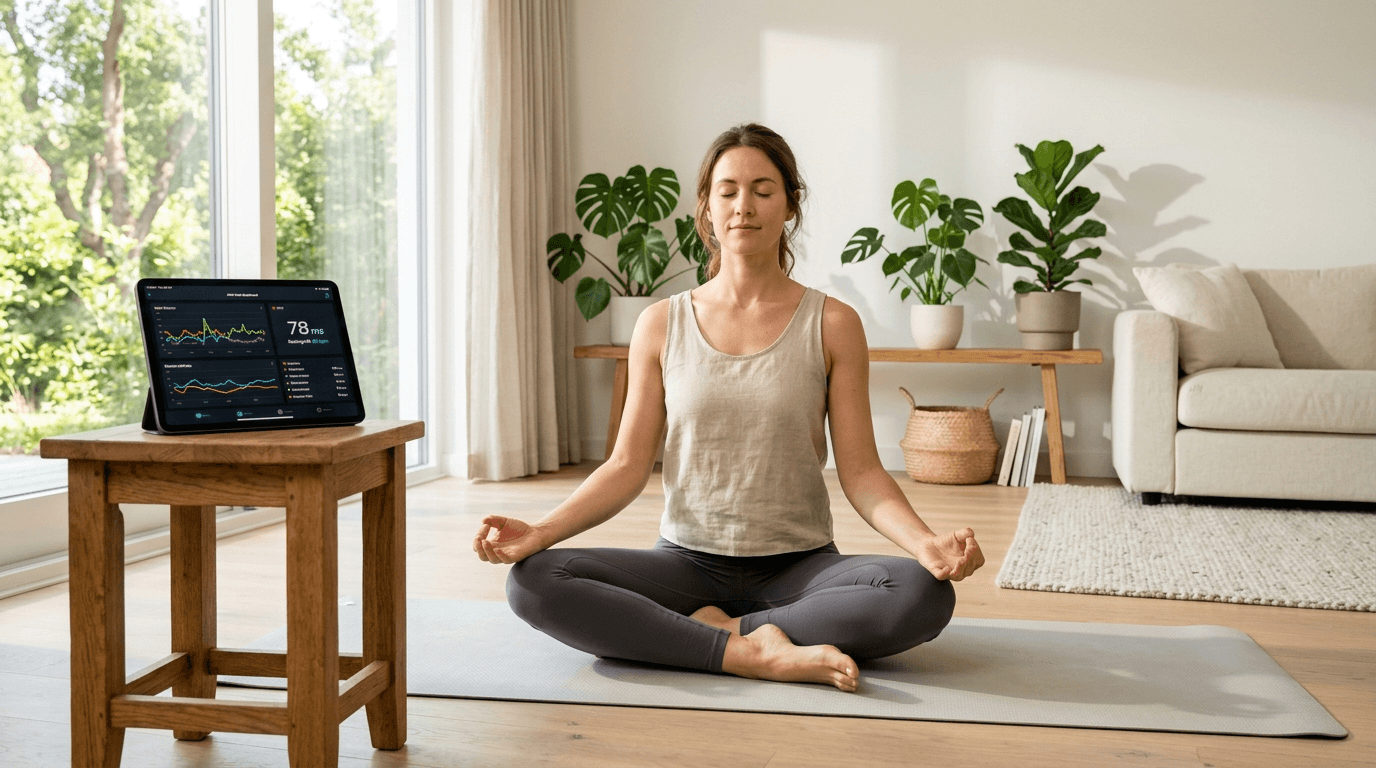
Resonance breathing is a slow, rhythmic breathing technique performed at roughly six breaths per minute — the rate that synchronizes your heart rhythm with your respiratory cycle and produces the largest measurable gains in heart rate variability (HRV). In a randomized controlled trial of 50 young adults, four weeks of daily resonance breathing practice increased SDNN (a key HRV marker) from 66.69 ms to 78.76 ms and boosted total HRV power by 55%, while perceived stress scores dropped by 24% (Ghati et al., 2022). If you’ve been looking for one breathwork technique with the strongest scientific backing for nervous-system training, resonance breathing is the place to start.
This article is for informational purposes only and does not constitute medical advice. Consult a qualified healthcare provider before beginning any new breathing practice, especially if you have a heart condition or respiratory disorder.
Key Takeaways
- Resonance breathing means inhaling and exhaling at approximately 6 breaths per minute (a 5-second inhale and 5-second exhale) to match your body’s natural cardiovascular resonance frequency.
- A 2022 RCT found that 20 minutes of daily practice over four weeks increased total HRV power by 55% and significantly lowered the LF/HF ratio, indicating stronger parasympathetic tone (Ghati et al., 2022).
- In a 2017 study of 95 participants, breathing at exact resonance frequency produced higher positive mood, a better LF/HF ratio, and lower systolic blood pressure during stress compared to a control group (Steffen et al., 2017).
- A 2024 meta-analysis of 31 studies (n = 1,133) confirmed that slow-paced breathing reliably reduces systolic blood pressure (SMD = -0.45) and increases SDNN (SMD = 0.77) (Shao et al., 2024).
- You don’t need expensive equipment to start — a simple timer or free app is enough.
What Is Resonance Breathing?
Resonance breathing — also called coherent breathing or resonance frequency breathing — is the practice of slowing your breath rate to approximately 4.5 to 7 breaths per minute, with most people finding their sweet spot around 6 breaths per minute. At this pace, something remarkable happens: your heart rate begins to oscillate in sync with your breathing rhythm.
This synchronization occurs at approximately 0.1 Hz (one cycle every 10 seconds), which aligns with the natural frequency of your cardiovascular system’s baroreflex — the homeostatic mechanism that regulates blood pressure beat by beat (Lehrer & Gevirtz, 2014). When your breathing rate matches this frequency, the resulting amplification is called resonance — just like pushing a swing at exactly the right moment to make it go higher.
Unlike box breathing, which uses equal inhale-hold-exhale-hold phases, or the 4-7-8 pattern for sleep, which emphasizes a long exhale, resonance breathing keeps things simple: breathe in for about 5 seconds, breathe out for about 5 seconds, and repeat. No breath holds. No complex ratios. Just steady, rhythmic breathing at the rate that maximizes your body’s self-regulation.
Why “Resonance” Matters
The term “resonance” isn’t metaphorical. In physics, resonance occurs when an external force matches a system’s natural oscillation frequency. Your cardiovascular system has two overlapping oscillators: respiratory sinus arrhythmia (RSA), which speeds your heart rate on inhalation and slows it on exhalation, and the baroreflex loop, which adjusts heart rate in response to blood pressure changes.
When you breathe at approximately 0.1 Hz, these two oscillators overlap and amplify each other. The result is the largest possible swing in heart rate from beat to beat — which is exactly what HRV measures (Laborde et al., 2022).
The Science of 6 Breaths Per Minute
HRV Gains Are Measurable Within Minutes
You don’t have to wait weeks to see changes. In a study of 10 healthy men, resonance frequency breathing acutely decreased systolic blood pressure by 4.6 mmHg and significantly increased low-frequency HRV power — all within a single session (Fogt et al., 2019). The baroreflex efficacy index also improved, meaning the body became better at fine-tuning blood pressure in real time.
Four Weeks of Practice Shifts Baseline Autonomic Tone
The longer-term picture is even more compelling. In the 2022 randomized controlled study by Ghati and colleagues, 25 young men who practiced resonance breathing for 20 minutes per day over four weeks showed these changes compared to a control group:
| HRV Metric | Before | After 4 Weeks | Change |
|---|---|---|---|
| SDNN (ms) | 66.69 | 78.76 | +18% (p = 0.001) |
| Total Power (ms^2) | 3,570 | 5,543 | +55% (p = 0.002) |
| LF/HF Ratio | 2.05 | 0.25 | Shifted toward parasympathetic (p = 0.02) |
| Perceived Stress | 27.65 | 21.0 | -24% (p = 0.01) |
Source: Ghati et al., 2022, PMC8924557
The dramatic drop in LF/HF ratio — from 2.05 to 0.25 — signals a shift from sympathetic (fight-or-flight) dominance to parasympathetic (rest-and-digest) dominance. That’s not a subtle change; it’s a fundamental rewiring of autonomic baseline.
Resonance Breathing Outperforms Other Techniques for HRV
A 2025 study from Brigham Young University directly compared three popular breathing methods — square breathing, 4-7-8 breathing, and 6-breaths-per-minute resonance breathing — for their effects on HRV, CO2 levels, and mood. While all three techniques increased low-frequency HRV, the 6-breaths-per-minute condition produced the highest LF-HRV with small to medium effect size advantages over the other two methods (Marchant, 2025, BYU ScholarsArchive). For practitioners who want to build the strongest HRV gains, resonance breathing appears to be the best choice.
Blood Pressure Benefits Are Clinically Meaningful
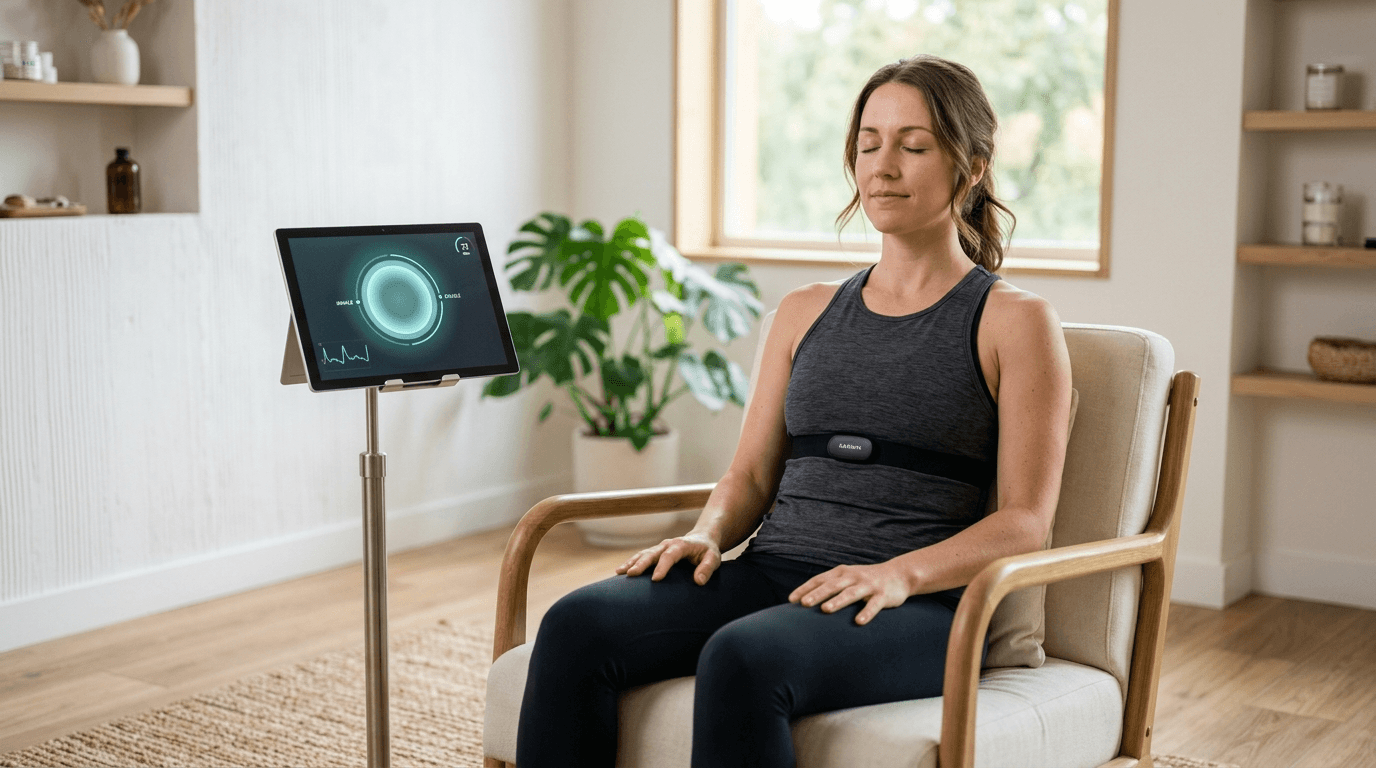
A 2024 meta-analysis of 31 studies with 1,133 total participants found that slow-paced breathing (including resonance breathing) reliably reduces systolic blood pressure with a standardized mean difference of -0.45. Time-domain HRV measures also improved: RMSSD showed an SMD of 0.37 and SDNN showed an SMD of 0.77 (Shao et al., 2024). Furthermore, limited evidence pointed to persistent blood pressure reduction three months after intervention in prehypertensive participants.
A 2023 review in Frontiers in Physiology concluded that mindful breathing at six breaths per minute for 15 minutes per day is an effective technique in the management of hypertension (Ubolsakka-Jones et al., 2023).
How to Practice Resonance Breathing: Step by Step
Resonance breathing is one of the most accessible breathwork techniques because the instructions are straightforward. Here’s how to get started.
Step 1: Find a Comfortable Position
Sit upright in a chair with your feet flat on the floor, or sit cross-legged on a cushion. You can also lie down, though sitting tends to keep you more alert. Place one hand on your chest and one on your belly — you’ll want your belly to expand, not your chest.
Step 2: Set Your Timer
Use a simple timer, metronome app, or breathing pacer set to a 10-second cycle (5 seconds in, 5 seconds out). That gives you 6 breaths per minute. Many free apps offer visual or audio cues for paced breathing.
Step 3: Inhale Through Your Nose for 5 Seconds
Breathe in slowly and steadily through your nose. Let your diaphragm descend so your belly pushes outward against your hand. Keep your shoulders relaxed and avoid raising your chest.
Step 4: Exhale Through Your Nose (or Mouth) for 5 Seconds
Let the breath flow out gently. Don’t force it. Some practitioners prefer exhaling through pursed lips, which adds slight back-pressure and can feel more controlled. Both nose and mouth exhalation work — choose what feels natural.
Step 5: Maintain a Smooth, Continuous Rhythm
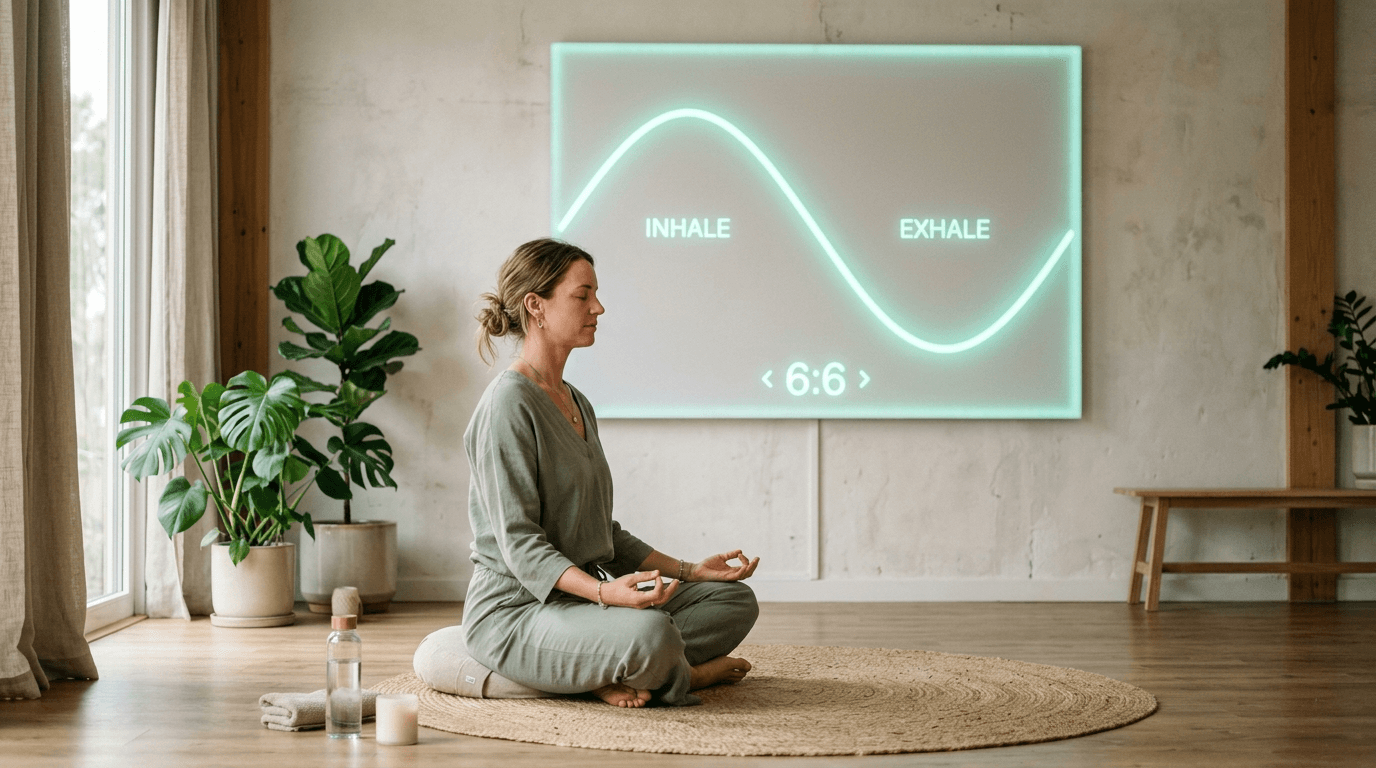
There should be no pauses between the inhale and exhale. Think of it as a continuous wave: the inhale flows seamlessly into the exhale, and the exhale flows back into the next inhale. This steady rhythm is what keeps your heart rate oscillating in that resonance zone.
Step 6: Practice for 10 to 20 Minutes
Start with 5-minute sessions if you’re new to breathwork, then gradually increase to 10 or 20 minutes. The 2022 study by Ghati et al. used 20-minute daily sessions, which produced significant changes after four weeks.
Tips for Beginners
- Don’t overthink the count. If 5 seconds in and 5 seconds out feels forced, try 4 seconds in and 6 seconds out. Research from BYU found no significant difference in HRV outcomes between 4:6 and 5:5 ratios (Marchant, 2025).
- Practice at the same time each day. Consistency matters more than duration.
- Expect mild lightheadedness. If you feel dizzy, slow down or take a normal breath before resuming. This sensation usually fades after a few sessions.
- Combine with other practices. Resonance breathing pairs well with morning meditation or as a wind-down routine before bed. If you struggle with sleep, also consider the 4-7-8 technique.
Tracking Your Resonance Breathing With HRV Devices
One of the reasons resonance breathing appeals to the biohacking community is that you can objectively measure its effects. HRV trackers give you a number that reflects how well your autonomic nervous system adapts to stress. Higher HRV generally indicates better cardiovascular fitness, stress resilience, and recovery capacity.
Popular HRV Tracking Options
Several consumer-grade wearables measure HRV:
- Oura Ring — tracks overnight HRV (RMSSD) and provides a daily readiness score.
- WHOOP Strap — monitors 24/7 HRV and reports recovery as a percentage.
- Apple Watch — records HRV during sleep and on-demand via the Breathe app.
- Garmin watches — offer HRV status trends with Body Battery scores.
- Polar chest straps — provide clinical-grade beat-to-beat accuracy, often used with biofeedback apps.
What to Look For in Your Data
After starting a daily resonance breathing practice, track these trends over 4 to 8 weeks:
- Resting HRV (RMSSD) — this should trend upward as parasympathetic tone improves.
- HRV during sessions — your real-time HRV amplitude should increase during resonance breathing compared to normal breathing.
- Resting heart rate — a gradual decrease often accompanies improved vagal tone.
- Subjective stress — many practitioners report feeling calmer and more focused within the first two weeks.
Note: wearable HRV readings have limitations. Consumer devices measure from the wrist or finger, which is less accurate than a chest strap or clinical ECG. Use the trends, not individual readings, to gauge progress.
Resonance Breathing vs. Other Techniques
The BYU study offers a rare head-to-head comparison. Here’s how resonance breathing stacks up against other popular methods:
| Technique | Breath Rate | HRV Effect | Best For |
|---|---|---|---|
| Resonance breathing | ~6 bpm (5s in, 5s out) | Highest LF-HRV gains; strongest resonance | Daily HRV training, stress resilience |
| Box breathing | ~4 bpm (4s each phase) | Moderate HRV increase; includes breath holds | Focus, acute stress relief |
| 4-7-8 breathing | ~3 bpm (4s in, 7s hold, 8s out) | Moderate HRV increase; very slow rate | Sleep onset, relaxation |
| Cyclic sighing | Variable | Shown to improve mood more than mindfulness meditation | Quick mood boost, anxiety |
| Diaphragmatic breathing | Variable (usually 8-12 bpm) | Moderate parasympathetic activation | General relaxation |
According to the BYU data, LF-HRV was higher during 6-breaths-per-minute breathing compared to square or 4-7-8 conditions, with small to medium effects. The researchers concluded that for anyone specifically interested in maximizing HRV coherence, the 6-breath condition is the strongest option (Marchant, 2025).
However, different techniques serve different purposes. If you’re anxious and need quick relief, breathing exercises for anxiety like cyclic sighing or extended-exhale patterns might be more immediately calming. Resonance breathing is the long game — it’s designed for consistent, daily practice that gradually resets your autonomic baseline.
What the Broader Research Says
A 2023 meta-analysis of 12 RCTs involving 785 participants found that breathwork in general (including resonance breathing) produced a significant effect on stress reduction (Hedges’ g = -0.35, p = 0.0009) and anxiety (g = -0.32, p < 0.0001) (Fincham et al., 2023). Meanwhile, a 2025 narrative review of 30 studies reported that 23 out of 30 showed significant improvements in at least one HRV parameter, with slow breathing at approximately 6 bpm being the most commonly effective protocol (Little, 2025).
Long-Term Benefits of Resonance Breathing
Nervous System Resilience
The core long-term benefit is improved vagal tone — your vagus nerve’s ability to quickly shift your body from a stressed state to a calm one. The Steffen et al. (2017) study demonstrated that participants who breathed at their resonance frequency showed lower systolic blood pressure not just during the breathing exercise, but also during a subsequent stress test and the recovery period. In other words, the training didn’t just calm them down in the moment; it helped them handle stress better afterward (Steffen et al., 2017).
Cognitive Performance
The Ghati et al. (2022) study also measured cognitive function using Trail Making Tests. After four weeks of resonance breathing:
- Trail A (processing speed): improved from 27.82s to 23.34s (p = 0.03)
- Trail B (executive function): improved from 63.39s to 53.52s (p = 0.01)
These improvements suggest that the autonomic benefits of resonance breathing translate into measurable cognitive gains — likely mediated by better cerebral blood flow and reduced stress interference.
Stress Recovery in Real-World Settings
A 2025 study published in Scientific Reports tested light-guided resonant breathing in a simulated office environment and found that it significantly enhanced psychophysiological stress recovery compared to a control condition (Weiser et al., 2025). This is encouraging because it suggests resonance breathing works not just in quiet lab settings but in the kind of environment where most people actually need it — at work.
Emotional Regulation
Across multiple studies, resonance breathing consistently improves mood. The Steffen et al. study found significantly higher positive mood in the resonance frequency group compared to both the control and the slightly-off-resonance group (p < 0.001, effect size: eta = 0.19). A 2025 study on resonance breathing in generalized anxiety disorder reported improvements in both HRV and inhibitory control, suggesting the practice may help anxious individuals better regulate their emotional responses (Tatschl et al., 2025).
Frequently Asked Questions
How long does it take for resonance breathing to improve HRV?
You’ll see acute HRV changes within a single session. However, for lasting baseline shifts, the research suggests consistent daily practice for at least four weeks. The Ghati et al. (2022) study found significant improvements in SDNN, total HRV power, and perceived stress after 20 minutes per day for four weeks.
Is 6 breaths per minute the right rate for everyone?
Not exactly. While 6 bpm (0.1 Hz) is the average resonance frequency, individual rates can range from about 4.5 to 7 breaths per minute. A biofeedback assessment can pinpoint your personal resonance frequency, but 6 bpm is a reliable starting point for most people. Research shows that even breathing at one breath above your exact resonance frequency still provides substantial benefits (Fogt et al., 2019).
Can I combine resonance breathing with other breathwork techniques?
Absolutely. Many practitioners use resonance breathing as their daily baseline practice and supplement it with other techniques for specific situations — box breathing for focus, 4-7-8 for sleep, or breathing exercises for anxiety relief. The key is consistency: pick one method as your daily anchor and use others as needed.
Do I need a biofeedback device to practice resonance breathing?
No. While a chest-strap HRV monitor paired with a biofeedback app can help you find your precise resonance frequency, it isn’t required. Simply breathing at 6 breaths per minute with a pacer app or timer will get you close enough for meaningful benefits. Consumer wearables like Oura, WHOOP, or Apple Watch can track your HRV trends over time to confirm you’re on the right track.
Is resonance breathing safe for people with anxiety or panic disorder?
For most people, yes. However, some individuals with panic disorder may initially find slow breathing uncomfortable or anxiety-provoking. If this happens, start with shorter sessions (2-3 minutes) and a slightly faster rate (7-8 bpm) before gradually slowing down. A 2025 study found that resonance breathing improved HRV and inhibitory control even in participants with generalized anxiety disorder (Tatschl et al., 2025). Always consult a healthcare provider if you have concerns.
How does resonance breathing affect blood pressure?
A 2024 meta-analysis found that slow-paced breathing reduces systolic blood pressure with a standardized mean difference of -0.45 (Shao et al., 2024). One acute study measured a 4.6 mmHg drop in systolic blood pressure during resonance frequency breathing (Fogt et al., 2019). These effects are modest compared to medication but clinically meaningful as a complementary approach.
Conclusion
Resonance breathing stands out among breathwork methods for a simple reason: it produces the largest, most consistent HRV gains documented in controlled research. By breathing at approximately 6 breaths per minute, you synchronize your respiratory and cardiovascular systems at their natural resonance frequency of 0.1 Hz, amplifying parasympathetic activity and training your nervous system to self-regulate more effectively.
The evidence is clear and growing. A single session acutely lowers blood pressure and boosts HRV. Four weeks of daily practice can shift your autonomic baseline toward parasympathetic dominance, reduce perceived stress by 24%, and even improve cognitive performance. Head-to-head comparisons show that resonance breathing outperforms square breathing and 4-7-8 patterns for HRV optimization.
The best part? It costs nothing and takes 10 to 20 minutes per day. All you need is a timer and a quiet place to sit. Start today, track your progress with a wearable or journal, and give it at least four weeks before assessing results.
If you want to explore more evidence-based breathing methods for different goals, check out the full breathwork techniques guide for a comprehensive overview of the methods that work and why.
This article is for informational purposes only and does not constitute medical advice. Consult a qualified healthcare provider before beginning any new breathing practice, especially if you have a heart condition or respiratory disorder.
References
- Ghati, N., et al. (2022). Effect of Resonance Breathing on Heart Rate Variability and Cognitive Functions in Young Adults: A Randomised Controlled Study. Cureus. https://pmc.ncbi.nlm.nih.gov/articles/PMC8924557/
- Steffen, P. R., et al. (2017). The Impact of Resonance Frequency Breathing on Measures of Heart Rate Variability, Blood Pressure, and Mood. Frontiers in Public Health. https://pmc.ncbi.nlm.nih.gov/articles/PMC5575449/
- Lehrer, P. & Gevirtz, R. (2014). A Practical Guide to Resonance Frequency Assessment for Heart Rate Variability Biofeedback. Frontiers in Neuroscience. https://pmc.ncbi.nlm.nih.gov/articles/PMC7578229/
- Laborde, S., et al. (2022). Heart rate variability and slow-paced breathing: when coherence meets resonance. Neuroscience & Biobehavioral Reviews. https://www.sciencedirect.com/science/article/abs/pii/S0149763422000653
- Fogt, D. L., et al. (2019). Acute effects of resonance frequency breathing on cardiovascular regulation. Physiological Reports. https://pmc.ncbi.nlm.nih.gov/articles/PMC6882954/
- Marchant, J. (2025). Comparing the Effects of Square, 4-7-8, and 6 Breaths-per-Minute Breathing Conditions on Heart Rate Variability, CO2 Levels, and Mood. BYU ScholarsArchive. https://scholarsarchive.byu.edu/cgi/viewcontent.cgi?article=11705&context=etd
- Shao, R., et al. (2024). The Effect of Slow-Paced Breathing on Cardiovascular and Emotion Functions: A Meta-Analysis and Systematic Review. Mindfulness. https://link.springer.com/article/10.1007/s12671-023-02294-2
- Fincham, G. W., et al. (2023). Effect of breathwork on stress and mental health: A meta-analysis of randomised-controlled trials. Scientific Reports. https://pmc.ncbi.nlm.nih.gov/articles/PMC9828383/
- Little, A. (2025). The A52 Breath Method: A Narrative Review of Breathwork for Mental Health and Stress Resilience. Stress and Health. https://pmc.ncbi.nlm.nih.gov/articles/PMC12341363/
- Ubolsakka-Jones, C., et al. (2023). Mindful breathing as an effective technique in the management of hypertension. Frontiers in Physiology. https://www.frontiersin.org/journals/physiology/articles/10.3389/fphys.2023.1339873/full
- Weiser, S., et al. (2025). Light-guided resonant breathing enhances psychophysiological stress recovery in a simulated office environment. Scientific Reports. https://www.nature.com/articles/s41598-025-24813-y
- Tatschl, J. M., et al. (2025). Effects of A Brief Resonance Frequency Breathing Exercise on Heart Rate Variability and Inhibitory Control in the Context of Generalised Anxiety Disorder. Applied Psychophysiology and Biofeedback. https://link.springer.com/article/10.1007/s10484-025-09687-0