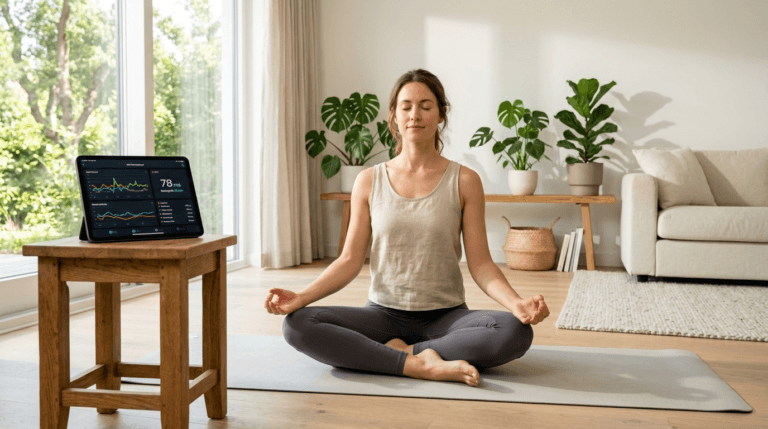
The Wim Hof Method has gone from fringe biohacking curiosity to one of the most researched breathwork and cold exposure protocols on the planet. Named after Dutch extreme athlete Wim “The Iceman” Hof, this three-pillar system combines controlled hyperventilation, breath retention, and progressive cold exposure to influence the autonomic nervous system in ways scientists once thought impossible. In a landmark 2014 study published in PNAS, trained practitioners showed 53% lower levels of the inflammatory marker TNF-alpha compared to controls — a result that sent shockwaves through the medical community.
But the Wim Hof Method isn’t a casual wellness trend. It involves intense physiological stress, and practicing it incorrectly carries real risks, including loss of consciousness. This guide walks you through the science, the step-by-step breathing protocol, a safe cold exposure progression, and the critical safety precautions you need before starting.
Key Takeaways
- Three pillars: The Wim Hof Method combines breathwork (cyclic hyperventilation + breath holds), cold exposure, and meditation/commitment.
- Proven immune effects: A randomized controlled trial found 53% lower TNF-alpha, 57% lower IL-6, and 194% higher anti-inflammatory IL-10 in trained participants (Kox et al., 2014).
- Mental health benefits: A 2024 clinical trial showed a 24% reduction in depressive symptoms and 27% reduction in anxiety in participants practicing the method.
- Progressive approach required: Start with cold showers (15-30 seconds) before attempting ice baths; never rush the process.
- Safety is non-negotiable: Never practice the breathing exercises near water, while driving, or while standing. Thirty-two deaths have been linked to the method, primarily from drowning during or after breathwork.
What Is the Wim Hof Method?
The Wim Hof Method rests on three interconnected pillars that work together to challenge and condition the body’s stress response systems.
Pillar 1: Breathwork
The breathing component is the engine of the Wim Hof Method. It involves cycles of controlled hyperventilation — 30 to 40 deep, rhythmic breaths — followed by an extended breath hold on the exhale, and then a recovery breath held for 15 seconds. This cycle is typically repeated three to four times per session.
The rapid breathing temporarily lowers carbon dioxide (CO2) levels in the blood, a state called hypocapnia. This shifts blood pH toward alkalinity and triggers a cascade of physiological changes, including increased adrenaline (epinephrine) release. If you’re new to breathwork techniques, this protocol sits at the more intense end of the spectrum.
Pillar 2: Cold Exposure
Cold exposure in the Wim Hof Method starts gently — typically with cold showers — and gradually progresses to ice baths and outdoor cold water immersion. The cold acts as a controlled stressor that activates the sympathetic nervous system, increases metabolic rate, and over time may help train a more resilient stress response.
Pillar 3: Commitment (Meditation)
The third pillar is often overlooked but ties the other two together. It involves focused meditation and mental commitment during the breathing and cold exposure phases. Hof describes this as the willpower needed to stay calm and present while the body experiences discomfort.
Together, these three pillars form a daily practice that typically takes 15 to 20 minutes for the breathwork and 2 to 5 minutes for the cold exposure.

The Science Behind the Wim Hof Method
For years, scientists dismissed voluntary control of the immune system as impossible. The research on the Wim Hof Method has challenged that assumption directly.
The Landmark 2014 PNAS Study
The most cited piece of evidence comes from a 2014 randomized controlled trial led by Matthijs Kox at Radboud University Medical Center, published in the Proceedings of the National Academy of Sciences (PNAS). The study enrolled 24 healthy male volunteers — 12 trained in the Wim Hof Method and 12 untrained controls. Both groups were injected with bacterial endotoxin (lipopolysaccharide) to trigger an immune response.
The results were striking:
- TNF-alpha: 53% lower in the trained group
- IL-6 (interleukin-6): 57% lower in the trained group
- IL-8: 51% lower in the trained group
- IL-10 (anti-inflammatory): 194% higher in the trained group
- Flu-like symptoms: 56% reduction in peak symptom severity
- Epinephrine: Profoundly increased, with some trained individuals reaching levels of 5.3 nmol/L
The study’s conclusion was groundbreaking: voluntary activation of the sympathetic nervous system through the Wim Hof Method results in epinephrine release and subsequent suppression of the innate immune response (Kox et al., 2014).
The 2024 Systematic Review
A systematic review by Omar Almahayni and Lucy Hammond of the University of Warwick, published in PLOS ONE in March 2024, examined eight individual trials. The review confirmed that the Wim Hof Method “may reduce inflammation in healthy and non-healthy participants as it increases epinephrine levels, causing an increase in interleukin-10 and a decrease in pro-inflammatory cytokines.”
However, the authors stressed significant limitations: all included studies scored “very low” on quality ratings, sample sizes ranged from just 15 to 48 participants, and 86.4% of participants across studies were male (Almahayni & Hammond, 2024).
Brain Imaging: “Brain Over Body”
In 2018, Wayne State University researchers Otto Muzik and Vaibhav Diwadkar conducted fMRI and PET imaging on Wim Hof during controlled cold exposure. They found that the Wim Hof Method activated the periaqueductal gray (PAG), a primary brain region for descending pain and cold stimuli modulation. Hof’s skin temperature remained remarkably stable during cold exposure, and his resting metabolic rate spiked by 40% — the highest value measured in their study (Muzik & Diwadkar, 2018).
Mental Health: Anxiety and Depression
A 2024 randomized controlled trial led by researchers at UCSF enrolled 84 women with elevated depressive symptoms. After a three-week Wim Hof Method intervention, participants showed:
- 24% reduction in depressive symptoms
- 27% reduction in anxiety symptoms
- 20% reduction in perceived stress
- Reduced cortisol at 40 minutes post-stressor compared to pre-intervention
At the three-month follow-up, 46% of participants reported mild or no depressive symptoms — up from baseline. These gains held at the follow-up period, with a 32% reduction in depression and 39% reduction in anxiety (Blades et al., 2024).
If you’re specifically looking for breathing techniques to manage anxiety, consider also reading our guide on breathing exercises for anxiety, which covers gentler starting points.
Wim Hof Method Breathing: Step-by-Step Protocol
Here’s the standard Wim Hof breathing protocol, broken down for beginners. Always practice this sitting or lying down in a safe, comfortable position. Never practice near water, while driving, or standing.
Step 1: Get Comfortable
Sit in a meditation posture or lie flat on your back on a bed or soft surface. Make sure you won’t fall or hit anything if you become lightheaded. Remove tight clothing and ensure you’re relaxed.
Step 2: Power Breaths (30-40 Cycles)
Inhale deeply through the nose or mouth, filling first the belly, then the chest. Let the exhale go naturally — don’t force it out. Immediately begin the next inhale. Think of it like inflating a balloon: a full, active inhale followed by a relaxed, passive exhale.
Repeat this 30 to 40 times at a steady, rhythmic pace. You may feel tingling in your fingers, lightheadedness, or a buzzing sensation. These are normal responses to the temporary drop in CO2.
Step 3: The Retention (Breath Hold)
After the final exhale of your 30-40 breaths, let the air out and stop breathing. Don’t force the exhale — just let it go gently. Hold your breath for as long as comfortable. Beginners typically hold for 60 to 90 seconds, though this will naturally extend with practice.
During the hold, stay relaxed. Notice the sensations without tensing up. The urge to breathe comes from rising CO2 levels, not from oxygen depletion.
Step 4: Recovery Breath
When you feel the urge to breathe, take one deep inhale through the nose, filling your lungs completely. Hold this recovery breath for 15 seconds, then release gently.
Step 5: Repeat 3-4 Rounds
Repeat Steps 2 through 4 for a total of three to four rounds. Most sessions take 15 to 20 minutes. After the final round, sit quietly and observe how you feel. Many practitioners report a deep sense of calm and mental clarity.
Beginner Progression
| Week | Breaths per Cycle | Rounds | Expected Hold Time |
|---|---|---|---|
| 1-2 | 30 | 3 | 45-75 seconds |
| 3-4 | 30-35 | 3-4 | 75-120 seconds |
| 5-8 | 35-40 | 3-4 | 90-150 seconds |
| 8+ | 40 | 4 | 2-3+ minutes |
These numbers are guidelines, not targets. Progress naturally and don’t push yourself to compete with anyone else’s hold times.
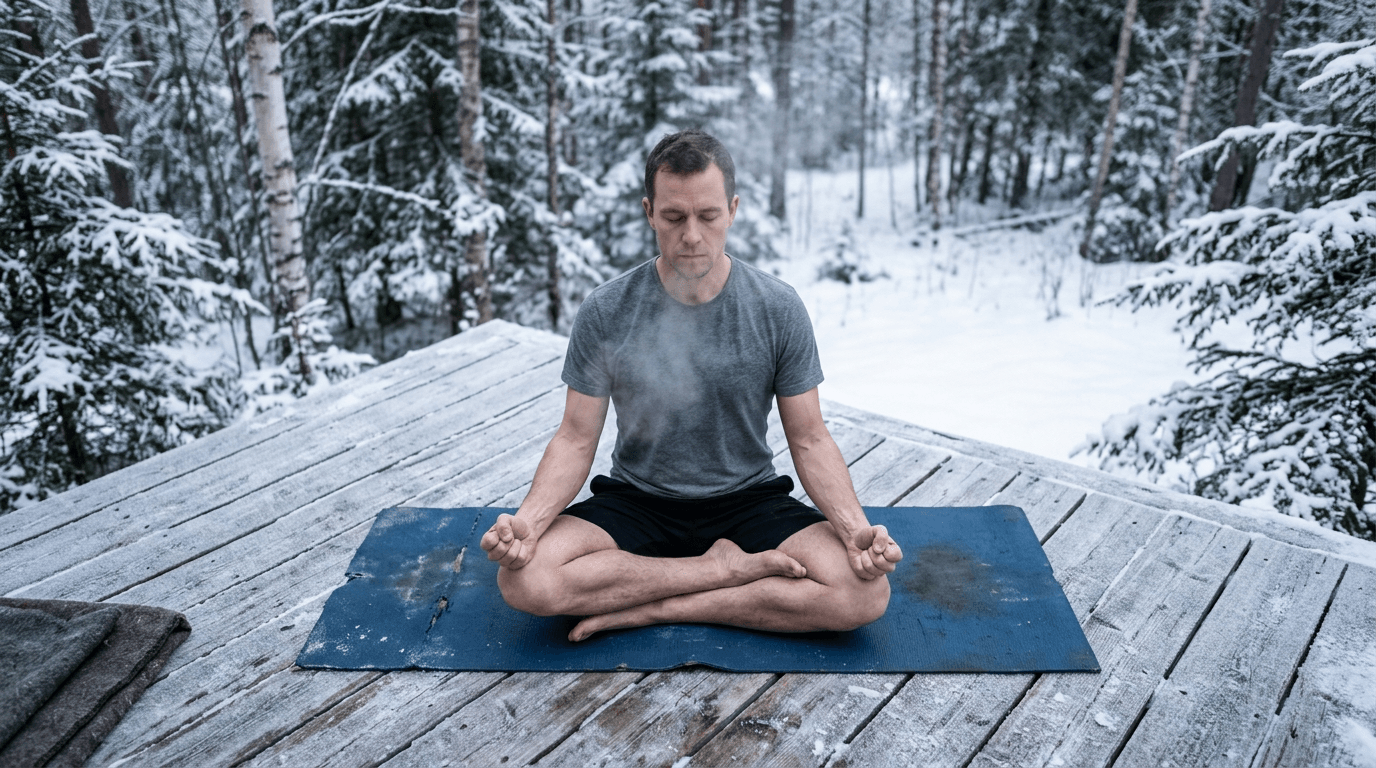
Cold Exposure Progression for Beginners
Cold exposure is the second pillar of the Wim Hof Method, and it’s where many beginners make mistakes by jumping in too fast. A gradual approach keeps you safe and builds genuine cold tolerance over time.
Phase 1: Cold Shower Finishing (Weeks 1-2)
At the end of your normal warm shower, turn the water to cold for the final 15 to 30 seconds. Focus on controlled breathing — slow exhales through the mouth. Your body will want to gasp; resist this reflex by exhaling deliberately.
Phase 2: Extended Cold Showers (Weeks 3-4)
Increase your cold shower time to 1 to 2 minutes. Start including your head and face. Continue practicing controlled, slow breathing throughout.
Phase 3: Cold-Only Showers (Weeks 5-8)
Begin your shower cold and keep it cold for the full duration (2-5 minutes). Notice how your body adapts — the initial shock subsides more quickly each time.
Phase 4: Ice Baths (Months 3+)
Only after building consistent cold shower tolerance should you consider ice baths. Start with water temperatures around 15 degrees Celsius (59 degrees Fahrenheit) for 2 minutes and gradually work toward colder temperatures and longer durations. Never exceed 15 minutes, and always have someone nearby.
Important Cold Exposure Rules
- Never combine Wim Hof breathing exercises with cold water immersion. Do your breathwork first, on dry land. Then do the cold exposure separately with normal breathing.
- Always have an exit strategy. If you feel numbness, pain, or extreme discomfort, get out immediately.
- Never practice alone in open water, ice baths, or any scenario where loss of consciousness could be dangerous.
- Warm up gradually after cold exposure. Let your body rewarm naturally or use gentle movement — avoid hot showers immediately after.
Safety Warnings for the Wim Hof Method
This section is the most important part of this guide. The Wim Hof Method is not a risk-free wellness practice. It involves deliberate hyperventilation and exposure to extreme cold, both of which carry serious physiological risks.
The Risk of Shallow Water Blackout
The greatest danger of the Wim Hof Method is loss of consciousness caused by hyperventilation-induced hypocapnia. When you deliberately lower your CO2 through rapid breathing, your brain’s natural “breathe now” signal is suppressed. This means you can lose consciousness before you feel the urge to breathe.
If this happens in or near water, the result can be fatal. This phenomenon is called shallow water blackout, and it’s well-documented in diving medicine.
Documented Incidents
As of 2024, at least 32 deaths have been reported in connection with the Wim Hof Method, primarily from drowning. Among these, four practitioners drowned in 2015 and 2016, a man drowned in a Singapore condominium pool in 2021, and a 17-year-old in Long Beach, California died after practicing the method in a pool, resulting in a $67 million lawsuit against Innerfire BV and Wim Hof (Live Science, 2024).
Cardiac Risks of Cold Exposure
Cold water immersion triggers a powerful cardiovascular stress response. Research indicates that immersion in cold water can produce cardiac arrhythmia in 1 to 3 percent of young, healthy individuals. When breath holding is combined with cold immersion, that figure rises to as high as 63% experiencing arrhythmia.
Absolute Rules
- Never practice Wim Hof breathing near, in, or over water — not in a pool, bathtub, lake, ocean, or any body of water.
- Never practice while driving or operating any vehicle or machinery.
- Never practice while standing — always sit or lie down on a soft surface.
- Never combine the breathing exercises with simultaneous cold water immersion. Do breathwork separately, on dry land, then do cold exposure with normal breathing.
- Never practice alone in any situation where fainting could cause harm.
Who Should Not Practice the Wim Hof Method?
The Wim Hof Method is contraindicated for certain populations. Do not practice this method without explicit clearance from a qualified healthcare provider if you have:
- Heart conditions (arrhythmia, coronary artery disease, heart failure)
- Epilepsy or a history of seizures
- High blood pressure (uncontrolled hypertension)
- Pregnancy
- Raynaud’s disease or cold urticaria
- History of stroke or transient ischemic attack
- Respiratory conditions such as severe asthma or COPD
- Recent surgery or open wounds (especially for cold exposure)
If you take any medication that affects heart rate, blood pressure, or nervous system function, consult your doctor before starting.
Wim Hof Method vs. Gentler Breathwork Techniques
The Wim Hof Method sits at the high-intensity end of the breathwork techniques spectrum. Not everyone needs — or benefits from — that level of physiological stress. Here’s how it compares to some gentler alternatives:
| Feature | Wim Hof Method | Box Breathing | Resonance Breathing |
|---|---|---|---|
| Intensity | High | Low-moderate | Low |
| Risk level | Moderate-high | Very low | Very low |
| Primary effect | Sympathetic activation, then parasympathetic | Parasympathetic calming | HRV optimization |
| Best for | Cold tolerance, immune modulation | Stress relief, focus | Nervous system balance |
| Time needed | 20-30 min | 5-10 min | 10-20 min |
| Equipment | Cold water source | None | HRV sensor (optional) |
If you’re primarily looking for stress relief without the intensity, box breathing is an excellent, low-risk starting point. For optimizing heart rate variability and nervous system balance, check out our guide on resonance breathing and HRV.
The Wim Hof Method can complement these gentler practices rather than replace them. Many experienced practitioners do the intense breathing in the morning and calmer techniques like resonance breathing in the evening.

Frequently Asked Questions About the Wim Hof Method
How long does it take to see results from the Wim Hof Method?
Most beginners notice changes in cold tolerance and mental clarity within the first two to four weeks of consistent daily practice. The immune and inflammatory effects observed in research studies (such as reduced TNF-alpha and IL-6) were measured after training programs lasting 10 days to 8 weeks. Consistency matters more than intensity.
Can I do the Wim Hof Method every day?
Yes, daily practice is the standard recommendation for the breathwork component. Cold exposure can also be done daily, though beginners should start with every other day to allow the body to adapt. Listen to your body and take rest days when needed.
Is the Wim Hof Method the same as Tummo breathing?
They share similarities, but they’re not identical. Tummo is a Tibetan Buddhist meditation practice focused on generating inner heat. The Wim Hof Method incorporates elements of Tummo alongside Western breathing techniques and progressive cold exposure. Hof has credited Tummo as an influence on his method.
Can the Wim Hof Method replace medication for anxiety or depression?
No. While the 2024 UCSF clinical trial showed a 24% reduction in depressive symptoms and 27% reduction in anxiety, the Wim Hof Method is not a replacement for prescribed medication or professional mental health treatment. It may serve as a complementary practice alongside professional care, but you should never stop or modify medication without consulting your healthcare provider.
How cold does the water need to be for an ice bath?
For beginners, water temperatures around 15 degrees Celsius (59 degrees Fahrenheit) are sufficient. Advanced practitioners may go as low as 0 to 4 degrees Celsius (32-39 degrees Fahrenheit). The key is gradual progression — start warmer and go colder over weeks and months, not days.
What if I can’t hold my breath very long during the Wim Hof breathing?
This is completely normal for beginners. Many people start with breath holds of 30 to 60 seconds. Your retention time will naturally increase with regular practice. Don’t force it, compete with others, or use willpower to push past the point of comfort. The hold should feel challenging but not distressing.
Conclusion
The Wim Hof Method represents one of the most scientifically studied breathwork and cold exposure protocols available today. The 2014 PNAS study demonstrated what was previously considered impossible: humans can voluntarily influence their innate immune response through trained breathing and cold exposure techniques. A growing body of research — including the 2024 PLOS ONE systematic review and the UCSF clinical trial — continues to build evidence for its anti-inflammatory and mental health benefits.
However, “evidence of benefit” and “safe for everyone” are very different statements. The Wim Hof Method carries genuine risks, particularly the danger of shallow water blackout during the hyperventilation phase. Approach this practice with the same respect you’d give any serious physical training program: learn the technique properly, progress gradually, follow the safety guidelines without exception, and never practice the breathing near water.
If you’re new to breathwork altogether, you might benefit from building a foundation with gentler practices first. Our comprehensive breathwork techniques guide covers the full spectrum, from simple diaphragmatic breathing to advanced methods like the Wim Hof protocol, helping you find the right fit for your experience level and goals.
This article is for informational purposes only and does not constitute medical advice. The Wim Hof Method involves intense breathing and cold exposure. Do NOT practice near water, while driving, or standing. People with heart conditions, epilepsy, high blood pressure, or who are pregnant should NOT practice this method without medical clearance. Consult a qualified healthcare provider before starting.
References
- Kox, M., van Eijk, L.T., Zwaag, J., et al. (2014). Voluntary activation of the sympathetic nervous system and attenuation of the innate immune response in humans. Proceedings of the National Academy of Sciences, 111(20), 7379-7384. https://pmc.ncbi.nlm.nih.gov/articles/PMC4034215/
- Almahayni, O. & Hammond, L. (2024). Does the Wim Hof Method have a beneficial impact on physiological and psychological outcomes in healthy and non-healthy participants? A systematic review. PLOS ONE, 19(3): e0286933. https://journals.plos.org/plosone/article?id=10.1371/journal.pone.0286933
- Muzik, O. & Diwadkar, V.A. (2018). “Brain over body” — A study on the willful regulation of autonomic function during cold exposure. NeuroImage, 172, 632-641. https://pubmed.ncbi.nlm.nih.gov/29438845/
- Blades, R., Epel, E., et al. (2024). A randomized controlled clinical trial of a Wim Hof Method intervention in women with high depressive symptoms. Comprehensive Psychoneuroendocrinology. https://pmc.ncbi.nlm.nih.gov/articles/PMC11599992/
- Ketelhut, S., Querciagrossa, D., Bisang, X., et al. (2023). The effectiveness of the Wim Hof method on cardiac autonomic function, blood pressure, arterial compliance, and different psychological parameters. Scientific Reports, 13, 17517. https://www.nature.com/articles/s41598-023-44902-0
- Wim Hof Method Safety: Shallow Water Blackout. Wim Hof Method Official. https://www.wimhofmethod.com/what-is-shallow-water-blackout
- “‘Gambling with your life’: Experts weigh in on dangers of the Wim Hof method.” Live Science. https://www.livescience.com/health/gambling-with-your-life-experts-weigh-in-on-dangers-of-the-wim-hof-method