You’ve tried sitting meditation. You lasted four minutes before your legs twitched, your mind wandered to groceries, and you gave up. You’re not alone — and you’re not broken. Some brains simply need movement to settle down. A single 35-minute guided mindful walk reduced state anxiety by a large effect size (d=1.26) in a randomized trial of 44 university students (International Journal of Exercise Science, 2024). That’s a stronger anxiety reduction than most seated meditation studies report. Walking meditation gives restless minds an anchor that sitting never could: the physical sensation of each step. If you’re new to meditation and stillness feels like punishment, this guide is for you.
Key Takeaways
– Walking meditation reduced state anxiety by d=1.26 in a single session (Int J Exercise Science, 2024). – A 4-week mindful walking program cut stress by 8.8 points vs 1.0 in controls (Evidence-Based CAM, 2013). – Combining movement with mindfulness produces larger mental health effects than either alone (Mental Health and Physical Activity, 2023). – You can practice walking meditation indoors, outdoors, in a Zen temple, or along a labyrinth path.
What Is Walking Meditation and How Does It Work?
Walking meditation is a mindfulness practice where slow, deliberate steps become your object of attention. A systematic review of 10 studies found it improves balance, proprioception, and cardiometabolic markers across 4-24 week programs (MDPI Sports, Marques et al., 2024). Unlike seated meditation, your body stays active while your mind narrows its focus.
The concept is simple. You walk slowly, paying close attention to the physical sensations in your feet, legs, and body. Each step becomes a mini-anchor — the heel touching ground, weight shifting forward, toes pressing down. Your breath flows naturally. When your mind wanders, you notice it and return attention to the next step.
Why Movement Helps Restless Minds Settle
Have you ever noticed that your best ideas come while walking? There’s a reason. Movement engages your motor cortex, giving the restless parts of your brain something to do. That frees the prefrontal cortex to focus without competing for bandwidth.
A 2023 meta-analysis confirmed what many restless meditators already suspected: combining physical activity with mindfulness produces larger mental health effects than either practice alone (Mental Health and Physical Activity, Buric et al., 2023). For people who struggle with sitting still, walking meditation isn’t a compromise. It’s actually a more effective entry point.
Most meditation guides treat walking meditation as a secondary practice — something to do when you can’t sit. The research tells a different story. For anxious, restless practitioners, walking meditation may produce stronger acute effects precisely because the movement channel absorbs excess nervous energy that otherwise disrupts focus.
Citation capsule: A single 35-minute guided mindful walk reduced state anxiety by d=1.26 (large effect) and distress by d=1.07 in 44 university students in a randomized controlled trial, suggesting walking meditation produces immediate and clinically meaningful anxiety relief (International Journal of Exercise Science, Burdick & Camhi, 2024).
Does Walking Meditation Actually Reduce Stress and Anxiety?
Yes, and the evidence is strong. An 8-session mindful walking program over 4 weeks reduced perceived stress by 8.8 points compared to just 1.0 in controls (p<0.001), with mental health scores improving by +9.1 vs +1.1 (Evidence-Based CAM, Teut et al., 2013). Those effects held at the 12-week follow-up.
[CHART: horizontal bar | Walking Meditation: Anxiety and Stress Reduction | State Anxiety d=1.26, Distress d=1.07, Engagement d=0.78, Mindfulness d=0.74 | Burdick & Camhi, 2024]
The stress reduction isn’t limited to research settings. A 2024 study of oncology healthcare workers — people under extreme daily pressure — found that 6 weeks of walking meditation (20 minutes per day) prevented the stress increases seen in the control group, where stress rose by d=3.38 (Yoga Mimamsa, 2024). If it works for cancer ward nurses, it can work for your Tuesday afternoon.
Walking Meditation and Depression
A 12-week Buddhist walking meditation program (3 sessions per week) improved vascular function by 88% compared to 72% in traditional walking. But here’s what stood out: only the meditation walkers showed significant reductions in depression, cortisol, and the inflammatory marker IL-6 (Journal of Alternative and Complementary Medicine, Prakhinkit et al., 2014). Traditional walking improved fitness. Walking meditation improved fitness and mood.
How Walking Meditation Affects Sleep
Can’t sleep? A 2022 study of 104 university students found that just one week of outdoor mindful walking significantly improved sleep quality (PSQI, eta-squared=.08) and mood (eta-squared=.09) in both nature and urban environments (Complementary Therapies in Clinical Practice, Saiz et al., 2022). The sleep improvement worked regardless of setting. Even city sidewalks counted.
This connects to emerging neuroscience. A 2025 Vanderbilt fMRI study published in PNAS found that meditation may stimulate the brain’s glymphatic waste removal system — the same cleanup process that happens during sleep (Vanderbilt University Medical Center, 2025). Walking meditation might literally help your brain take out the trash. For more on sleep practices, see my sleep relaxation techniques guide.
Citation capsule: An 8-session mindful walking program over 4 weeks reduced perceived stress by 8.8 points versus 1.0 in controls (p<0.001) and improved SF-36 mental health scores by +9.1 versus +1.1 (p<0.001) in 74 distressed adults, with benefits maintained at 12-week follow-up (Evidence-Based CAM, Teut et al., 2013).
How Do You Practice Walking Meditation? (Step-by-Step)
The basic technique requires no equipment, no special clothing, and no outdoor space. In Burdick and Camhi’s 2024 trial, a single 35-minute session produced large anxiety reductions (d=1.26) using a simple indoor protocol (International Journal of Exercise Science, 2024). Here’s how to do it yourself.
Step 1: Choose Your Path (10-20 Steps Long)
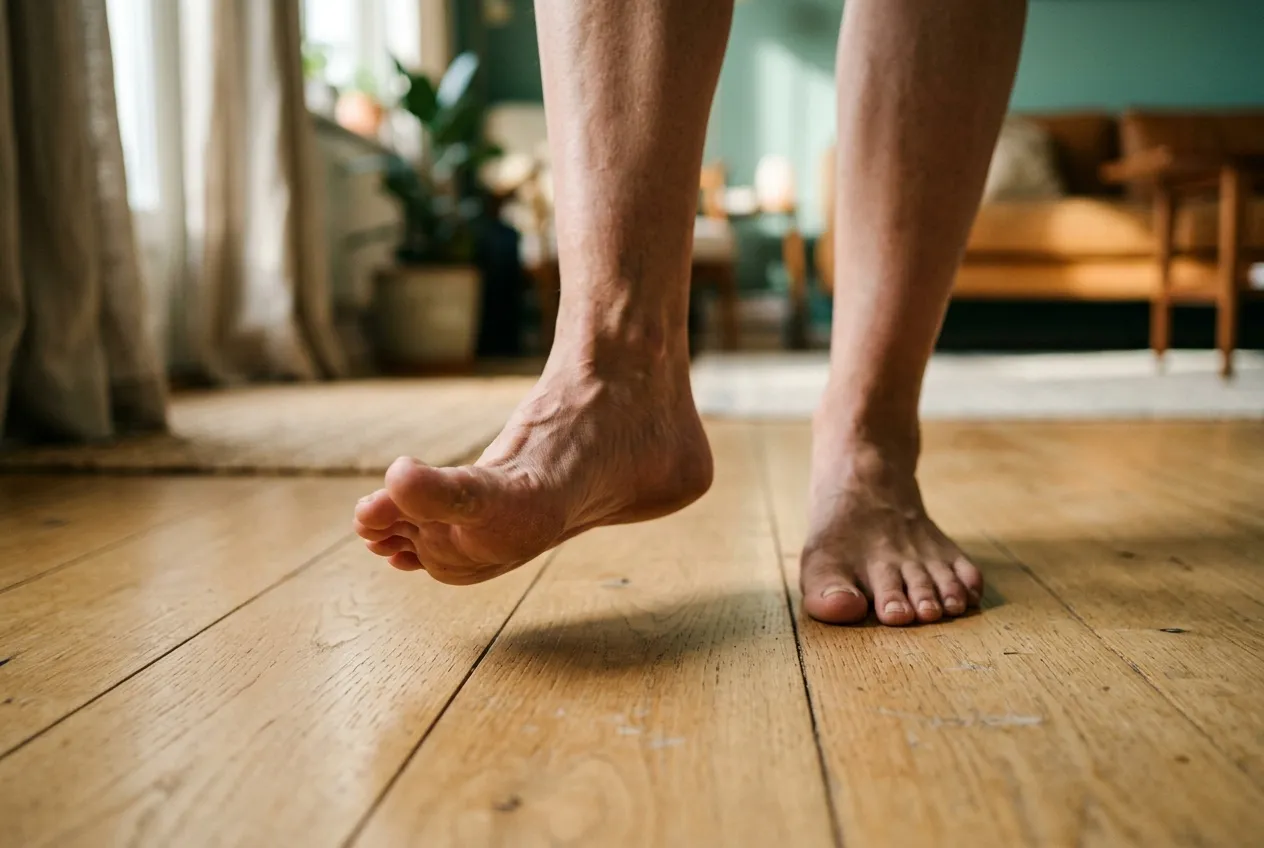
Find a straight path indoors or outdoors. A hallway works perfectly. You need roughly 10-20 steps in one direction. Mark the endpoints mentally. You’ll walk back and forth along this path, not in circles. Remove your shoes if the surface allows it — barefoot walking increases sensory feedback.
Step 2: Stand Still for 30 Seconds
Before you take your first step, pause. Stand with your feet hip-width apart. Feel the weight distributed across your feet. Notice the subtle swaying your body does just to stay upright. Take three natural breaths. This standing pause shifts your brain from “going somewhere” mode to “being here” mode.
Step 3: Begin Walking at Half Your Normal Speed
Start walking slowly. Roughly half your normal pace. Break each step into three phases:
- Lifting: Feel your heel rise, then the ball of your foot, then your toes peel away
- Moving: Notice the leg swinging forward through space
- Placing: Feel the heel contact the ground, weight rolling forward to the toes
Some practitioners silently label each phase: “lifting… moving… placing.” Others simply feel the sensations without words. Both approaches work. Try labeling for your first few sessions — it gives the thinking mind a job.
Step 4: Turn Mindfully at Each End
When you reach the end of your path, stop. Stand still for two breaths. Then turn slowly and deliberately. The turn is part of the practice, not a break from it. Many people lose focus during transitions. Treating the turn as its own mini-meditation prevents that gap.
Step 5: Practice for 10-20 Minutes
Start with 10 minutes. Set a gentle timer. When your mind wanders — and it will, probably every 30 seconds at first — simply notice where it went and return attention to your feet. No judgment. Each return to the feet is one repetition of the exercise, like a bicep curl for attention.
I started walking meditation after years of failing at seated practice. My restless energy made sitting feel like holding my breath underwater. Walking gave me a release valve. After two weeks of 15-minute sessions before dinner, I noticed I was snapping at my family less in the evenings. The practice didn’t make me calmer during the walk — it made me calmer two hours later.
What Are the Different Types of Walking Meditation?
Walking meditation isn’t a single technique. Several traditions have developed distinct approaches, each with a different emphasis. The systematic review by Marques et al. (2024) covered Buddhist walking meditation, mindful walking, and labyrinth walking across 10 studies (MDPI Sports). Here’s how they differ.
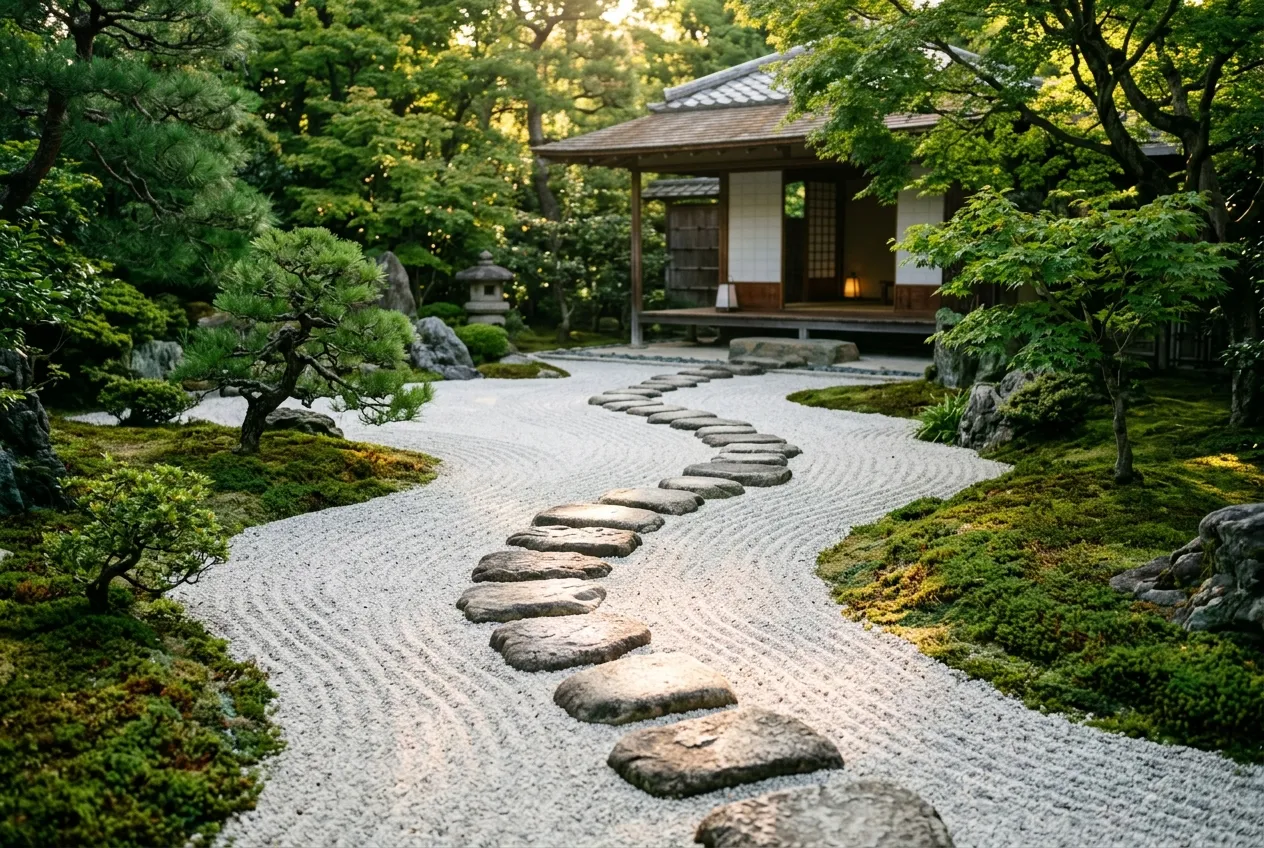
Kinhin: Zen Walking Meditation
Kinhin is the walking meditation practiced between seated zazen sessions in Zen Buddhism. It’s slower and more formal than the basic technique described above.
How to practice kinhin:
- Form a fist with your left hand, thumb inside, and place it against your solar plexus
- Cover the left fist with your right hand
- Keep elbows slightly out from your body
- Walk in a clockwise circle (traditional direction)
- Take one step per full breath cycle — inhale as you lift, exhale as you place
- Steps are roughly half a foot length apart
Kinhin is deliberately slow. A single circuit around a small room might take five minutes. The extreme slowness forces concentration — you can’t zone out when you’re balancing on one foot between steps. It’s an excellent progression after you’ve practiced the basic technique for a few weeks.
Nature Walking Meditation (Outdoor Practice)
Outdoor mindful walking expands awareness beyond the feet to include sounds, smells, and visual details. The Saiz et al. (2022) study found that one week of outdoor mindful walking improved sleep quality and mood in both nature and urban settings (Complementary Therapies in Clinical Practice).
How to practice outdoor walking meditation:
- Start with two minutes of standing awareness — feel the air on your skin, listen to the ambient sounds
- Begin walking at a comfortable pace (slightly slower than normal, but not as slow as kinhin)
- Rotate your attention through three channels: feet (sensations of contact), ears (sounds near and far), eyes (colors, movement, light)
- Spend roughly 2-3 minutes on each channel before rotating
- When you notice yourself planning or problem-solving, gently return to the current sensory channel
This approach works especially well for people who find indoor practice too monotonous. The constant stream of natural stimuli provides fresh anchors for attention. It also pairs well with breathwork techniques — try synchronizing your breath with your steps.
Labyrinth Walking Meditation
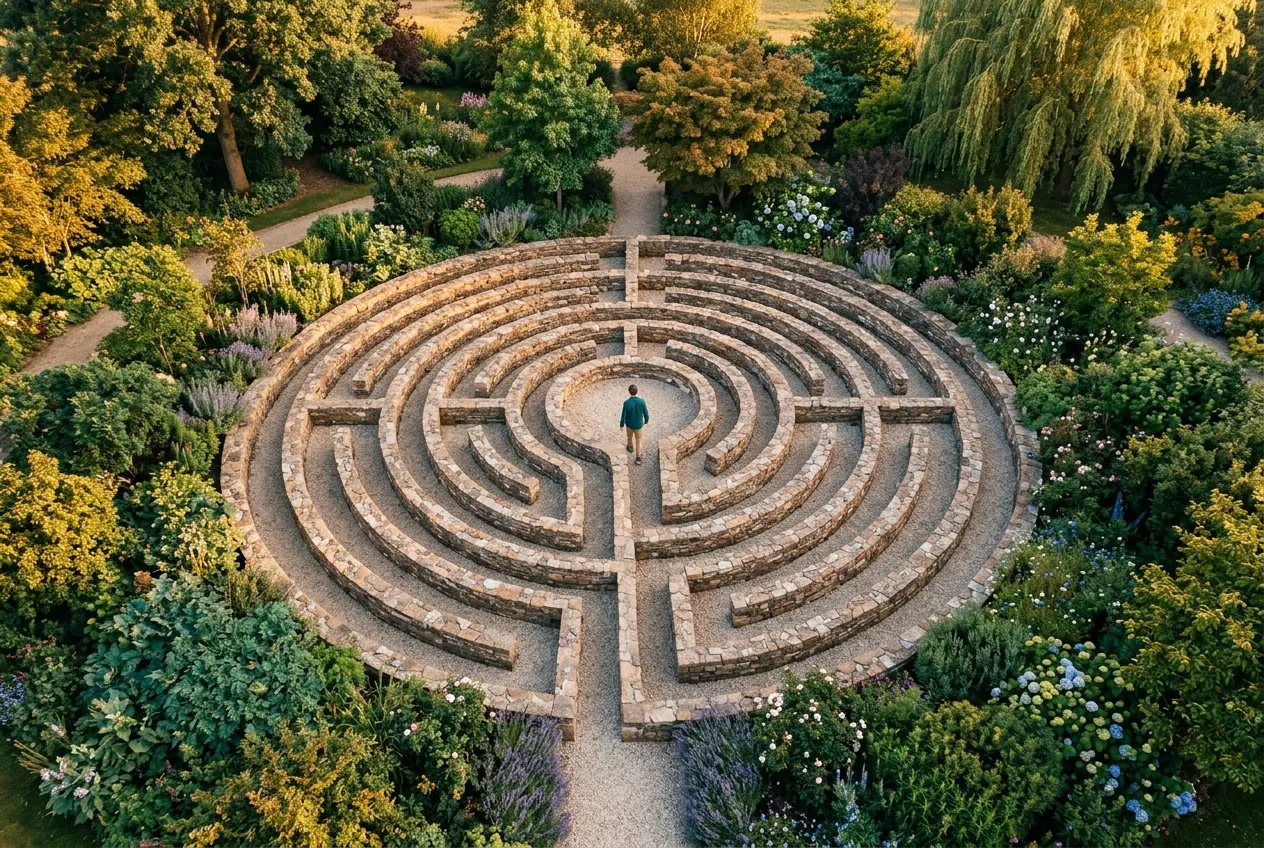
Labyrinth walking is one of the oldest forms of walking meditation. Unlike a maze, a labyrinth has a single winding path that leads to the center and back out. There are no dead ends. No decisions to make. You simply follow the path.
The practice divides into three phases: walking in (releasing thoughts and worries), pausing at the center (receiving stillness and insight), and walking out (integrating the experience). Many hospitals, churches, and retreat centers maintain labyrinth paths. The Labyrinth Society’s online locator lists thousands of public labyrinths worldwide.
Labyrinth walking works particularly well for people who resist meditation because it feels “unproductive.” The physical act of walking a path with a clear destination satisfies the goal-oriented mind while still delivering the attentional benefits of mindfulness practice.
Citation capsule: Combining physical activity with mindfulness produces larger mental health effects than either practice alone, according to a 2023 analysis of dual-task mind-body interventions, suggesting walking meditation may be more effective than seated meditation for some populations (Mental Health and Physical Activity, Buric et al., 2023).
How Can You Build a Daily Walking Meditation Habit?
Consistency determines whether walking meditation transforms your stress response or remains a nice idea you tried once. Teut et al.’s 2013 study showed that 8 sessions over 4 weeks was enough to produce lasting stress reductions maintained at 12 weeks (Evidence-Based CAM). Here’s how to make it stick.
Start With 5 Minutes After an Existing Habit
Attach your walking meditation to something you already do daily. After your morning meditation, during your lunch break, or right after arriving home from work. The trigger matters more than the time of day. Walk the hallway to your kitchen mindfully. Use the 30 seconds between parking your car and entering your office.
Progress Gradually
Week 1-2: 5 minutes of basic indoor walking meditation. Focus only on the feet. Week 3-4: Extend to 10-15 minutes. Add the labeling technique (lifting, moving, placing). Week 5-6: Try one outdoor session per week, rotating through sensory channels. Week 7-8: Experiment with kinhin or labyrinth walking.
Don’t rush the progression. The Prakhinkit et al. (2014) trial that reduced depression and cortisol used a 12-week timeline with just 3 sessions per week (Journal of Alternative and Complementary Medicine). Slow and steady works. Fast and ambitious burns out.
Combine With Other Practices
Walking meditation pairs naturally with other nervous system regulation techniques. Try a body scan meditation after your walking session, or add vagus nerve exercises to your standing pause. The Buric et al. (2023) meta-analysis found that combining movement with mindfulness amplifies results (Mental Health and Physical Activity). Stacking practices isn’t overkill — it’s strategic.
What’s the Difference Between Walking Meditation and Mindful Walking?
The terms overlap, but they’re not identical. Walking meditation is a formal practice with a set time, location, and technique. A 2024 randomized trial used structured 35-minute sessions with specific instructions, and the controlled environment mattered for the large effect sizes achieved (d=1.26 for anxiety) (International Journal of Exercise Science, Burdick & Camhi, 2024). Mindful walking is less formal.
Mindful walking means bringing attention to the act of walking during your normal day. Walking to a meeting. Strolling through a grocery store. Moving from the car to the front door. You don’t slow down or follow a set path. You simply pay attention to the sensations of walking while you’re already doing it.
Both practices build the same attentional muscle. The formal version trains it faster. The informal version makes it practical. Ideally, you’d do both — formal sessions to build skill, and mindful walking throughout your day to maintain it. For a deeper look at this formal-vs-informal distinction, see my article on mindfulness vs meditation.
Frequently Asked Questions
How long should a walking meditation session be?
Research shows benefits starting at 20 minutes per day. The Burdick and Camhi (2024) trial achieved large anxiety reductions (d=1.26) in a single 35-minute session (International Journal of Exercise Science). For daily practice, 10-20 minutes is practical and effective. Even 5 minutes of mindful walking during a lunch break builds the habit.
Can you do walking meditation indoors?
Yes. Indoor walking meditation works well and may even be preferable for beginners. You control the environment — no traffic noise, weather, or uneven terrain. A hallway or living room with 10-20 steps of clear space is enough. The Burdick and Camhi trial used an indoor protocol and still achieved strong results.
Is walking meditation better than sitting meditation?
Neither is universally better. But for restless minds and people with anxiety, walking meditation may produce stronger immediate effects. A 2023 analysis found that combining physical activity with mindfulness outperforms either alone for mental health outcomes (Mental Health and Physical Activity, Buric et al., 2023). Try both and keep what works.
How slow should you walk during walking meditation?
Slower than normal, but there’s no single correct speed. Basic walking meditation uses roughly half your normal pace. Kinhin (Zen walking) is much slower — one step per full breath cycle. Outdoor mindful walking can be near-normal speed. Start slow and find the pace where you can notice each phase of each step without losing balance.
Does walking meditation help with focus?
A systematic review of 10 studies found walking meditation improves proprioception and functional fitness (MDPI Sports, Marques et al., 2024). The attentional training transfers to daily life. Each time you notice your mind wandering and return focus to your feet, you strengthen the same neural circuits used for focus and concentration at work.
Start Walking, Start Meditating
Walking meditation isn’t a lesser form of meditation. For many people, it’s the right form. A single session can reduce anxiety by a large effect size (d=1.26), and a 4-week program can cut perceived stress by nearly 9 points while improving mental health scores (Evidence-Based CAM, Teut et al., 2013). The barrier to entry is as low as it gets: stand up, walk slowly, pay attention to your feet.
Start today with the 10-minute indoor technique from Step 3. Walk your hallway mindfully before dinner tonight. If you’re building a broader meditation practice, return to my meditation beginners guide for the full picture. And if your restless energy persists even after walking, try adding breathwork techniques to your routine — the combination of movement and controlled breathing is particularly powerful for calming a busy nervous system.
meditation beginners guide breathwork techniques
References
- Burdick, S.R. & Camhi, S.L. (2024). Effects of Guided Mindful Walking on State Anxiety, Distress, and Mindfulness. International Journal of Exercise Science. https://pmc.ncbi.nlm.nih.gov/articles/PMC11164429/
- Teut, M. et al. (2013). Mindful Walking in Psychologically Distressed Individuals. Evidence-Based Complementary and Alternative Medicine. https://pmc.ncbi.nlm.nih.gov/articles/PMC3747483/
- Prakhinkit, S. et al. (2014). Effects of Buddhist Walking Meditation on Depression, Functional Fitness, and Endothelium-Dependent Vasodilation. Journal of Alternative and Complementary Medicine. https://pubmed.ncbi.nlm.nih.gov/24372522/
- Saiz, J. et al. (2022). Outdoor Mindful Walking and Sleep Quality. Complementary Therapies in Clinical Practice. https://pmc.ncbi.nlm.nih.gov/articles/PMC9365743/
- Marques, A.P. et al. (2024). Walking Meditation: A Systematic Review. MDPI Sports. https://www.mdpi.com/2673-5318/6/4/122
- Effect of Walking Meditation on Perceived Stress in Oncology Healthcare Workers (2024). Yoga Mimamsa. https://journals.lww.com/yomi/fulltext/2024/56020/effect_of_walking_meditation_on_perceived_stress.2.aspx
- Buric, I. et al. (2023). Physical Activity and Mindfulness Combined Effects. Mental Health and Physical Activity. https://www.sciencedirect.com/science/article/pii/S175529662300073X
- Vanderbilt University Medical Center (2025). Meditation and Brain’s Glymphatic Waste Removal System. PNAS. https://news.vumc.org/2025/12/10/study-finds-that-meditation-may-help-stimulate-the-brains-waste-removal-system-providing-restorative-benefits-like-sleep/