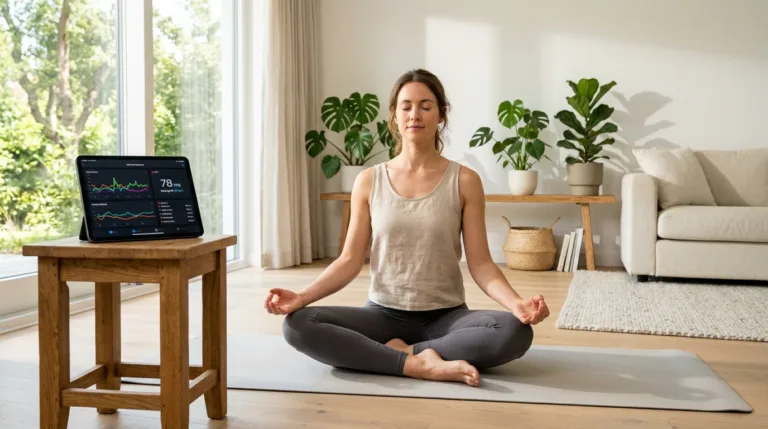
Cyclic sighing is a simple breathing pattern that took the wellness world by surprise when Stanford researchers proved it outperforms mindfulness meditation for mood improvement. In a 2023 study published in Cell Reports Medicine, just five minutes of daily cyclic sighing produced significantly greater increases in positive mood than sitting quietly and meditating. If you’ve ever felt that meditation isn’t for you, this breathwork technique might be exactly what you’ve been looking for.
The technique itself is almost embarrassingly easy: two inhales through the nose, followed by one long exhale through the mouth. That’s it. No apps, no cushions, no incense. And yet the science behind it is remarkably robust. Let’s break down what cyclic sighing is, why it works, and how to start practicing it today.
This article is for informational purposes only and does not constitute medical advice. Consult a qualified healthcare provider before beginning any new breathing practice, especially if you have a respiratory condition or are pregnant.
Key Takeaways
- Cyclic sighing outperformed meditation in a Stanford randomized controlled trial with 108 participants, producing significantly greater daily mood improvement over 28 days (Balban et al., 2023).
- Only 5 minutes per day is needed to see measurable reductions in anxiety and increases in positive emotions.
- The double inhale reinflates collapsed lung sacs (alveoli), allowing your body to expel more carbon dioxide on the exhale —- which directly calms your nervous system.
- Benefits grow over time: the longer participants practiced cyclic sighing, the more their mood improved compared to other groups.
- Zero cost, zero equipment —- you can practice cyclic sighing anywhere, anytime.
What Is Cyclic Sighing?
Cyclic sighing is a structured breathwork practice built on something your body already does naturally. You spontaneously sigh roughly every five minutes throughout the day —- even during sleep. These involuntary sighs serve a critical purpose: they reinflate tiny air sacs in your lungs called alveoli that gradually collapse during normal breathing (Li & Bhatt, 201631055-7)). For the position-specific angle, see our research roundup on the best sleeping position.
The voluntary version of this pattern is what researchers call a “physiological sigh.” It consists of a double inhale through the nose (one regular breath followed immediately by a shorter, sharper top-up breath), then a slow, extended exhale through the mouth. When you repeat this pattern continuously for five minutes, that’s cyclic sighing.
What makes cyclic sighing different from other breathing exercises? The emphasis on exhalation. Unlike box breathing (where inhales and exhales are equal) or breathing exercises for anxiety that focus on slowing everything down, cyclic sighing deliberately makes the exhale longer than the inhale. This ratio matters, because your exhale is what activates the calming branch of your nervous system.

Neuroscientist Andrew Huberman of Stanford University, who co-led the landmark study on this technique, has described structured breathwork as one of the “more powerful —- and zero cost —- tools” available for stress recovery and sleep improvement.
The Stanford Cyclic Sighing Study: What the Science Shows
The most important study on cyclic sighing was published in January 2023 in Cell Reports Medicine by Melis Yilmaz Balban, David Spiegel, Andrew Huberman, and colleagues at Stanford University (Balban et al., 2023).
Study Design
The researchers enrolled 108 participants and randomly assigned them to one of four daily 5-minute practices over 28 days:
- Cyclic sighing (exhale-dominant, 30 participants)
- Box breathing (equal inhale-hold-exhale, 21 participants)
- Cyclic hyperventilation (inhale-dominant, 33 participants)
- Mindfulness meditation (control group, 24 participants)
Participants tracked their mood, anxiety, and sleep using validated questionnaires. The researchers also collected physiological data including heart rate, respiratory rate, and heart rate variability.
Key Findings
All four techniques improved mood and reduced anxiety. But the groups weren’t equal.
The breathwork groups as a whole showed significantly greater increases in positive affect than the meditation group. On the Positive and Negative Affect Schedule (PANAS), the combined breathwork group averaged a daily positive mood increase of 1.91 points, compared to 1.22 points in the meditation group —- roughly 56% more improvement (Stanford Medicine, 2023).
Among the three breathing techniques, cyclic sighing came out on top. The cyclic sighing group reported the greatest daily improvements in positive mood, an effect that notably increased the longer participants practiced (Stanford Medicine Magazine, 2023).
Participants who practiced cyclic sighing also significantly lowered their resting respiratory rate —- not just during the exercise, but throughout the entire day. Slower baseline breathing is a recognized marker of reduced physiological stress.
Perhaps most striking: about 90% of all participants reported that the exercises made them feel more positive overall (Balban et al., 2023).
How to Practice Cyclic Sighing: Step-by-Step Guide
Cyclic sighing is one of the most accessible breathing techniques available. Here’s how to do it properly.
Step 1: Find a Comfortable Position
Sit upright in a chair, on the floor, or lie on your back. You can also practice standing. The key is that your posture allows your lungs to expand freely. Close your eyes if that feels comfortable, or soften your gaze toward the floor.
Step 2: Take the First Inhale Through Your Nose
Breathe in through your nose for about 3—4 seconds. Don’t force it —- just take a comfortable, full breath that expands your belly and lower ribs.
Step 3: Take a Second, Shorter Inhale (the “Top-Up”)
Without exhaling, immediately take a second, shorter inhale through your nose. This “top-up” breath lasts about 1—2 seconds. You’ll feel your lungs fill completely. This double inhale is what reopens collapsed alveoli and maximizes your lung surface area.
Step 4: Exhale Slowly and Completely Through Your Mouth
Now let all the air out through your mouth in a slow, controlled exhale lasting 6—8 seconds. Let your shoulders drop. Let your belly deflate. Release until your lungs feel empty.
Step 5: Repeat for 5 Minutes
Continue the cycle: double inhale through the nose, long exhale through the mouth. Aim for about 6—8 full cycles per minute. Set a timer for 5 minutes so you don’t have to watch the clock.
Quick Reference Pattern
| Phase | Duration | How |
|---|---|---|
| First inhale | 3—4 seconds | Through the nose, fill belly |
| Second inhale (top-up) | 1—2 seconds | Through the nose, fill chest completely |
| Long exhale | 6—8 seconds | Through the mouth, release everything |
Pro tip: If you’re new to breathwork, start with 2—3 minutes and work up to 5. There’s no benefit to pushing past comfort. The Stanford study used 5 minutes daily, and that’s plenty.
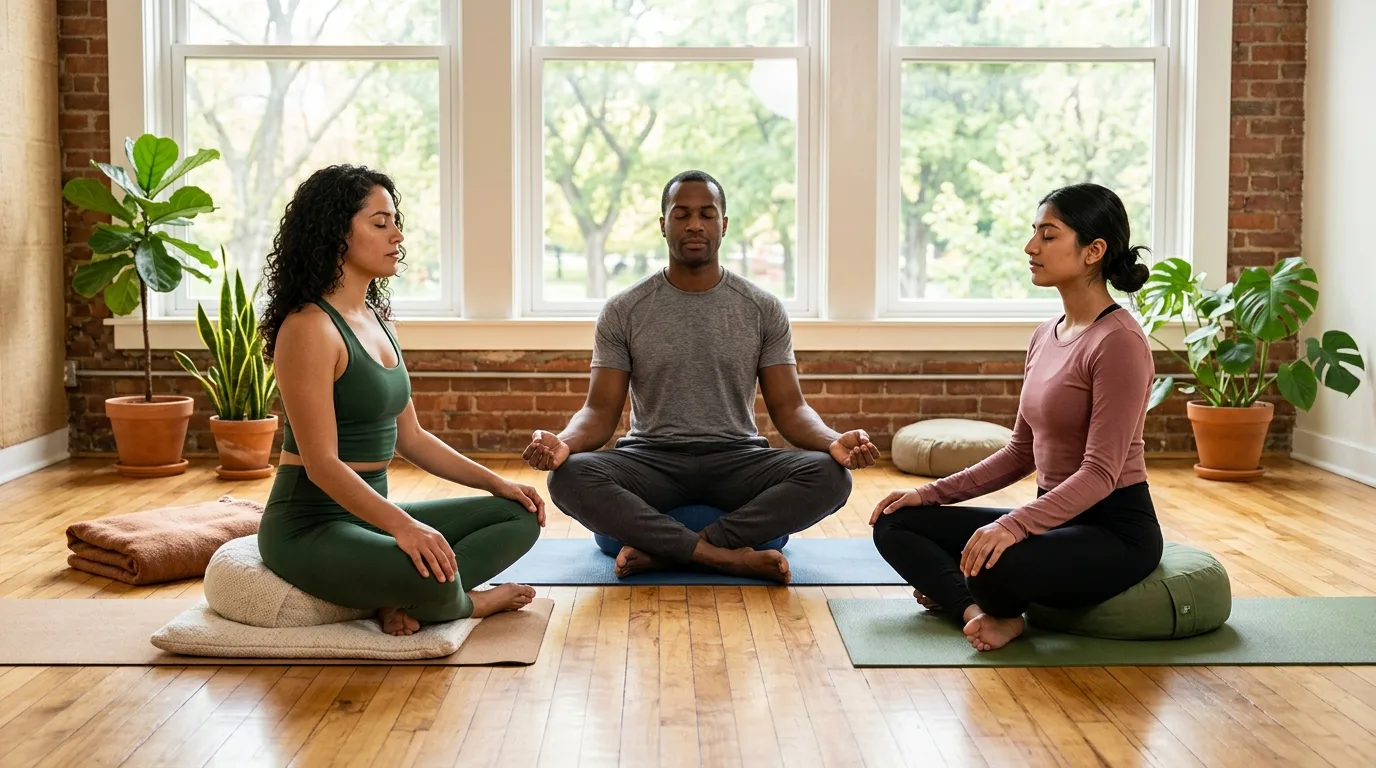
Why Cyclic Sighing Beats Meditation for Mood (According to the Data)
This isn’t about bashing meditation —- mindfulness has decades of strong research behind it. But the Stanford data tells a clear story about why cyclic sighing provides faster, stronger mood benefits for many people.
Active Control vs. Passive Observation
Meditation typically asks you to observe your breath without changing it. Cyclic sighing gives you something specific to do. For people who find meditation frustrating or boring (and research suggests that’s a lot of people), having a concrete physical task keeps the mind engaged rather than wandering into anxious thoughts.
The Exhale Advantage
The critical difference is the emphasis on extended exhalation. When you exhale, several things happen simultaneously:
- Your heart rate decreases (inhalation speeds it up, exhalation slows it down).
- The vagus nerve —- your body’s longest cranial nerve and primary parasympathetic pathway —- gets activated.
- Blood pressure drops slightly.
- Stress hormones decrease.
Mindfulness meditation doesn’t specifically target these exhale-driven mechanisms. Cyclic sighing does, by design (Psychology Today, 2023).
Cumulative Benefits Compound Faster
In the Stanford study, the cyclic sighing group showed a significant interaction between mood improvement and the number of days practiced. In plain language: the more days participants practiced, the bigger the benefit —- and this compounding effect was stronger for cyclic sighing than for meditation. The researchers specifically noted this cumulative advantage (Balban et al., 2023).
How It Compares to Box Breathing and Other Techniques
Box breathing (used by Navy SEALs and first responders) performed well in the study but didn’t match cyclic sighing for mood improvement. The likely reason: box breathing uses equal inhale and exhale durations, while cyclic sighing tilts the ratio toward exhalation. If you’re interested in how different techniques stack up, check out our breathwork techniques guide for a full comparison.
What Happens in Your Body During Cyclic Sighing
Understanding the physiology helps explain why such a simple technique produces such reliable results.
The Alveoli Reset
Your lungs contain roughly 480 million tiny air sacs called alveoli. Throughout normal breathing, some of these alveoli gradually collapse —- a process called atelectasis. The double inhale in cyclic sighing generates enough pressure to pop open these collapsed sacs, dramatically increasing the surface area available for gas exchange (Li & Bhatt, 201631055-7)).
More surface area means more efficient oxygen uptake and, critically, more carbon dioxide removal during the extended exhale that follows.
Carbon Dioxide and Calm
Excess CO2 in your blood triggers feelings of anxiety and agitation. It’s one of the primary signals your brain uses to decide you’re under threat. By maximizing alveolar surface area and then performing a long exhale, cyclic sighing efficiently clears CO2 from your bloodstream. Lower CO2 levels translate directly into reduced feelings of panic and anxiety.
Vagus Nerve Activation
Extended exhalation stimulates the vagus nerve, which runs from your brainstem to your gut. When activated, the vagus nerve triggers the parasympathetic nervous system —- your “rest and digest” mode. This lowers heart rate, reduces blood pressure, improves digestion, and decreases the production of stress hormones like cortisol (Psychology Today, 2023).
If you’re interested in how vagus nerve stimulation through breathing affects your heart rate variability, our article on resonance breathing and HRV goes deeper into that topic.
Respiratory Rate Baseline Shift
One of the most interesting findings from the Stanford study was that cyclic sighing didn’t just slow breathing during the exercise —- it lowered participants’ resting respiratory rate throughout the entire day. A lower baseline breathing rate is associated with better emotional regulation and reduced chronic stress (Balban et al., 2023).
When to Use Cyclic Sighing: 7 Practical Scenarios
The beauty of cyclic sighing is its versatility. Here are the most effective times to use it.
1. Before a Stressful Event
A job interview, a difficult conversation, a presentation. Even 1—3 cycles of cyclic sighing can shift your nervous system out of fight-or-flight mode within seconds. You don’t need the full five minutes for an acute stress response.
2. During Your Morning Routine
Starting the day with five minutes of cyclic sighing sets a calmer baseline before emails, news, and responsibilities hit. The Stanford data showed benefits compound over consecutive days, so consistency matters.
3. At Your Desk During a Work Break
Mid-afternoon stress buildup is real. A 5-minute cyclic sighing break can reset your nervous system without leaving your chair. Nobody around you even needs to notice.
4. Before Sleep
The extended exhale activates your parasympathetic system, making it easier to transition into sleep. For an even more targeted pre-sleep routine, you might combine cyclic sighing with 4-7-8 breathing for sleep.
5. After Exercise
Post-workout, your sympathetic nervous system is still firing. Cyclic sighing can accelerate the transition from “go mode” to recovery mode, helping your heart rate and breathing return to baseline faster.
6. During Commuting
Whether you’re sitting on a train or waiting in traffic (as a passenger, not while driving), cyclic sighing transforms wasted time into a stress-reduction opportunity.
7. When You Notice Anxiety Building
Rather than waiting for a full anxiety episode, use cyclic sighing at the first signs of tension: shallow breathing, tight shoulders, racing thoughts. Early intervention is far more effective than trying to calm down once anxiety has peaked.

Common Mistakes to Avoid
Cyclic sighing is straightforward, but a few pitfalls can reduce its effectiveness.
Forcing the inhale. The double inhale should feel like a natural top-up, not a gasp. If you’re straining, you’re breathing too deeply on the first inhale. Leave room for the second one.
Rushing the exhale. The exhale should be at least twice as long as the combined inhales. If you’re exhaling in 2—3 seconds, you’re missing the primary mechanism that activates your parasympathetic nervous system.
Breathing through your mouth on the inhale. Nasal breathing warms, filters, and humidifies the air. It also produces nitric oxide, which helps open blood vessels. Always inhale through the nose.
Expecting instant transformation. A single session helps, but the Stanford study showed that benefits compound significantly over days and weeks. Commit to daily practice for at least two weeks before judging the technique.
Overthinking the timing. You don’t need a metronome. The approximate ratio of 4 seconds inhale + 2 seconds top-up + 7 seconds exhale is a guideline, not a rigid rule. Find a rhythm that feels natural to you.
Frequently Asked Questions About Cyclic Sighing
How long should I practice cyclic sighing each day?
The Stanford study used 5-minute daily sessions over 28 days and found significant mood improvement and anxiety reduction. Five minutes is the research-backed minimum. You can practice longer if you enjoy it, but don’t feel pressured —- five minutes produced clear, measurable results in the study.
Is cyclic sighing the same as a physiological sigh?
They’re closely related. A physiological sigh is a single cycle: double inhale, long exhale. Cyclic sighing is the practice of repeating that pattern continuously for several minutes. Think of a physiological sigh as one rep, and cyclic sighing as the full workout.
Can cyclic sighing replace meditation?
That depends on your goals. For mood improvement and acute stress relief, the Stanford data suggests cyclic sighing is at least as effective as mindfulness meditation —- and possibly more so. However, meditation offers other benefits (improved focus, self-awareness, emotional insight) that breathwork doesn’t specifically target. Many people find value in practicing both.
Is cyclic sighing safe for everyone?
For most healthy adults, cyclic sighing is safe. However, individuals with respiratory conditions (such as COPD or severe asthma), cardiovascular issues, or who are pregnant should consult a healthcare provider before starting any structured breathing practice. Stop immediately if you feel dizzy, lightheaded, or uncomfortable.
How quickly does cyclic sighing work?
For acute stress, even 1—3 cycles (about 30—45 seconds) can produce a noticeable calming effect. For long-term mood improvement, the Stanford study showed significant benefits after 28 days of daily practice, with the effect growing stronger over time.
Can I practice cyclic sighing lying down?
Yes. You can practice cyclic sighing sitting, standing, or lying down. Lying down works well for pre-sleep practice. Just make sure your posture allows your lungs to expand fully —- avoid curling up in a ball.
What’s the difference between cyclic sighing and box breathing?
Box breathing uses equal durations for inhale, hold, exhale, and hold (often 4 seconds each). Cyclic sighing uses a double inhale with a longer exhale and no breath holds. In the Stanford study, cyclic sighing produced greater mood improvement than box breathing, likely because the extended exhale more strongly activates the parasympathetic nervous system.
Making Cyclic Sighing a Daily Habit
Cyclic sighing is one of those rare techniques that manages to be both scientifically validated and genuinely simple. The Stanford study (Balban et al., 2023) demonstrated that five minutes of daily practice produced significantly greater mood improvement than mindfulness meditation, with benefits that grew stronger over time.
The physiology is clear: the double inhale reinflates collapsed alveoli, the extended exhale efficiently clears CO2 and activates your vagus nerve, and the parasympathetic response that follows reduces heart rate, blood pressure, and stress hormones. It’s your body’s own built-in calming mechanism, amplified through repetition.
Whether you use it as a daily practice, a pre-event calming tool, or a sleep aid, cyclic sighing deserves a spot in your breathwork toolkit. Start with two minutes tomorrow morning. Build to five. Notice how you feel after a week.
Your body already knows how to sigh. Now you know how to use it on purpose.
This article is for informational purposes only and does not constitute medical advice. Consult a qualified healthcare provider before beginning any new breathing practice, especially if you have a respiratory condition or are pregnant.
References
- Balban, M.Y., Neri, E., Kogon, M.M., Weed, L., Nourber, B., Jo, B., Holl, G., Zeitzer, J.M., Spiegel, D., & Huberman, A.D. (2023). Brief structured respiration practices enhance mood and reduce physiological arousal. Cell Reports Medicine, 4(1), 100895. https://pmc.ncbi.nlm.nih.gov/articles/PMC9873947/
- Stanford Medicine. (2023). ‘Cyclic sighing’ can help breathe away anxiety. https://med.stanford.edu/news/insights/2023/02/cyclic-sighing-can-help-breathe-away-anxiety.html
- Stanford Medicine Magazine. (2023). Cyclic sighing tops other breathing methods for calming down. https://stanmed.stanford.edu/cyclic-sighing-stress-relief/
- Bergland, C. (2023). How Longer Exhalations and Cyclic Sighing Make Us Feel Good. Psychology Today. https://www.psychologytoday.com/us/blog/the-athletes-way/202301/how-longer-exhalations-and-cyclic-sighing-make-us-feel-good
- Li, P. & Bhatt, D.K. (2016). Sighing. Current Biology, 26(21), R1042—R1047. https://www.cell.com/current-biology/fulltext/S0960-9822(16)31055-731055-7)
- Vlemincx, E., Van Diest, I., & Van den Bergh, O. (2012). Respiratory variability and sighing: A psychophysiological reset model. Biological Psychology, 93(1), 24—32. https://www.sciencedirect.com/science/article/abs/pii/S0301051112002633
- World Health Organization. (2023). Anxiety disorders. https://www.who.int/news-room/fact-sheets/detail/anxiety-disorders
- MedicalXpress. (2023). Study shows cyclic breathing technique more effective in reducing stress than mindfulness meditation. https://medicalxpress.com/news/2023-01-cyclic-technique-effective-stress-mindfulness.html