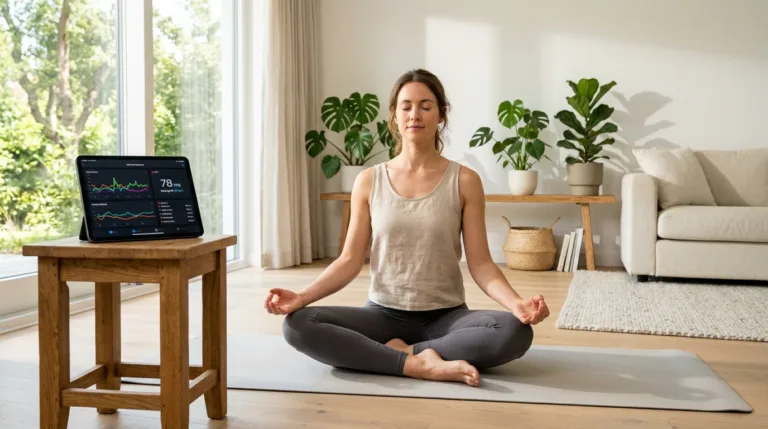
It’s 2 a.m. You’ve been staring at the ceiling for an hour. Your mind won’t stop replaying tomorrow’s to-do list. Sound familiar? You’re not alone — roughly one in three adults regularly struggles with sleep. The 4-7-8 breathing technique, developed by integrative medicine specialist Dr. Andrew Weil, involves inhaling for four counts, holding for seven, and exhaling for eight. A 2022 study found that this method reduced heart rate by 7.21% and lowered systolic blood pressure by 3.80% in healthy young adults (PMC, 2022). In this guide, we’ll explore what the research says — and how to use this breathwork technique tonight. Position is one variable that affects sleep onset, see our research roundup on the best sleeping position.
Key Takeaways
– 4-7-8 breathing uses a simple count pattern: inhale 4 seconds, hold 7, exhale 8. – Research shows it activates the parasympathetic nervous system, shifting your body toward rest (Cleveland Clinic, 2022). – A study found the technique reduced state anxiety significantly in post-surgical patients compared to controls (PubMed, 2023). – The extended exhale stimulates the vagus nerve, which slows heart rate and promotes calm. – Consistent daily practice — not just one session — produces the strongest results.
What Is the 4-7-8 Breathing Technique?
This method — also called the “Relaxing Breath” — is a controlled breathing pattern rooted in the ancient yogic practice of pranayama. Dr. Andrew Weil, founder of the Andrew Weil Center for Integrative Medicine at the University of Arizona, popularized it and describes the technique as a “natural tranquilizer for the nervous system” (Dr. Weil).
The pattern is straightforward. You breathe in through your nose for four counts, hold for seven counts, and then exhale slowly through your mouth for eight counts. That’s one cycle. Most practitioners recommend starting with four cycles per session and gradually building up over time.
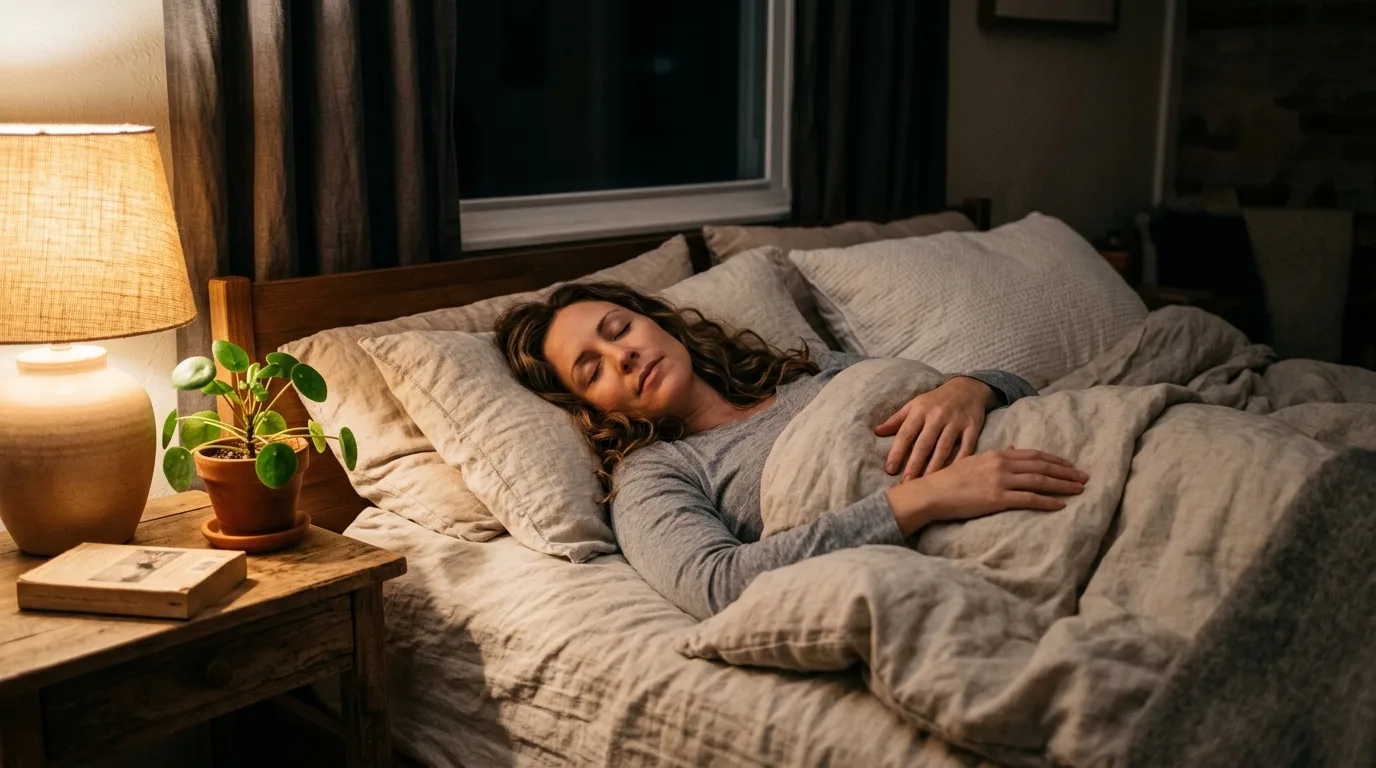
What makes this different from ordinary deep breathing? Two things stand out. First, the breath hold gives your lungs extra time to fully absorb oxygen. Second, the exhale is deliberately twice as long as the inhale. This extended exhale is the key mechanism — it activates the parasympathetic nervous system more strongly than patterns with equal inhale-to-exhale ratios.
Unlike more advanced breathwork techniques such as the Wim Hof method or holotropic breathing, this technique requires no equipment, no training, and no special environment. You can practice it in bed, at your desk, or even in a parked car. That accessibility is one reason it’s become so widely recommended for sleep.
Does 4-7-8 Breathing Actually Help You Sleep?
Let’s cut through the hype and look at what peer-reviewed research says. While no single study declares this technique a guaranteed sleep cure, several lines of evidence support its effectiveness.
Direct evidence. A 2022 study in Physiological Reports examined the effects on healthy young adults. The technique significantly decreased heart rate by 7.21% (p < 0.001) and reduced systolic blood pressure by 3.80% (p < 0.001). High-frequency heart rate variability — a marker of calming activity — also increased significantly (p < 0.05) (PMC, 2022). In other words, this breathing pattern measurably shifted the body toward rest.
Anxiety reduction. A randomized controlled trial with 90 post-bariatric surgery patients found that the 4-7-8 group had significantly lower state-anxiety scores compared to both a deep breathing group and a control group (p < 0.05) (PubMed, 2023). Since anxiety is a primary driver of insomnia, reducing it before bed can meaningfully improve sleep onset.
COPD patients. A study of 87 patients with moderate COPD found that those who practiced this pattern alongside conventional therapy showed significant reductions in anxiety and depression on the Hospital Anxiety and Depression Scale (p < 0.0001) (IJHSR, 2019).
Broader evidence on breathing and sleep. A 2025 review in Frontiers in Sleep analyzed studies from 2000 to 2024 and found consistent improvements in sleep quality across all examined breathing interventions (Frontiers in Sleep, 2025). The authors attributed these results to autonomic nervous system modulation and stress reduction.
While large-scale trials specifically on this technique and sleep are still emerging, the existing evidence suggests it’s a reasonable, low-risk tool for improving sleep quality.
How Do You Practice 4-7-8 Breathing for Sleep? (Step-by-Step)
Here’s a complete walkthrough you can follow tonight. The entire process takes less than two minutes.
Step 1: Get into Position
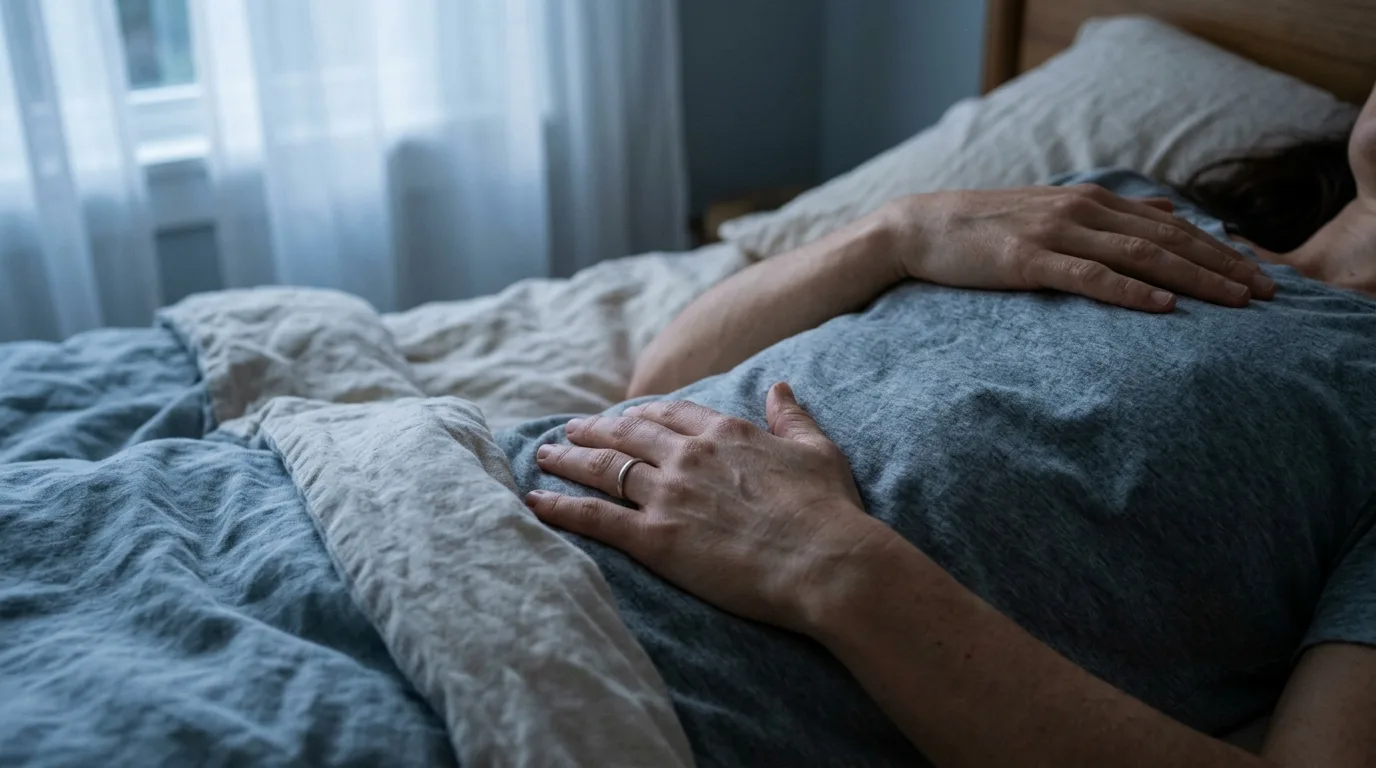
Lie on your back in bed with your head on a pillow. Place one hand on your chest and the other on your belly. Relax your jaw, shoulders, and face muscles. If you’re practicing during the day, sitting upright in a comfortable chair works just as well.
Step 2: Place Your Tongue
Touch the tip of your tongue to the ridge of tissue just behind your upper front teeth. Keep it there throughout the entire exercise. This tongue position is part of Dr. Weil’s original instruction and helps direct the airflow during exhalation.
Step 3: Exhale Completely
Before you begin the first cycle, exhale fully through your mouth, making a gentle “whoosh” sound. Empty your lungs completely. This creates a clean starting point.
Step 4: Inhale for 4 Counts
Close your mouth and inhale quietly through your nose while mentally counting to four. Focus on filling your belly first (you should feel the hand on your abdomen rise), then your chest.
Step 5: Hold for 7 Counts
Hold your breath for a count of seven. Don’t clamp down or create tension. Simply pause. This hold allows oxygen to saturate your bloodstream more fully.
Step 6: Exhale for 8 Counts
Exhale completely through your mouth for eight counts, making a soft “whoosh” sound. Let the exhale be slow and steady. This is the most important phase — the extended exhalation triggers the parasympathetic response.
Step 7: Repeat for 4 Cycles
That completes one cycle. Repeat the sequence three more times for a total of four cycles. As you improve, gradually work up to eight cycles per session. However, Dr. Weil recommends not exceeding eight cycles, especially when starting out.
Pro tip: Don’t worry about counting at the exact “right” speed. The ratio (4:7:8) matters more than the absolute duration. If holding for seven seconds feels uncomfortable at first, shorten all three phases proportionally — for example, 2-3.5-4 — and build up from there.
What Happens in Your Body During 4-7-8 Breathing?
Understanding the physiology helps explain why this technique works. Three mechanisms are at play.
The Extended Exhale Activates Your Vagus Nerve
The vagus nerve is the longest cranial nerve in your body. It serves as the main highway of your parasympathetic nervous system — the branch responsible for “rest and digest” functions. During exhalation, the vagus nerve releases acetylcholine, a neurotransmitter that slows heart rate beat by beat (PMC, 2018).
A study found that prolonged expiratory breathing significantly increased parasympathetic activity. High-frequency HRV rose from 36.88 to 43.08 (p < 0.01), while the LF/HF ratio dropped significantly (p < 0.01) (PMC, 2018). Since the 4-7-8 pattern uses an even longer exhale-to-inhale ratio, the parasympathetic effect is likely amplified.
The Breath Hold Increases CO2 Tolerance
When you hold your breath for seven counts, carbon dioxide levels rise slightly. This isn’t dangerous — it’s actually beneficial. Mild CO2 elevation causes blood vessels to dilate and improves oxygen delivery to tissues. Additionally, it trains your body to tolerate higher CO2 levels, which reduces the urge to overbreathe.
Counting Redirects Your Attention
As Dr. Melissa Young of the Cleveland Clinic explains, “The counting sequence is a way to focus your mind on something other than your worries” (Cleveland Clinic, 2022). This forced focus interrupts the rumination loops that often keep people awake.
A 2021 study found that just five minutes of deep, slow breathing significantly increased parasympathetic activity and reduced anxiety in both young and older adults (p < 0.001) (PMC, 2021). The anxiety reduction correlated with increased vagal tone, suggesting the physiological and psychological effects reinforce each other.
How Does 4-7-8 Breathing Compare to Other Techniques?
If you’ve explored breathwork techniques before, you may wonder how 4-7-8 stacks up against other popular methods. Here’s what the research shows.
The Relaxing Breath vs. Box Breathing
Box breathing uses equal four-count intervals: inhale 4, hold 4, exhale 4, hold 4. A 2025 Brigham Young University thesis compared box breathing, the relaxing breath, and 6-breaths-per-minute breathing across 84 participants. While 6 bpm breathing increased HRV the most, the relaxing breath showed an advantage: it increased end-tidal CO2, whereas 6 bpm breathing caused mild overbreathing (BYU ScholarsArchive, 2025). For sleep, the longer exhale creates a stronger parasympathetic signal than box breathing’s equal intervals.
The Relaxing Breath vs. Cyclic Sighing
Cyclic sighing involves a double inhale followed by a long exhale. A Stanford-led RCT with 108 participants found that cyclic sighing produced the greatest daily improvement in positive feelings among all techniques tested (PMC, 2023). If racing thoughts keep you awake, the structured counting of the relaxing breath may work better. If you need rapid mood improvement before bed, cyclic sighing could be more effective.
The Relaxing Breath vs. Diaphragmatic Breathing
Simple diaphragmatic (belly) breathing — without any specific count pattern — is the most basic relaxation technique. The 4-7-8 method adds two layers: the breath hold and the counting structure. These additions make it more engaging for people whose minds tend to wander at bedtime.
For a broader comparison of techniques, see our full breathing exercises for anxiety guide.
What Are Common 4-7-8 Breathing Mistakes?
Even a simple technique can go wrong. Here are the most common pitfalls and how to avoid them.
Breathing Too Fast
The most frequent mistake is rushing through the counts. If you’re powering through each cycle in under 10 seconds, you’re breathing too quickly to trigger the parasympathetic response. Slow down. Each full cycle should take roughly 19 seconds (4 + 7 + 8 counts at about one count per second).
Forcing the Breath Hold
Holding for seven counts should feel comfortable, not strained. If you find yourself gasping when you start the exhale, the hold is too long for your current capacity. Shorten all three phases proportionally (for example, 3-5-6) and gradually increase as your comfort grows.
Breathing Through Your Mouth on the Inhale
The inhale should always come through your nose. Nasal breathing filters, warms, and humidifies the air. It also produces nitric oxide, which improves oxygen absorption. Mouth breathing during the inhale phase bypasses these benefits.
Expecting Instant Results
Dr. Weil himself describes the relaxing breath as a skill that improves with practice. He recommends practicing twice daily for at least four to six weeks before judging the results. A single session may help you relax, but the nervous system adaptations that lead to consistently better sleep build over time. Consequently, patience matters.
Doing Too Many Cycles
More isn’t always better. Doing too many cycles — especially when you’re new to the practice — can cause lightheadedness or tingling sensations. Start with four cycles. Only increase to eight after you’ve practiced consistently for several weeks.

Frequently Asked Questions About 4-7-8 Breathing
How long does it take for 4-7-8 breathing to work for sleep?
Many people notice a calming effect within the first session. However, the sleep-specific benefits tend to strengthen over weeks of consistent practice. Dr. Weil recommends practicing twice daily for four to six weeks. A meta-analysis of 15 clinical trials confirms that breathing exercises produce significant physiological effects, including a reduction in systolic blood pressure by an average of 7.06 mmHg (PMC, 2023). These adaptations accumulate over time.
Is 4-7-8 breathing safe for everyone?
For most healthy adults, the technique is very safe. However, people with respiratory conditions such as COPD or asthma should start cautiously, as the breath hold may initially feel uncomfortable. Those with heart conditions or who are pregnant should consult a healthcare provider before starting any new breathing practice. Additionally, if you feel dizzy or lightheaded, stop the exercise and breathe normally.
Can I practice 4-7-8 breathing while lying in bed?
Absolutely. Lying down is actually one of the best positions for this technique when you’re using it for sleep. Place one hand on your belly to ensure you’re breathing diaphragmatically. The supine position allows your diaphragm to move freely, which enhances the effectiveness of each breath cycle.
How is 4-7-8 breathing different from meditation?
While both practices promote relaxation, they work differently. Meditation typically involves open monitoring or focused attention on a single anchor (like your breath). The 4-7-8 method adds structure through precise counting and breath control. Research from Stanford found that structured breathwork produced greater improvements in mood compared to mindfulness meditation in a 28-day trial (PMC, 2023). For people who find meditation “too open-ended,” the counting pattern can serve as a more structured alternative.
What if I can’t hold my breath for 7 counts?
That’s perfectly normal, especially for beginners. The exact count matters less than maintaining the 4:7:8 ratio. You can scale down to 2-3.5-4 or 3-5-6 to start. As your lung capacity and comfort increase, gradually extend toward the full counts. The key is that the exhale remains longer than the inhale.
Can children use this technique?
Yes, though younger children may struggle with the seven-count hold. A simplified version — like 2-3-4 or 3-5-6 — works well for kids. The fundamental principle remains the same: the exhale should be longer than the inhale to activate the calming response.
Your 4-7-8 Practice Starts Tonight
The 4-7-8 breathing technique isn’t a magic sleep pill. But the research tells a compelling story. Studies show it reduces heart rate, lowers blood pressure, increases parasympathetic activity, and decreases anxiety — all preconditions for falling asleep more easily. A scoping review examining 15 studies published between 2013 and 2024 positions this method as “an accessible, low-cost psychoregulatory intervention” (ResearchGate, 2025).
The best part? It costs nothing, takes less than two minutes, and you can start tonight. Practice four cycles right before you turn off the lights. Do it consistently for a month. If your sleep improves — as the evidence suggests it will for many people — you’ll have gained a tool you can use for the rest of your life.
For more breathing methods that support relaxation and stress relief, explore our complete breathwork techniques guide.
This article is for informational purposes only and does not constitute medical advice. Consult a qualified healthcare provider before beginning any new breathing practice, especially if you have a heart condition, respiratory disorder, or are pregnant.
References
- Vierra, J., Boonla, O., & Prasertsri, P. (2022). Effects of sleep deprivation and 4-7-8 breathing control on heart rate variability, blood pressure, blood glucose, and endothelial function in healthy young adults. Physiological Reports, 10(14), e15389. PMC
- Kurt Aktas, G., & Eskici Ilgin, V. (2023). The effect of deep breathing exercise and 4-7-8 breathing techniques applied to patients after bariatric surgery on anxiety and quality of life. Obesity Surgery, 33(3), 920-929. PubMed
- Pandekar, P., & Thangavelu, P. (2019). Effect of 4-7-8 breathing technique on anxiety and depression in moderate chronic obstructive pulmonary disease patients. International Journal of Health Sciences and Research, 9(5), 209-217. IJHSR
- Komori, T. (2018). The relaxation effect of prolonged expiratory breathing. Mental Illness, 10(1), 7669. PMC
- Magnon, V., Dutheil, F., & Vallet, G. T. (2021). Benefits from one session of deep and slow breathing on vagal tone and anxiety in young and older adults. Scientific Reports, 11, 19267. PMC
- Garg, P., et al. (2023). Effect of breathing exercises on blood pressure and heart rate: A systematic review and meta-analysis. International Journal of Cardiology Cardiovascular Risk and Prevention, 20, 200232. PMC
- Balban, M. Y., et al. (2023). Brief structured respiration practices enhance mood and reduce physiological arousal. Cell Reports Medicine, 4(1), 100895. PMC
- Marchant, J. (2025). Comparing the effects of square, 4-7-8, and 6 breaths-per-minute breathing conditions on heart rate variability, CO2 levels, and mood. MS Thesis, Brigham Young University. BYU ScholarsArchive
- Steinmane, V., & Fernate, A. (2025). The effect of breathing exercises on adults’ sleep quality: an intervention that works. Frontiers in Sleep, 4. Frontiers
- Cleveland Clinic. (2022). How to do the 4-7-8 breathing exercise. Health Essentials. Cleveland Clinic
- Weil, A. (n.d.). Breathing exercises: 4-7-8 breath. DrWeil.com. Dr. Weil